 Indietro
Innate and Adaptive Defenses: Blood and Immune System Study Guide
Guida di studio - Note intelligenti
 Appunti personalizzati basati sui tuoi materiali, ampliati con definizioni chiave, esempi e contesto.
Innate Defenses
Overview of Innate Defenses
Innate defenses are the body's first line of protection against pathogens and include cellular and chemical mechanisms that respond rapidly to infection. These defenses are non-specific and act against a wide range of invaders.
White Blood Cells (WBCs): Key players in innate immunity, including neutrophils, macrophages, and natural killer cells.
Inflammation: A localized response to infection or injury, characterized by redness, heat, swelling, and pain.
Antimicrobial Proteins: Proteins that attack microorganisms or hinder their reproduction.
Antimicrobial Proteins
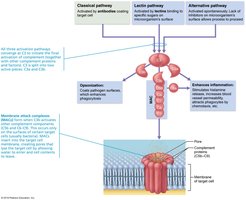
Antimicrobial proteins enhance innate defense by attacking microorganisms directly or hindering their ability to reproduce. The most important antimicrobial proteins are interferons and complement proteins.
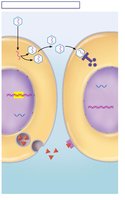
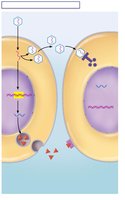
Interferons: Proteins released by virus-infected cells that signal neighboring cells to produce antiviral proteins, thereby limiting viral spread.
Complement Proteins: A group of 20-30 blood proteins that circulate in inactive form and are activated to destroy foreign substances, enhance inflammation, and support both innate and adaptive immunity.
Fever
Fever is a systemic response to infection, triggered by pyrogens released from leukocytes and macrophages.
Pyrogens: Act on the hypothalamus to raise body temperature.
Benefits: Sequesters iron and zinc, increases metabolic rate, and accelerates tissue repair.
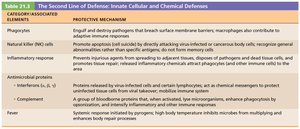
Summary Table: Innate Cellular and Chemical Defenses
Category/Associated Elements | Protective Mechanism |
|---|---|
Phagocytes | Engulf and destroy pathogens that breach surface barriers. |
Natural killer (NK) cells | Promote apoptosis in infected or cancerous cells. |
Inflammatory response | Prevents spread of pathogens, alerts adaptive defenses, disposes of debris. |
Antimicrobial proteins | Interferons: Inhibit viral replication; Complement: Enhance phagocytosis and inflammation. |
Fever | Inhibits microbial growth, increases repair rate. |
Interferon Mechanism Against Viruses
Interferon Action
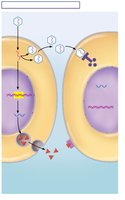
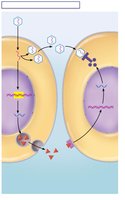
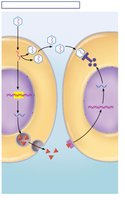
Interferons are produced by virus-infected cells and act as chemical messengers to protect neighboring cells.
Step 1: Virus enters host cell and triggers interferon gene expression.
Step 2: Infected cell produces and releases interferon molecules.
Step 3: Interferon binds to receptors on neighboring cells, inducing synthesis of antiviral proteins.
Step 4: Antiviral proteins block viral reproduction in these cells.
Adaptive Defenses
Overview of Adaptive Immunity
The adaptive immune system is a specific defense mechanism that eliminates pathogens or abnormal cells. It must be primed by exposure to a specific antigen and has three key characteristics: specificity, systemic action, and memory.
Specificity: Targets specific antigens.
Systemic: Not restricted to the initial site of infection.
Memory: Mounts stronger responses to previously encountered antigens.
Branches of Adaptive Immunity
Humoral Immunity: Mediated by antibodies produced by B lymphocytes; targets extracellular pathogens.
Cellular Immunity: Mediated by T lymphocytes; targets intracellular pathogens and abnormal cells.
Antigens
Antigens are substances that provoke an immune response. They can be complete antigens (immunogenic and reactive) or haptens (incomplete antigens that become immunogenic when attached to body proteins).
Antigenic Determinants: Specific regions of an antigen recognized by antibodies or lymphocyte receptors.

Self-Antigens: MHC Proteins
MHC Proteins: Glycoproteins coded by the major histocompatibility complex; unique to each individual and present self or foreign antigens to T cells.
Lymphocytes and Antigen-Presenting Cells (APCs)
The adaptive immune system relies on B and T lymphocytes and antigen-presenting cells.
B Lymphocytes (B cells): Responsible for humoral immunity.
T Lymphocytes (T cells): Responsible for cellular immunity.
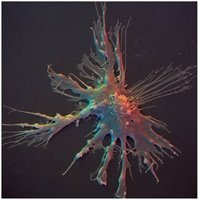
Antigen-Presenting Cells (APCs): Include dendritic cells, macrophages, and B cells; present antigens to T cells.
Lymphocyte Development and Activation
Lymphocytes undergo several stages: origin, maturation, seeding of secondary lymphoid organs, antigen encounter and activation, and proliferation/differentiation.
Origin: Both B and T lymphocytes originate in red bone marrow.
Maturation: T cells mature in the thymus; B cells mature in bone marrow.
Seeding: Immunocompetent but naive lymphocytes migrate to secondary lymphoid organs.
Activation: Occurs when lymphocyte receptors bind their specific antigen.
Proliferation and Differentiation: Activated lymphocytes multiply and differentiate into effector and memory cells.
Antigen Receptor Diversity
Genes determine the diversity of lymphocyte antigen receptors, allowing recognition of a vast array of foreign substances.
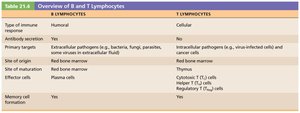
Summary Table: B and T Lymphocytes
B Lymphocytes | T Lymphocytes | |
|---|---|---|
Type of immune response | Humoral | Cellular |
Antibody secretion | Yes | No |
Primary targets | Extracellular pathogens | Intracellular pathogens |
Site of origin | Red bone marrow | Thymus |
Effector cells | Plasma cells | Cytotoxic T cells, Helper T cells, Regulatory T cells |
Memory cell formation | Yes | Yes |
Humoral Immune Response
Primary and Secondary Responses
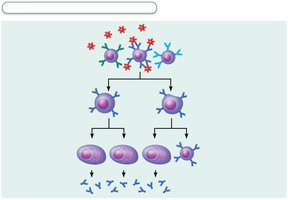
When a B cell encounters its target antigen, it initiates the humoral immune response by producing antibodies.
Primary Response: First exposure to antigen; lag period of 3-6 days; peak antibody levels in 10 days.
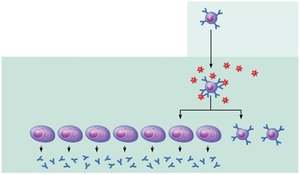
Secondary Response: Subsequent exposure; faster, stronger, and longer-lasting response due to memory cells.
Immunological Memory
Memory Cells: Provide rapid and effective response upon re-exposure to the same antigen.
Antibody Levels: Peak faster and remain higher during secondary response.
Active and Passive Humoral Immunity
Active Humoral Immunity
Naturally Acquired: Response to actual infection.
Artificially Acquired: Response to vaccination with dead or attenuated pathogens.
Passive Humoral Immunity
Naturally Acquired: Antibodies passed from mother to fetus or infant.
Artificially Acquired: Injection of exogenous antibodies (gamma globulin).
Immunological Memory: Not established in passive immunity; protection ends when antibodies degrade.
Summary
Innate defenses provide immediate, non-specific protection.
Adaptive defenses are specific, systemic, and have memory.
Antimicrobial proteins, fever, and inflammation are key innate mechanisms.
B and T lymphocytes, antigen-presenting cells, and immunological memory are central to adaptive immunity.
Vaccines provide artificial active immunity and do not cause autism.
Additional info:
Tables and images included are directly relevant to the mechanisms and cell types discussed.
