 Indietro
Innate and Adaptive Defenses: Blood and Immune System
Guida di studio - Note intelligenti
 Appunti personalizzati basati sui tuoi materiali, ampliati con definizioni chiave, esempi e contesto.
Innate Defenses
Overview of Innate Defenses
The innate immune system provides the body's first line of defense against pathogens. It is non-specific, meaning it responds to all pathogens in a similar manner and does not require prior exposure to be effective.
White Blood Cells (WBCs): Key players in innate immunity, including neutrophils, macrophages, and natural killer cells.
Inflammation: A localized response to infection or injury, characterized by redness, heat, swelling, and pain.
Antimicrobial Proteins: Proteins that attack microorganisms or hinder their reproduction.
Antimicrobial Proteins
Antimicrobial proteins enhance innate defenses by directly attacking microorganisms or hindering their ability to reproduce. The most important antimicrobial proteins are interferons and complement proteins.
Interferons: Proteins released by virus-infected cells that signal neighboring cells to produce antiviral proteins, thereby limiting viral spread.
Complement Proteins: A group of about 20-30 blood proteins that circulate in inactive form and become activated to destroy foreign substances.
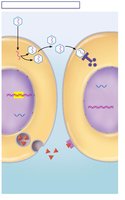
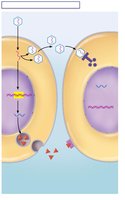
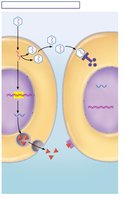
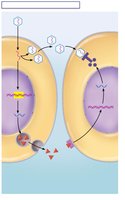
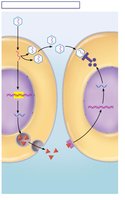
Interferon Mechanism
Interferons are produced by cells infected with viruses. They bind to receptors on neighboring cells, stimulating the production of antiviral proteins that block viral replication.
Step 1: Virus infects a host cell, triggering the production of interferon.
Step 2: Interferon is released and binds to receptors on nearby cells.
Step 3: Neighboring cells produce antiviral proteins, protecting them from viral infection.
Step 4: Antiviral proteins block viral reproduction in these cells.
Complement System
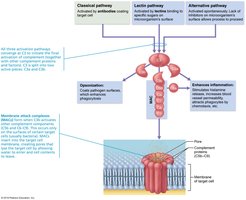
The complement system is a major mechanism for destroying foreign substances. It enhances inflammation, opsonizes pathogens (making them easier for phagocytes to engulf), and directly lyses bacteria.
Activation Pathways: Classical, lectin, and alternative pathways.
Functions: Opsonization, enhancement of inflammation, and formation of membrane attack complexes (MAC) that lyse pathogens.
Fever
Fever is a systemic response to infection, characterized by an abnormally high body temperature. It is triggered by pyrogens released by leukocytes and macrophages exposed to foreign substances.
Pyrogens: Act on the hypothalamus to raise body temperature.
Benefits: Sequesters iron and zinc, increases metabolic rate, and accelerates tissue repair.
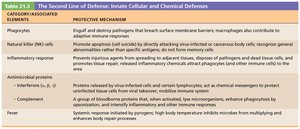
Summary Table: Innate Cellular and Chemical Defenses
Category/Associated Elements | Protective Mechanism |
|---|---|
Phagocytes | Engulf and destroy pathogens that breach surface barriers. |
Natural killer (NK) cells | Promote apoptosis in infected or cancerous cells. |
Inflammatory response | Prevents spread of pathogens, alerts adaptive immune system, promotes healing. |
Antimicrobial proteins | Interferons and complement proteins attack microorganisms or hinder their reproduction. |
Fever | Elevates body temperature to inhibit microbial growth and enhance repair. |
Adaptive Defenses
Overview of Adaptive Immunity
The adaptive immune system is a specific defensive system that eliminates pathogens or abnormal cells. It must be primed by initial exposure to a specific antigen and has three key characteristics: specificity, systemic action, and memory.
Specificity: Recognizes and targets specific antigens.
Systemic: Not restricted to the initial site of infection.
Memory: Mounts stronger attacks upon subsequent exposures to the same antigen.
Branches of Adaptive Immunity
Humoral Immunity: Mediated by antibodies produced by B lymphocytes; targets extracellular pathogens.
Cellular Immunity: Mediated by T lymphocytes; targets intracellular pathogens and abnormal cells.
Antigens
Antigens are substances that can mobilize adaptive defenses and provoke an immune response. Most antigens are large, complex molecules not normally found in the body.
Complete Antigens: Have immunogenicity (stimulate lymphocyte proliferation) and reactivity (react with lymphocytes and antibodies).
Haptens (Incomplete Antigens): Small molecules that are not immunogenic unless attached to a larger protein.
Antigenic Determinants
Antigenic determinants are specific parts of an antigen that antibodies or lymphocyte receptors bind to. Most antigens have multiple determinants, allowing for the mobilization of several lymphocyte populations and formation of different antibodies.

Self-Antigens: MHC Proteins
Self-antigens are proteins on cell surfaces that are not antigenic to the self but may be antigenic to others. Major histocompatibility complex (MHC) proteins are glycoproteins unique to each individual and play a crucial role in immune recognition.
Lymphocytes and Antigen-Presenting Cells (APCs)
The adaptive immune system involves B lymphocytes (humoral immunity), T lymphocytes (cellular immunity), and antigen-presenting cells (APCs) such as dendritic cells and macrophages.
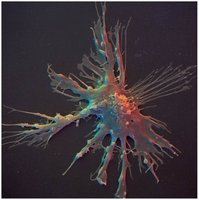
Dendritic Cells: Phagocytize pathogens and present antigens to T cells; most effective antigen presenters.
Macrophages: Present antigens to T cells and trigger inflammatory responses.
B Lymphocytes: Present antigens to helper T cells to assist their own activation.
Lymphocyte Development and Activation
B and T lymphocytes originate in the red bone marrow. T cells mature in the thymus, while B cells mature in the bone marrow. After maturation, immunocompetent but naive lymphocytes seed secondary lymphoid organs and circulate through blood and lymph. Upon antigen encounter, lymphocytes are activated, proliferate, and differentiate into effector and memory cells.
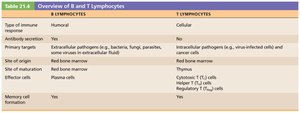
Summary Table: B and T Lymphocytes
B Lymphocytes | T Lymphocytes | |
|---|---|---|
Type of immune response | Humoral | Cellular |
Antibody secretion | Yes | No |
Primary targets | Extracellular pathogens | Intracellular pathogens |
Site of origin | Red bone marrow | Thymus |
Effector cells | Plasma cells | Cytotoxic T cells, Helper T cells, Regulatory T cells |
Memory cell formation | Yes | Yes |
Humoral Immune Response
Primary and Secondary Responses
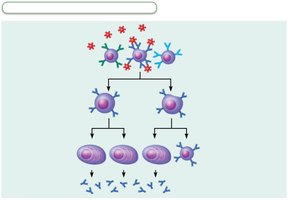
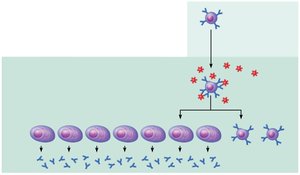
When a B cell encounters its target antigen, it provokes a humoral immune response, producing antibodies specific for that antigen. The primary response occurs upon first exposure, while the secondary response is faster and stronger due to memory cells.
Primary Response: Lag period of 3-6 days; peak antibody levels in 10 days.
Secondary Response: Faster, more prolonged, and more effective; antibody levels peak in 2-3 days and remain high for weeks to months.
Active and Passive Humoral Immunity
Humoral immunity can be acquired actively or passively.
Active Humoral Immunity: B cells encounter antigens and produce antibodies. Can be naturally acquired (infection) or artificially acquired (vaccination).
Passive Humoral Immunity: Ready-made antibodies are introduced into the body. Can be naturally acquired (maternal antibodies) or artificially acquired (injection of antibodies).
Summary Table: Types of Humoral Immunity
Type | Acquisition | Example |
|---|---|---|
Active, Naturally Acquired | Infection | Contact with pathogen |
Active, Artificially Acquired | Vaccination | Dead or attenuated pathogens |
Passive, Naturally Acquired | Maternal antibodies | Antibodies passed from mother to fetus via placenta or to infant in milk |
Passive, Artificially Acquired | Injection | Exogenous antibodies (gamma globulin) |
Example: Vaccines provide antigenic determinants that are immunogenic and reactive, sparing us symptoms of primary response.
Additional info: Immunological memory is a hallmark of adaptive immunity, allowing for rapid and effective responses to previously encountered antigens.
