 Indietro
Innate and Adaptive Immunity: The Immune System's Body Defenses
Guida di studio - Note intelligenti
 Appunti personalizzati basati sui tuoi materiali, ampliati con definizioni chiave, esempi e contesto.
The Immune System: Innate and Adaptive Body Defenses
Overview of Immunity
The immune system protects the body from disease through two main defense systems: innate (nonspecific) and adaptive (specific) immunity. These systems work together to resist pathogens and maintain health.
Innate Immunity: Provides immediate, nonspecific defense against pathogens.
Adaptive Immunity: Targets specific pathogens and develops memory for future protection.
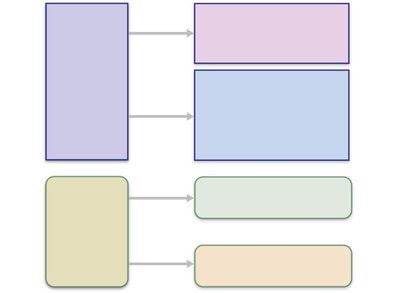
Innate immunity includes surface barriers (skin, mucous membranes) and internal defenses (phagocytes, NK cells, inflammation, antimicrobial proteins, fever). Adaptive immunity consists of humoral (B cells) and cellular (T cells) responses.
Innate Defenses
Surface Barriers
Surface barriers are the body's first line of defense, preventing pathogen entry.
Keratin: Resistant to acids, bases, bacterial enzymes, and toxins.
Protective Chemicals: Skin acidity, lipids in sebum, dermcidin in sweat, HCl and enzymes in stomach, lysozyme in saliva and tears, mucus in respiratory and digestive tracts.
Respiratory Modifications: Mucus-coated hairs and cilia trap and remove pathogens.
Internal Defenses: Cells and Chemicals
If pathogens breach surface barriers, internal defenses are activated.
Phagocytes: Macrophages (free and fixed), neutrophils.
Natural Killer (NK) Cells: Target cells lacking "self" markers, induce apoptosis, and enhance inflammation.
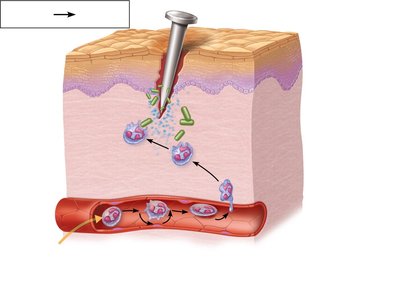
Inflammatory Response: Triggered by injury or infection, prevents spread, disposes debris, and initiates repair.
Antimicrobial Proteins: Interferons and complement proteins attack pathogens and hinder reproduction.
Fever: Systemic response to infection, increases metabolic rate and sequesters nutrients from pathogens.
Inflammatory Response
Inflammation is a key mechanism of innate immunity, characterized by redness, heat, swelling, pain, and sometimes loss of function.
Vasodilation: Increases blood flow (hyperemia).
Increased Vascular Permeability: Leads to edema and exudate formation, delivering proteins and antibodies for repair.
Phagocyte Mobilization: Steps include leukocytosis, margination, diapedesis, and chemotaxis.
Antimicrobial Proteins
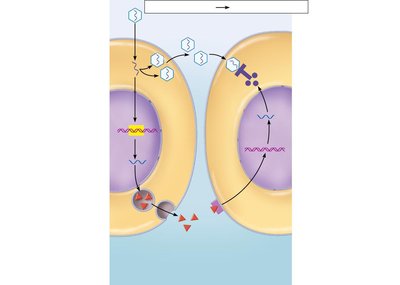
Interferons and complement proteins are crucial for inhibiting pathogen spread.
Interferons (IFNs): Produced by infected cells, stimulate neighboring cells to produce antiviral proteins.
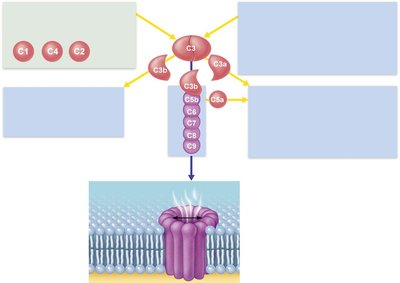
Complement: A group of ~20 blood proteins that enhance inflammation, promote phagocytosis, and cause cell lysis.
Adaptive Defenses
Antigens
Antigens are substances that provoke an immune response. Most are large, complex molecules not normally found in the body.
Complete Antigens: Proteins, polysaccharides, lipids, nucleic acids.
Haptens: Small molecules that become immunogenic when attached to body proteins (e.g., poison ivy).
Antigenic Determinants: Specific regions of an antigen recognized by antibodies and lymphocyte receptors.

Self-Antigens: MHC Proteins
Major Histocompatibility Complex (MHC) proteins are self-antigens found on cell surfaces. They are unique to each individual and play a critical role in immune recognition.
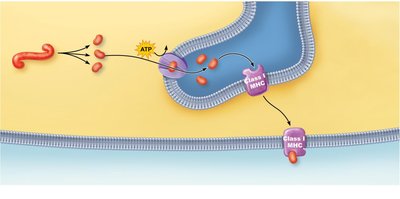
Class I MHC: Found on all body cells except RBCs.
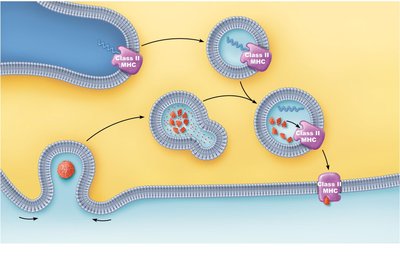
Class II MHC: Found on antigen-presenting cells (APCs).
Cells of the Adaptive Immune System
Adaptive immunity relies on lymphocytes and antigen-presenting cells.
B Lymphocytes (B cells): Mediate humoral immunity.
T Lymphocytes (T cells): Mediate cellular immunity.
Antigen-Presenting Cells (APCs): Dendritic cells, macrophages, and B cells present antigens to T cells.
Lymphocyte Development
Lymphocytes originate in red bone marrow. B cells mature in bone marrow, T cells in the thymus. Mature cells are immunocompetent and self-tolerant.
Immunocompetence: Ability to recognize and bind specific antigens.
Self-Tolerance: Unresponsive to self-antigens.
T Cell Selection
T cells undergo positive and negative selection in the thymus to ensure self-tolerance and proper antigen recognition.
Positive Selection: T cells must recognize self-MHC proteins.
Negative Selection: T cells that bind self-antigens are eliminated.
Antigen-Presenting Cells (APCs)
APCs engulf antigens and present fragments to T cells, activating them for immune response.
Dendritic Cells: Internalize pathogens and present antigens in lymphoid organs.
Macrophages: Present antigens and secrete bactericidal chemicals.
Humoral Immunity
Antibody-Mediated Response
Humoral immunity involves B cells producing antibodies in response to antigen exposure.
Primary Response: First exposure, slow antibody production.
Secondary Response: Faster, stronger response upon re-exposure due to memory cells.
Clonal Selection and Immunological Memory
B cells activated by antigen undergo clonal selection, forming plasma cells (antibody producers) and memory cells.
Plasma Cells: Secrete antibodies.
Memory Cells: Provide rapid response to future exposures.
Antibody Structure and Function
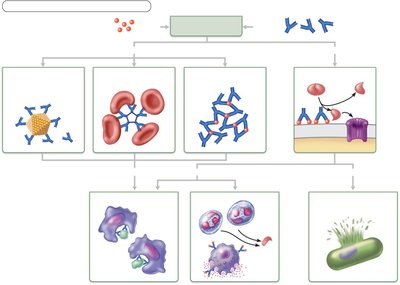
Antibodies (immunoglobulins) are Y-shaped proteins with variable regions for antigen binding and constant regions determining class and function.
Classes: IgM, IgA, IgD, IgG, IgE.
Functions: Neutralization, agglutination, precipitation, complement fixation.
Cell-Mediated Immunity
T Cell Responses
T cells defend against intracellular pathogens and abnormal cells. CD4 cells become helper T cells, CD8 cells become cytotoxic T cells.
Helper T Cells (TH): Activate B and T cells, stimulate macrophages.
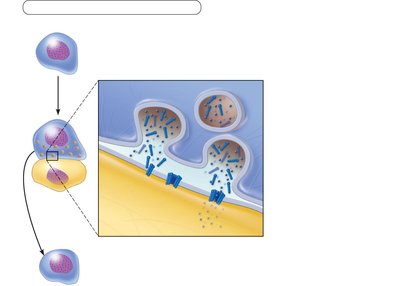
Cytotoxic T Cells (TC): Destroy infected or abnormal cells via perforins and granzymes.
Regulatory T Cells (TReg): Suppress immune response, prevent autoimmunity.
Antigen Recognition and MHC
T cells recognize antigens only when presented on MHC proteins. Class I MHC presents endogenous antigens to CD8 cells; Class II MHC presents exogenous antigens to CD4 cells.
Cytotoxic T Cell Mechanism
Cytotoxic T cells bind to infected cells, release perforins and granzymes, and induce apoptosis.
Immune Disorders
Immunodeficiencies
Conditions where immune cells or complement behave abnormally, leading to increased susceptibility to infections.
AIDS: Caused by HIV, destroys helper T cells, cripples immune response.
Autoimmune Diseases
Immune system attacks self-tissues, producing autoantibodies and sensitized T cells.
Examples: Multiple sclerosis, rheumatoid arthritis, type I diabetes.
Hypersensitivities
Immune responses to harmless antigens cause tissue damage. Types include immediate (allergies), subacute, and delayed hypersensitivities.
Anaphylactic Shock: Severe allergic reaction, treated with epinephrine.
Developmental Aspects
Immune system matures after birth, is affected by stress and aging, and declines with age, increasing cancer risk.
Innate Immunity | Adaptive Immunity |
|---|---|
Immediate, nonspecific response | Delayed, specific response |
Surface barriers, phagocytes, NK cells, inflammation, complement, fever | B cells (antibodies), T cells (cell-mediated), memory |
No memory | Immunological memory |
Additional info: The notes expand on brief points from the slides, providing definitions, examples, and mechanisms for each major immune system component. Images included are directly relevant to the described processes, such as phagocyte mobilization, interferon action, complement activation, antigenic determinants, antibody mechanisms, MHC processing, and cytotoxic T cell action.
