 Indietro
Introduction to Anatomy & Physiology: Levels of Organization, Basic Tissues, Body Systems, and Anatomical Terminology
Guida di studio - Note intelligenti
 Appunti personalizzati basati sui tuoi materiali, ampliati con definizioni chiave, esempi e contesto.
Introduction to Anatomy & Physiology
Relationship Between Anatomy and Physiology
Anatomy is the study of the structure of living organisms, while physiology focuses on the functions and processes of these structures. Understanding both fields is essential for comprehending how the human body operates and adapts to various conditions.
Anatomy: Examines the physical structure, organization, and spatial relationships of body parts.
Physiology: Investigates the mechanisms and functions that allow anatomical structures to work.
Example: The heart's anatomy (chambers, valves) is directly related to its physiological function (pumping blood).
Levels of Organization in Living Organisms
Hierarchical Structure of the Human Body
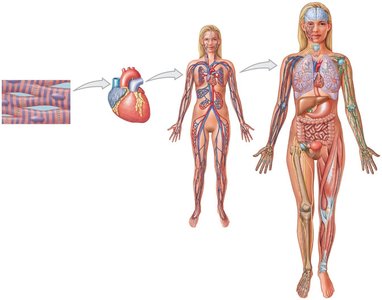
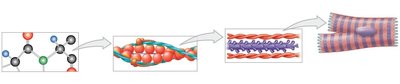
The human body is organized into several levels, from the simplest chemical components to the complex organism. Each level builds upon the previous, contributing to overall function and health.
Chemical/Molecular Level: Atoms and molecules form the basis of cellular structures.
Cellular Level: Cells are the basic units of life, each specialized for particular functions.
Tissue Level: Groups of similar cells form tissues, each with a specific role.
Organ Level: Tissues combine to form organs, which perform distinct physiological tasks.
Organ System Level: Organs work together in systems to carry out complex functions.
Organism Level: The complete living being, integrating all systems.
Basic Tissues of the Human Body
Epithelial Tissue
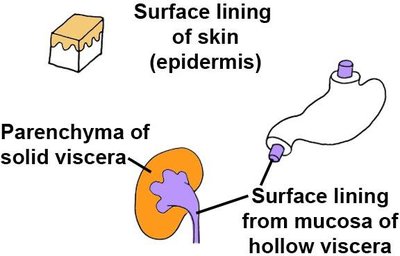
Epithelial tissue forms protective layers and linings throughout the body. It covers surfaces, lines cavities, and forms glands.
Functions: Protection, absorption, secretion, and sensation.
Locations: Skin (epidermis), lining of hollow organs, and glandular tissue.
Example: The epidermis protects underlying tissues from environmental damage.
Connective Tissue
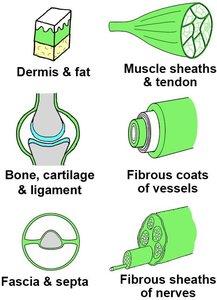
Connective tissue supports, binds, and protects other tissues and organs. It is characterized by an abundance of extracellular matrix.
Types: Dermis & fat, bone, cartilage, ligaments, fascia, muscle sheaths, fibrous coats of vessels and nerves.
Functions: Structural support, protection, insulation, and transport of substances.
Example: Bone provides structural support and protection for vital organs.
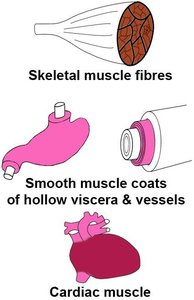
Muscular Tissue
Muscular tissue is specialized for contraction, enabling movement and force generation. It is divided into three main types.
Skeletal Muscle: Voluntary movement, attached to bones.
Cardiac Muscle: Involuntary, found only in the heart.
Smooth Muscle: Involuntary, found in walls of hollow organs and vessels.
Example: Skeletal muscle allows for locomotion, while cardiac muscle maintains heart rhythm.
Nervous Tissue
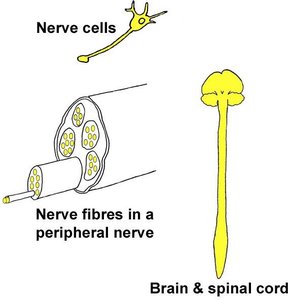
Nervous tissue is responsible for transmitting electrical impulses and coordinating bodily functions. It consists of neurons and supporting cells.
Components: Nerve cells (neurons), nerve fibers, brain, and spinal cord.
Functions: Sensory input, integration, motor output, and regulation of homeostasis.
Example: The brain processes sensory information and initiates responses.
Organization of Body Systems
Somatic and Visceral Systems
The body is organized into somatic and visceral systems, each with distinct functions and anatomical features.
Somatic Systems: Include body walls and limbs, skin, skeletal muscle, bones, and joints. These systems are involved in voluntary movement and sensation.
Visceral Systems: Comprise organs, glands, and tubes with smooth muscle. These systems are responsible for involuntary functions such as digestion, circulation, and reproduction.
Example: The somatic nervous system controls skeletal muscle movement, while the autonomic nervous system regulates visceral functions.
Anatomical Terminology
Planes of Reference
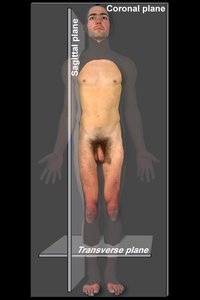
Anatomical planes are used to describe locations and sections of the body. Understanding these planes is essential for accurate communication in anatomy.
Sagittal Plane: Divides the body into left and right portions.
Coronal Plane: Divides the body into anterior (front) and posterior (back) portions.
Transverse (Horizontal) Plane: Divides the body into superior (upper) and inferior (lower) portions.
Terms of Relationship
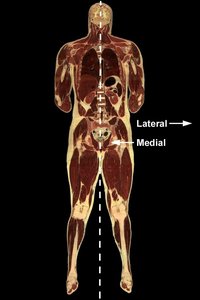
These terms describe the relative positions of body parts.
Medial/Lateral: Medial is closer to the midline; lateral is farther from the midline.
Superior/Inferior: Superior is above; inferior is below.
Anterior/Posterior: Anterior is toward the front; posterior is toward the back.
Terms of Comparison
These terms are used to compare the location or depth of structures.
Superficial/Deep: Superficial is closer to the surface; deep is farther from the surface.
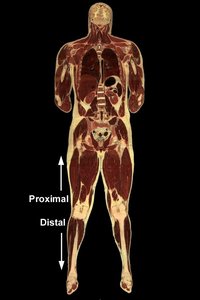
Proximal/Distal: Proximal is closer to the origin; distal is farther from the origin.
External/Internal: External is outside; internal is inside.
Ventral/Dorsal: Ventral is toward the belly; dorsal is toward the back.
Terms of Movement
Movement terms describe actions at joints and relative to anatomical planes.
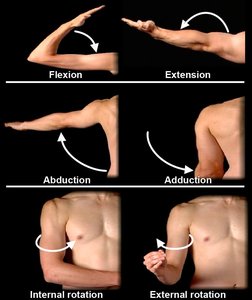
Flexion/Extension: Flexion decreases the angle at a joint; extension increases it.
Abduction/Adduction: Abduction moves a limb away from the midline; adduction moves it toward the midline.
Internal (Medial)/External (Lateral) Rotation: Internal rotation turns a limb toward the midline; external rotation turns it away.
Body Cavities
Major Body Cavities
The body contains several cavities that house and protect internal organs. These cavities are essential for compartmentalizing functions and providing structural support.
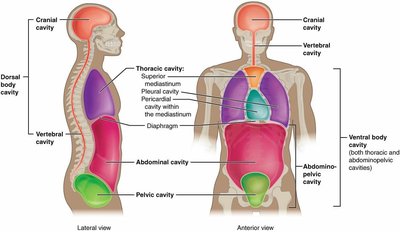
Dorsal Cavity: Includes the cranial and vertebral cavities, housing the brain and spinal cord.
Ventral Cavity: Includes the thoracic, abdominal, and pelvic cavities, containing organs of the respiratory, digestive, and reproductive systems.
Thoracic Cavity: Contains the heart and lungs.
Abdominopelvic Cavity: Contains digestive, urinary, and reproductive organs.
Study Strategies for Anatomy
Effective Learning Techniques
Anatomy requires active learning and engagement with the material. Students should employ strategies that enhance understanding and retention.
Active Learning: Participate in lectures, labs, and study groups.
Language Acquisition: Learn anatomical terminology, often derived from Latin and Greek.
Conceptual Understanding: Focus on principles and relationships between structures.
Visualization: Draw diagrams and tables to synthesize information.
Assessment Preparation: Complete quizzes and ask questions to clarify concepts.
Additional info: These strategies are essential for mastering the large volume of information in anatomy and physiology courses.
