 Indietro
Introduction to Human Anatomy and Physiology: Structure, Function, and Homeostasis
Guida di studio - Note intelligenti
 Appunti personalizzati basati sui tuoi materiali, ampliati con definizioni chiave, esempi e contesto.
Introduction to Human Anatomy and Physiology
Structure Determines Function
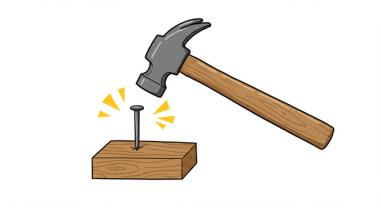
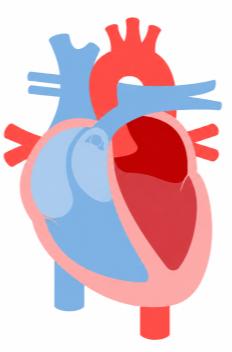
The principle of "structure determines function" is fundamental in anatomy and physiology. The shape and arrangement of a structure directly influence its ability to perform its function. For example, a hammer works as a hammer because of its specific shape; similarly, the heart's structure enables it to function as a pump.
Key Point: Understanding the structure of organs and tissues is essential to understanding their function.
Example: The heart has chambers composed of muscle that contract, allowing it to circulate blood throughout the body.
Anatomy and Physiology
Definitions and Relationship
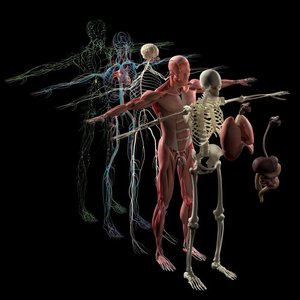
Anatomy is the study of the structure and shape of the body and its parts, as well as their relationships to one another. Physiology is the study of how the body and its parts work or function. These fields are inseparable, as structure always influences function.
Anatomy: Structure, location, and relationships of body parts.
Physiology: Mechanisms and processes by which body parts operate.
Necessary Life Functions
Overview of Life Functions
Living organisms must perform certain functions to sustain life. These functions are carried out by organ systems working together.
Maintaining a boundary: Separates internal from external environments (e.g., skin).
Responsiveness: Ability to sense and respond to stimuli.
Digestion: Breakdown of food into absorbable molecules.
Metabolism: All chemical reactions in the body, including catabolism (breaking down molecules) and anabolism (building molecules).
Excretion: Removal of waste products.
Movement: Physical movement of body parts or the whole body.
Growth: Increase in size and repair of tissues.
Reproduction: Production of new cells and offspring.
Organ Systems of the Human Body
Integumentary System
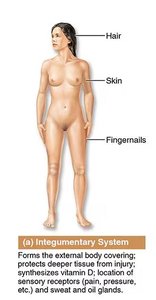
The integumentary system forms the body's external covering and separates the internal environment from the external environment. It consists of the skin, hair, and nails, and also aids in excretion, vitamin D synthesis, thermoregulation, and immune defense.
Components: Hair, skin, fingernails
Functions: Protection, vitamin D synthesis, sensory reception, excretion
Skeletal System
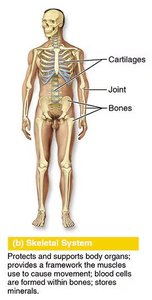
The skeletal system provides structural integrity, attachment points for muscles, stores ions, and is the site of hematopoiesis (formation of blood cells).
Components: Bones, joints, cartilages
Functions: Support, movement, blood cell formation, mineral storage
Muscular System
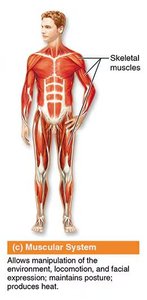
The muscular system is composed of muscle tissue capable of contraction. It enables movement, posture, thermoregulation, control of bodily openings, and communication.
Components: Skeletal muscles
Functions: Movement, heat production, posture, communication
Nervous System
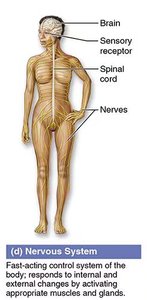
The nervous system detects changes in the environment, processes sensory information, controls motor responses, regulates homeostasis, and forms consciousness, memories, and emotions.
Components: Brain, spinal cord, nerves, sensory receptors
Functions: Sensory input, integration, motor output, regulation
Endocrine System
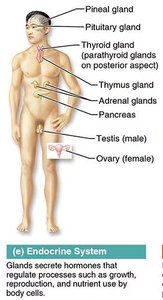
The endocrine system produces and secretes hormones that regulate cell and organ behaviors, growth, development, and internal variables.
Components: Glands (pituitary, thyroid, adrenal, etc.)
Functions: Hormone secretion, regulation of metabolism, growth, reproduction
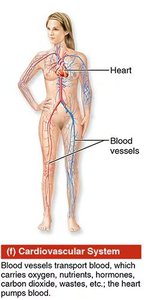
Cardiovascular System
The cardiovascular system circulates blood to deliver oxygen, nutrients, and hormones, removes waste, regulates temperature, pH, and fluid balance, and prevents blood loss.
Components: Heart, blood vessels
Functions: Transport, regulation, protection
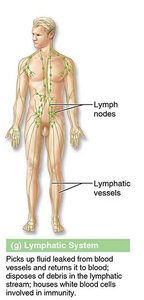
Lymphatic System
The lymphatic system returns interstitial fluid to the circulatory system, houses immune cells, filters lymph, absorbs fats, and surveils for infection.
Components: Lymph nodes, lymphatic vessels
Functions: Fluid balance, immunity, fat absorption
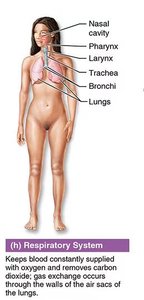
Respiratory System
The respiratory system supplies oxygen, eliminates carbon dioxide, performs ventilation, maintains pH, enables vocalization, and olfaction.
Components: Nasal cavity, pharynx, larynx, trachea, bronchi, lungs
Functions: Gas exchange, pH regulation, communication
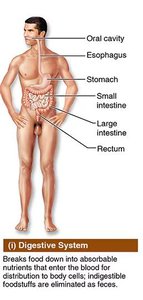
Digestive System
The digestive system enables ingestion, digestion, absorption, elimination, and prevents entry of pathogens.
Components: Oral cavity, esophagus, stomach, intestines, rectum
Functions: Nutrient breakdown, absorption, waste elimination
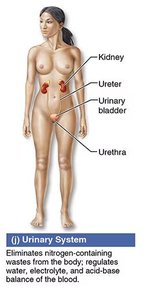
Urinary System
The urinary system filters blood, eliminates waste, regulates fluid and electrolyte balance, pH, blood pressure, and produces hormones.
Components: Kidneys, ureters, urinary bladder, urethra
Functions: Waste removal, regulation, hormone production
Body Cavities
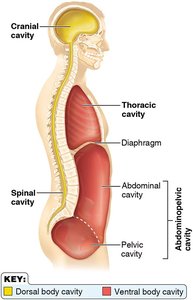
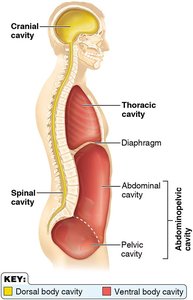
Dorsal and Ventral Cavities
The human body contains two main cavities: dorsal and ventral. The dorsal cavity includes the cranial and spinal cavities, while the ventral cavity includes the thoracic and abdominopelvic cavities.
Dorsal cavity: Cranial (brain) and spinal (spinal cord)
Ventral cavity: Thoracic (lungs, heart), abdominopelvic (digestive organs, reproductive organs)
Structural Complexity of Life
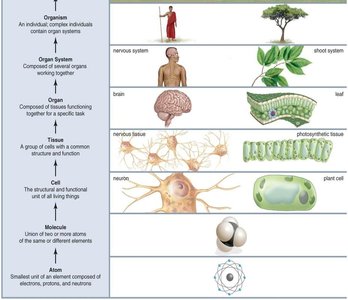
Levels of Organization
Biological organization progresses from simple to complex structures. Each level builds upon the previous, culminating in the organism.
Sub-atomic particles → Atoms → Molecules → Macromolecules → Organelles → Cells → Tissues → Organs → Organ systems → Organism
Homeostasis
Definition and Importance
Homeostasis is the body's ability to maintain a relatively stable internal environment despite external changes. It is achieved through feedback loops that detect and resist changes in internal variables.
Key word: "Relatively" – internal conditions fluctuate but are regulated.
Example: Blood calcium levels are maintained within a narrow range.
Feedback Loops
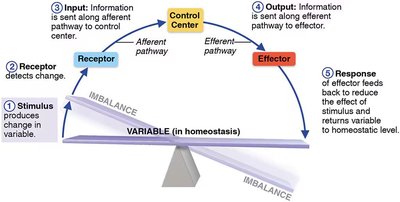
Feedback loops control physical properties of biological systems. They consist of five key components:
Internal Variable: Property monitored (e.g., blood temperature)
Setpoint: Desired value (e.g., 97.7–98.6°F)
Receptor: Detects changes (e.g., thermoreceptors)
Control Center: Analyzes information and determines response (e.g., hypothalamus)
Effectors: Carry out response (e.g., skeletal muscle contraction)
Negative Feedback Loops
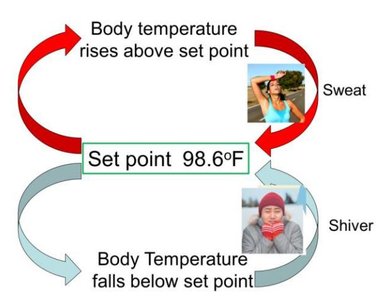
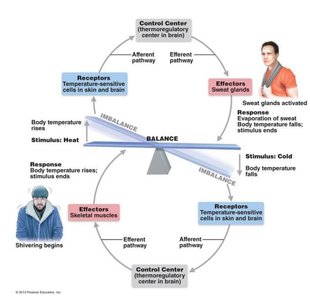
Negative feedback loops act to reverse changes in internal variables, restoring them to setpoint. They are the most common mechanism for maintaining homeostasis.
Example: Regulation of body temperature – sweating when hot, shivering when cold.
Positive Feedback Loops
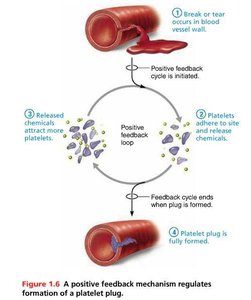
Positive feedback loops amplify changes in internal variables, moving them further from setpoint. They are essential for certain physiological processes, such as childbirth and blood clotting.
Example: Platelet plug formation during blood clotting.
Application: Feedback Loop Example
Calcium Regulation in Blood
The concentration of ionized Ca2+ in the blood is critical for physiology. When blood calcium drops below setpoint, chemoreceptors in the parathyroid gland detect the change, prompting the gland to release parathyroid hormone (PTH). PTH stimulates bone and kidneys to conserve and replace blood calcium.
Internal Variable: Blood calcium
Setpoint: 8.6–10.2 mg/dL
Receptor: Chemoreceptors of endothelial cells
Control Center: Parathyroid gland
Effectors: Bone and kidneys
Summary Table: Major Organ Systems and Functions
Organ System | Main Components | Primary Functions |
|---|---|---|
Integumentary | Skin, hair, nails | Protection, vitamin D synthesis, excretion |
Skeletal | Bones, joints, cartilages | Support, movement, blood cell formation |
Muscular | Skeletal muscles | Movement, heat production, posture |
Nervous | Brain, spinal cord, nerves | Sensory input, integration, motor output |
Endocrine | Glands | Hormone secretion, regulation |
Cardiovascular | Heart, blood vessels | Transport, regulation, protection |
Lymphatic | Lymph nodes, vessels | Fluid balance, immunity |
Respiratory | Lungs, airways | Gas exchange, pH regulation |
Digestive | GI tract organs | Nutrient breakdown, absorption, waste elimination |
Urinary | Kidneys, bladder | Waste removal, regulation |
