 Indietro
Introduction to Physiology: Organization, Homeostasis, and Control Systems
Guida di studio - Note intelligenti
 Appunti personalizzati basati sui tuoi materiali, ampliati con definizioni chiave, esempi e contesto.
Introduction to Physiology
Physiology as an Integrative Science
Physiology is the study of the normal functioning of living organisms and their component parts, including all chemical and physical processes. It is closely tied to anatomy at all levels of organization, from atoms to the biosphere. Complex systems in physiology possess emergent properties, meaning that the whole is more than the sum of its parts.
Emergent Properties: Characteristics that arise from the interaction of simpler elements, such as organ systems working together to maintain life.
Integration: Functions are integrated across many levels of organization, from molecules to organ systems.
Relationship to Anatomy: Anatomy provides the structural basis for physiological function.
Levels of Organization
The organization of life is hierarchical, with each level building upon the previous. The cell is the smallest unit capable of carrying out all life processes.
Hierarchy: Atoms → Molecules → Cells → Tissues → Organs → Organ Systems → Organisms → Populations → Ecosystems → Biosphere
Physiology: Focuses on the function at each level, especially cells, tissues, organs, and organ systems.
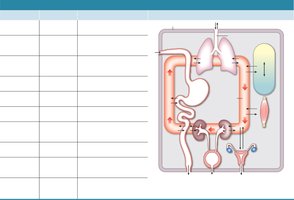
Organ Systems Overview
Human physiology is organized into organ systems, each with specific functions and components. These systems interact to maintain homeostasis and support life.
Integumentary: Skin; protection from external environment
Musculoskeletal: Muscles and bones; support and movement
Respiratory: Lungs and airways; gas exchange
Digestive: Stomach, intestines, liver, pancreas; nutrient uptake and waste removal
Urinary: Kidneys, bladder; water and waste removal
Reproductive: Ovaries, uterus, testes; perpetuation of the species
Circulatory: Heart, blood vessels, blood; material transport
Nervous: Brain, spinal cord; coordination via electrical signals
Endocrine: Glands; coordination via regulatory molecules
Immune: Thymus, spleen, lymph nodes; defense against invaders
Function and Mechanism in Physiology
Teleological vs. Mechanistic Approaches
Physiology explains both the function (the "why") and the mechanism (the "how") of biological processes.
Teleological Approach: Explains why a process occurs (e.g., "Why do red blood cells transport oxygen?" Because cells need oxygen).
Mechanistic Approach: Explains how a process occurs (e.g., "How do red blood cells transport oxygen?" Oxygen binds to hemoglobin in red blood cells).
Translational Research: Integrates mechanistic studies with medical treatment.
Themes in Physiology
Key Themes
Several central themes guide the study of physiology:
Structure and Function: Closely related at all levels; anatomical structure determines physiological function.
Molecular Interactions: Chemical interactions underpin cellular and tissue function.
Compartmentation: Separation of biological spaces allows specialization and regulation.
Energy: Living organisms require energy for processes such as metabolism and movement.
Information Flow: Coordinates body functions via signaling pathways.
Homeostasis: Maintains internal stability despite external changes.
Homeostasis
Definition and Importance
Homeostasis is the maintenance of a relatively stable internal environment in an ever-changing external environment. It is essential for normal function and survival.
Critical Variables: Environmental factors, materials for cell needs, and communication factors are regulated within a range of values.
Disease State: Failure to maintain homeostasis leads to pathophysiology (e.g., diabetes mellitus).
The Body's Internal Environment
The internal environment consists of extracellular fluid (ECF) and intracellular fluid (ICF). ECF serves as a buffer zone between the outside world and the ICF.
ECF: Watery environment surrounding cells; must be kept stable.
ICF: Fluid within cells.
Cell Membrane: Separates ECF from ICF.
Mass Balance and Homeostasis
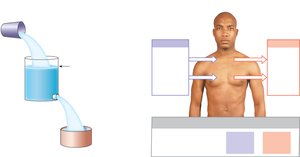
Homeostasis depends on the law of mass balance: the amount of a substance remains constant if any gain is offset by an equal loss.
Gain: Intake from outside or metabolic production.
Loss: Excretion to outside or metabolic removal.
Mass Flow: Rate of transport of a substance through the body.
Clearance: Volume of blood cleared of a substance per unit time.
Homeostasis vs. Equilibrium
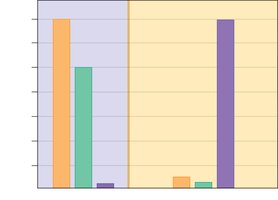
Homeostasis maintains a dynamic steady state rather than equilibrium. Materials move between compartments, but there is no net movement.
Dynamic Steady State: Constant movement, but overall balance is maintained.
Equilibrium: Implies identical composition in compartments, which is not the case in homeostasis.
Disequilibrium: Homeostasis often involves maintaining disequilibrium between compartments (e.g., ion concentrations).
Control Systems and Homeostasis
Regulation of Variables
Regulated variables are kept within a normal range by control mechanisms, which maintain values near a setpoint.
Control Systems: Include local and reflex mechanisms.
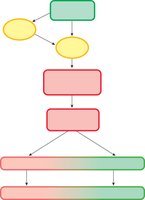
Components: Input signal, integrating center, output signal, response.
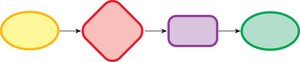
Local vs. Reflex Control
Control systems can be local (restricted to a tissue or cell) or reflex (using long-distance signaling via nervous or endocrine systems).
Local Control: Cells in the vicinity of the change initiate the response.
Reflex Control: Cells at a distant site control the response.
Response Loop: Begins with a stimulus and involves feedback loops.
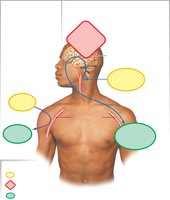
Reflex Pathways and Feedback Loops
Reflex pathways involve a series of steps: stimulus, sensor, input signal, integrating center, output signal, target, and response. Feedback loops modulate these pathways.
Negative Feedback: Homeostatic; stabilizes variable by counteracting the stimulus.
Positive Feedback: Not homeostatic; reinforces the stimulus, moving the variable farther from the setpoint.
Feedforward Control: Allows anticipation of change.
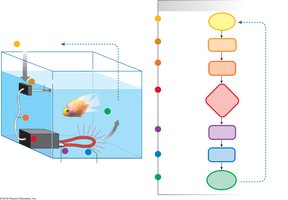
Oscillation and Setpoints
Most functions that maintain homeostasis have a setpoint or normal value. The response loop activates when the function moves outside a predetermined range, leading to oscillation around the setpoint.
Setpoint: Optimum value for a regulated variable.
Oscillation: Variable fluctuates within a normal range due to feedback mechanisms.
Negative and Positive Feedback
Feedback loops are essential for regulation:
Negative Feedback: Response counteracts the stimulus, shutting off the response loop.
Positive Feedback: Response reinforces the stimulus; an outside factor is required to shut off the loop.
Feedback Type | Effect | Example |
|---|---|---|
Negative Feedback | Stabilizes variable | Body temperature regulation |
Positive Feedback | Reinforces stimulus | Blood clotting, childbirth |
Additional info: The notes above expand brief points into full academic explanations, add definitions, and provide context for each concept. Images included are directly relevant to the adjacent paragraphs, visually reinforcing the explanations.
