 Indietro
Joints and Articulations: Structure, Function, and Movement
Guida di studio - Note intelligenti
 Appunti personalizzati basati sui tuoi materiali, ampliati con definizioni chiave, esempi e contesto.
Joints and Articulations
Classification of Joints
Joints, also known as articulations, are the locations where two or more bones meet. They are classified based on their structure and the degree of movement they permit. The structural classification includes bony, fibrous, cartilaginous, and synovial joints, while the functional classification is based on the range of motion: synarthrosis (no movement), amphiarthrosis (little movement), and diarthrosis (free movement).
Synarthrosis: Immovable joints, such as sutures in the skull.
Amphiarthrosis: Slightly movable joints, like the syndesmosis between the tibia and fibula.
Diarthrosis: Freely movable joints, primarily synovial joints.
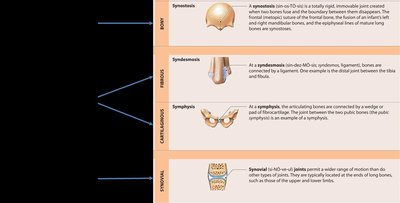
Structural Types of Joints
Joints are further categorized by their structural composition:
Bony: Bones fused together, e.g., synostosis.
Fibrous: Bones connected by fibrous tissue, e.g., syndesmosis.
Cartilaginous: Bones joined by cartilage, e.g., symphysis.
Synovial: Joints with a synovial cavity, allowing for a wide range of movement.
Synovial Joints: Structure and Function
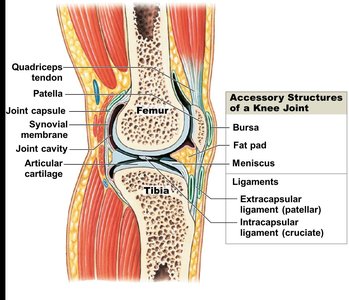
Basic Structure of Synovial Joints
Synovial joints are characterized by a joint cavity filled with synovial fluid, surrounded by an articular capsule. They are stabilized by accessory structures such as ligaments, tendons, bursae, and fat pads. These joints are highly mobile but relatively weak compared to other joint types.
Types of Synovial Joints
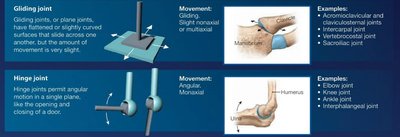
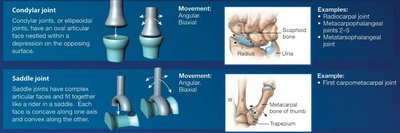
Synovial joints are classified based on the shape of their articulating surfaces and the type of movement they allow:
Gliding (Plane) Joint: Allows slight nonaxial or multiaxial movement. Examples: acromioclavicular, intercarpal joints.
Hinge Joint: Permits angular, monaxial movement. Examples: elbow, knee, ankle joints.
Condylar (Ellipsoidal) Joint: Allows angular, biaxial movement. Examples: radiocarpal, metacarpophalangeal joints.
Saddle Joint: Permits angular, biaxial movement. Example: first carpometacarpal joint (thumb).
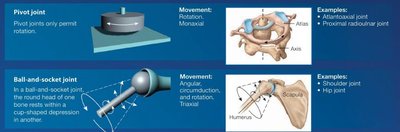
Pivot Joint: Allows rotation, monaxial movement. Examples: atlantoaxial, proximal radioulnar joints.
Ball-and-Socket Joint: Permits angular, circumduction, and rotation, triaxial movement. Examples: shoulder, hip joints.
Joint Motion and Axes
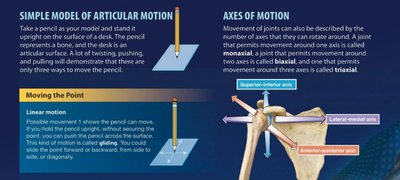
Model of Articular Motion
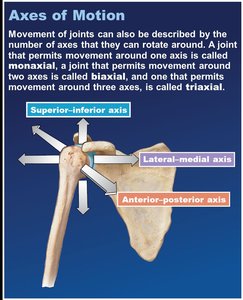
Joint movement can be modeled using a pencil as a representation of a bone. The pencil can move in three ways: linear motion, angular motion, and rotation. The axes of motion are described as monaxial (one axis), biaxial (two axes), and triaxial (three axes).
Types of Joint Movements
Movements at synovial joints are described by their direction and relationship between structures:
Gliding: Sliding movement between flat surfaces.
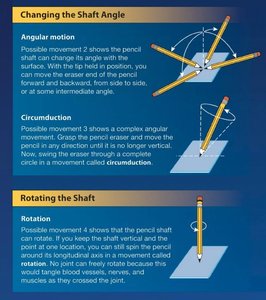
Angular: Changes in the angle between bones (flexion, extension, abduction, adduction).
Circumduction: Circular movement combining angular motions.
Rotation: Movement around a longitudinal axis (medial/lateral rotation, supination/pronation).
Special Movements: Unique to certain joints (e.g., dorsiflexion, plantar flexion, opposition).
Movement Names and Examples
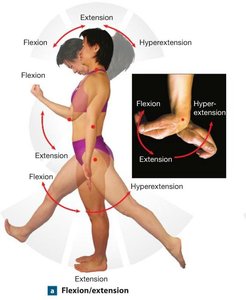
Flexion, Extension, and Hyperextension
Flexion decreases the angle between bones in the anterior plane, while extension increases it. Hyperextension extends the joint beyond its normal range.
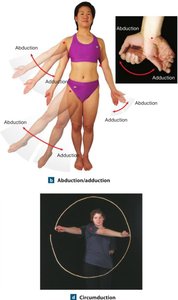
Abduction, Adduction, and Circumduction
Abduction moves a limb away from the midline, adduction moves it toward the midline, and circumduction is a circular movement.
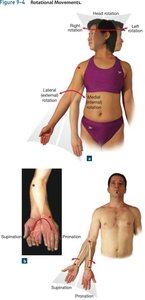
Rotational Movements
Rotation involves turning a bone around its longitudinal axis. Supination and pronation refer to movements of the forearm.
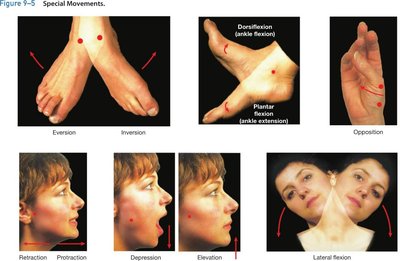
Special Movements
Special movements include dorsiflexion, plantar flexion, inversion, eversion, opposition, retraction, protraction, depression, elevation, and lateral flexion.
Structure and Function of Major Joints
Elbow Joint
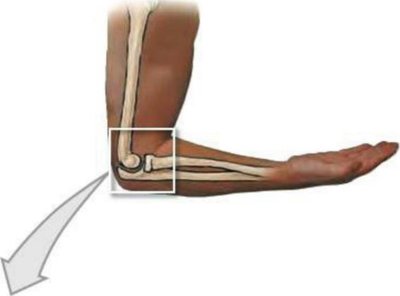
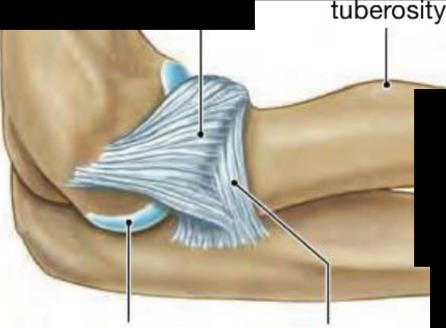
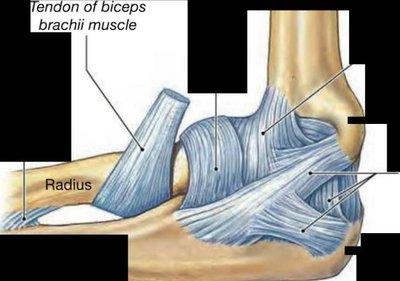
The elbow is a hinge joint involving the humerus, radius, and ulna. It allows for flexion and extension and is stabilized by ligaments and tendons.
Knee Joint
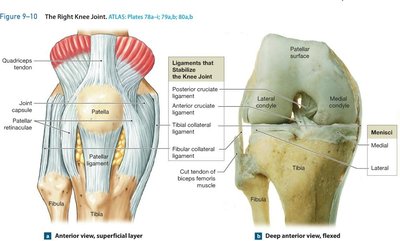
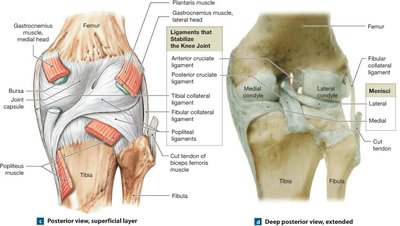
The knee is a complex hinge joint transferring weight from the femur to the tibia. It has three articulations and is stabilized by seven major ligaments and fibrocartilage pads (menisci).
Patellar ligament (anterior)
Popliteal ligaments (posterior)
Anterior and posterior cruciate ligaments (inside joint capsule)
Tibial and fibular collateral ligaments (medial and lateral)
Shoulder and Hip Joints
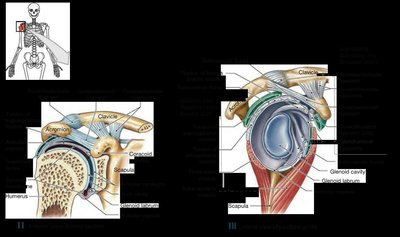
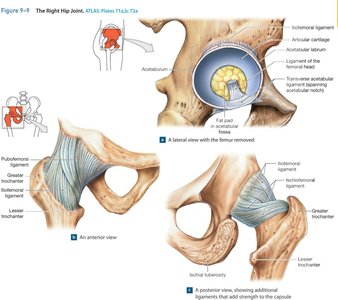
Both the shoulder and hip are ball-and-socket joints, allowing for flexion, extension, adduction, abduction, circumduction, and rotation. The shoulder is highly mobile but less stable, while the hip is more stable due to deeper articulation.
Effects of Aging on Joints
Degenerative Changes
Aging leads to degenerative changes in joints, including rheumatism, arthritis, osteoarthritis, rheumatoid arthritis, and gouty arthritis. Immobilization can reduce synovial fluid flow, increasing arthritis risk. Bone mass decreases, bones weaken, and fracture risk increases with age.
Integration with Other Systems
Skeletal System Interactions
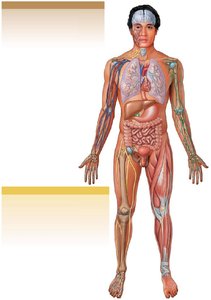
The skeletal system interacts with other body systems. Muscles attach to bones for movement, endocrine system regulates bone growth, and digestive and urinary systems supply minerals. The skeleton serves as a mineral reserve and supports other organs.
Summary Table: Joint Types and Movements
Joint Type | Movement | Examples |
|---|---|---|
Gliding (Plane) | Slight nonaxial/multiaxial | Acromioclavicular, intercarpal |
Hinge | Angular, monaxial | Elbow, knee, ankle |
Condylar (Ellipsoidal) | Angular, biaxial | Radiocarpal, metacarpophalangeal |
Saddle | Angular, biaxial | First carpometacarpal (thumb) |
Pivot | Rotation, monaxial | Atlantoaxial, proximal radioulnar |
Ball-and-Socket | Angular, circumduction, rotation, triaxial | Shoulder, hip |
Key Terms
Articulation: The location where two bones meet.
Synovial fluid: Lubricating fluid within synovial joints.
Ligament: Connective tissue stabilizing joints.
Tendon: Connects muscle to bone.
Bursa: Fluid-filled sac reducing friction.
Meniscus: Fibrocartilage pad cushioning the knee.
Formulas and Equations
While joint movement is not typically described by equations, biomechanics may use angular velocity and torque:
Angular velocity:
Torque:
Additional info: Biomechanical equations are provided for academic completeness.
