 Indietro
Lymphatic and Immune Systems Study Guide – Step-by-Step Guidance
Guida di studio - Note intelligenti
 Appunti personalizzati basati sui tuoi materiali, ampliati con definizioni chiave, esempi e contesto.
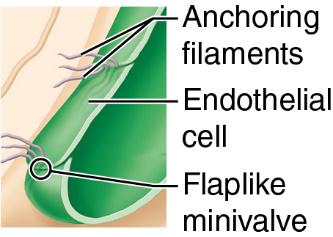
Q13. Describe how the anchoring filaments and mini-valves shown below facilitate the uptake of fluid into lymphatic capillaries.
Background
Topic: Lymphatic Capillaries Structure and Function
This question is testing your understanding of how the unique structure of lymphatic capillaries allows them to absorb excess fluid from tissues, which is a key part of the lymphatic system's role in maintaining fluid balance and immune surveillance.
Key Terms and Concepts:
Anchoring filaments: Thin fibers that attach lymphatic endothelial cells to surrounding tissue.
Endothelial cells: Cells that form the walls of lymphatic capillaries.
Flaplike minivalves: Overlapping edges of endothelial cells that act as one-way valves.
Interstitial fluid: Fluid found in the spaces between cells in tissues.
Step-by-Step Guidance
Recognize that lymphatic capillaries are highly permeable due to their unique structure, which includes overlapping endothelial cells that form flaplike minivalves.
Understand that anchoring filaments connect the endothelial cells of the lymphatic capillary to the surrounding connective tissue.
When tissue fluid pressure increases (for example, during inflammation or injury), the anchoring filaments are pulled, causing the endothelial cell flaps to separate slightly.
This separation creates openings (mini-valves) that allow interstitial fluid, proteins, and even cells to enter the lymphatic capillary, but not exit back into the tissue.
Consider how this one-way system prevents backflow and ensures that excess fluid is efficiently collected and transported away from tissues.
Try solving on your own before revealing the answer!
Final Answer:
Anchoring filaments attach the lymphatic capillary endothelial cells to surrounding tissue. When interstitial fluid pressure rises, these filaments pull on the endothelial cells, causing the flaplike minivalves to open. This allows fluid, proteins, and other particles to enter the lymphatic capillary. The minivalves act as one-way gates, preventing the fluid from leaking back out, thus facilitating the uptake of excess tissue fluid into the lymphatic system.
This mechanism is essential for maintaining tissue fluid balance and for the immune system to monitor and respond to pathogens in the tissues.
