 Indietro
Lymphatic System and Immunity: Structure, Function, and Defense Mechanisms
Guida di studio - Note intelligenti
 Appunti personalizzati basati sui tuoi materiali, ampliati con definizioni chiave, esempi e contesto.
Lymphatic System: Structure and Function
Overview of the Lymphatic System
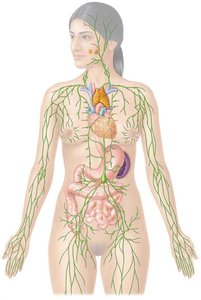
The lymphatic system is a network of vessels, tissues, and organs that plays a crucial role in maintaining fluid balance, absorbing dietary fats, and defending the body against disease. It works closely with the immune system to protect the body from pathogens and remove excess interstitial fluid.
Structures: Lymphatic vessels, lymphoid tissues, and organs (e.g., lymph nodes, spleen, thymus, tonsils).
Functions:
Drains interstitial fluid and leaked plasma proteins back to the blood.
Transports dietary fats from the digestive tract.
Protects the body from disease by housing immune cells.
Lymphatic Vessels and Circulation
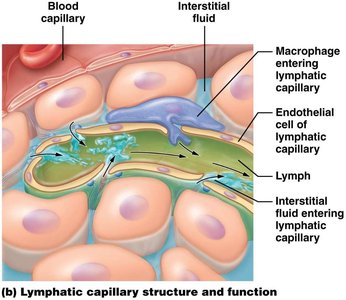
Lymphatic vessels begin as blind-ended capillaries in tissues, collecting excess interstitial fluid (now called lymph) and returning it to the cardiovascular system. This prevents edema and maintains blood volume.
Lymphatic capillaries: Highly permeable, allow entry of fluid, proteins, and cells.
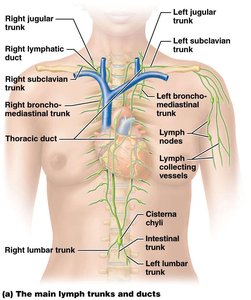
Principal lymphatic trunks: Five main trunks unite into two main channels:
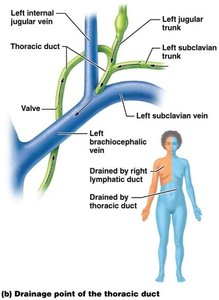
Right lymphatic duct: Drains right side of head, neck, chest, and arm.
Thoracic duct: Drains all remaining regions of the body.
Both ducts empty into the subclavian veins.
Mechanisms of Lymph Flow
Lymph is propelled toward the heart by several mechanisms:
Overlapping endothelial cells and valves prevent backflow.
Skeletal muscle contraction and respiratory pump pressure changes facilitate lymph movement.
Lymphatic Tissue and Cellular Composition
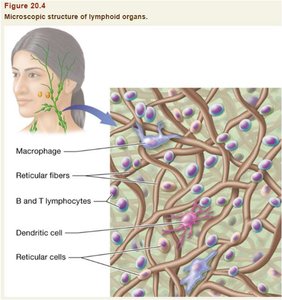
Lymphatic tissues are composed of a network of reticular fibers that support various immune cells, including lymphocytes, macrophages, and dendritic cells. These tissues are found in lymphoid organs and mucosa-associated lymphoid tissue (MALT).
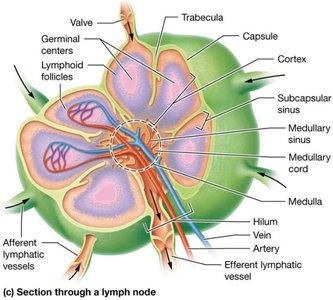
Lymph nodes: Encapsulated structures that filter lymph and house immune cells.
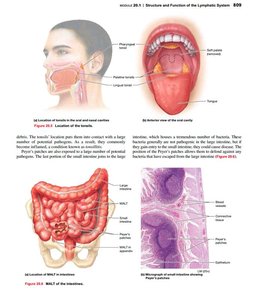
Lymph nodules: Unencapsulated clusters of lymphatic tissue found in mucous membranes (e.g., tonsils, Peyer's patches).
Lymphoid Organs
Primary Lymphoid Organs
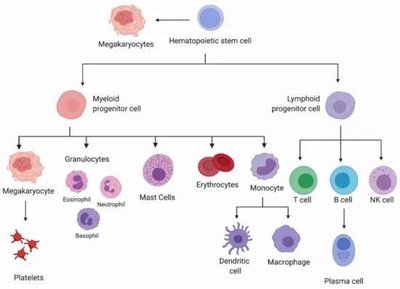
Primary lymphoid organs are where lymphocytes mature and become immunocompetent.
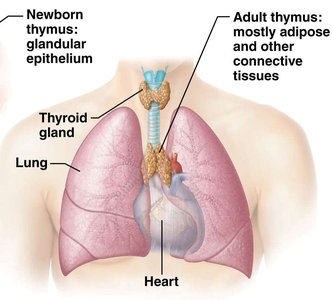
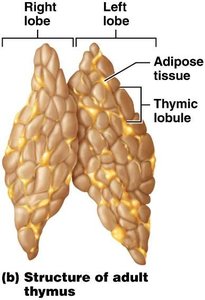
Thymus: Site of T lymphocyte maturation; largest in childhood, located between the sternum and heart.
Red bone marrow: Site of B lymphocyte maturation and hematopoiesis.
Secondary Lymphoid Organs
Secondary lymphoid organs are sites of immune cell activation and response.
Lymph nodes: Filter lymph, trap pathogens, and facilitate immune responses.
Spleen: Largest lymphoid organ; filters blood, removes old erythrocytes, and mounts immune responses.
MALT (Mucosa-Associated Lymphoid Tissue): Includes tonsils, Peyer's patches, and other nodules in mucous membranes.
Overview of the Immune System
Innate and Adaptive Immunity
The immune system is divided into innate (nonspecific) and adaptive (specific) immunity. These two systems work together to defend the body against pathogens.
Innate immunity: Present at birth, provides immediate but nonspecific defense (e.g., skin, mucous membranes, phagocytes).
Adaptive immunity: Develops after exposure to antigens, provides specific and long-lasting protection (e.g., T and B lymphocytes).
Lines of Defense
First line: Physical, chemical, and mechanical barriers (e.g., skin, mucous membranes, secretions).
Second line: Internal defenses (e.g., phagocytes, natural killer cells, inflammation, antimicrobial proteins, fever).
Third line: Adaptive immune responses (antibody-mediated and cell-mediated immunity).
Innate Immunity: First and Second Lines of Defense
First Line of Defense: Barriers
Physical and chemical barriers prevent the entry of pathogens.
Physical: Skin and mucous membranes act as barriers.
Chemical: Secretions such as tears, saliva, sebum, sweat, and gastric juices create hostile environments for microbes.
Mechanical: Actions like urination, defecation, vomiting, and vaginal excretions expel microbes.
Second Line of Defense: Internal Defenses
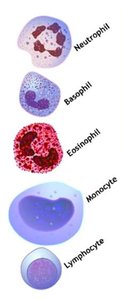
Phagocytic cells: Neutrophils and macrophages ingest and destroy pathogens through chemotaxis, ingestion, and digestion.
Natural killer (NK) cells: Lymphocytes that kill infected or abnormal cells by releasing toxins (perforins, granzymes).
Antimicrobial proteins: Cytokines (e.g., interferons) and complement proteins enhance immune responses and inhibit pathogens.
Fever: Increased body temperature inhibits microbial growth and accelerates tissue repair.
Inflammation: Localized response to tissue damage characterized by redness, swelling, heat, and pain. Stages include vasodilation, phagocyte migration, and tissue repair.
Summary Table: Comparison of Lymphatic and Blood Vessels
Feature | Lymphatic Vessels | Blood Vessels |
|---|---|---|
Function | Return interstitial fluid to blood; immune surveillance | Transport blood throughout the body |
Structure | Thin walls, valves, blind-ended capillaries | Thicker walls, continuous circuit |
Contents | Lymph (fluid, proteins, immune cells) | Blood (cells, plasma, proteins) |
Direction of Flow | One-way toward heart | Closed loop |
Key Terms and Definitions
Lymph: Fluid collected from interstitial spaces, transported by lymphatic vessels.
Lymphocyte: Type of white blood cell involved in adaptive immunity (T cells, B cells, NK cells).
Phagocyte: Cell that engulfs and digests pathogens (e.g., neutrophils, macrophages).
Antigen: Substance that triggers an immune response.
Immunocompetent: Capable of mounting an immune response.
Relevant Equations
Net Filtration Pressure (NFP) in Capillaries:
Where HP = hydrostatic pressure, OP = osmotic pressure, c = capillary, i = interstitial fluid.
Clinical Application: Lymphedema
Lymphedema is swelling caused by the accumulation of lymph due to obstruction or damage to lymphatic vessels. It highlights the importance of proper lymphatic drainage in maintaining tissue fluid balance.

Additional info: The lymphatic and immune systems are structurally and functionally interconnected, with lymphoid organs serving as sites for immune cell maturation, activation, and response. Understanding these systems is essential for comprehending the body's defense mechanisms against disease.
