 Indietro
Lymphatic System and Immunity: Structure, Function, and Integration
Guida di studio - Note intelligenti
 Appunti personalizzati basati sui tuoi materiali, ampliati con definizioni chiave, esempi e contesto.
Lymphatic System: Structure and Function
Overview of the Lymphatic System
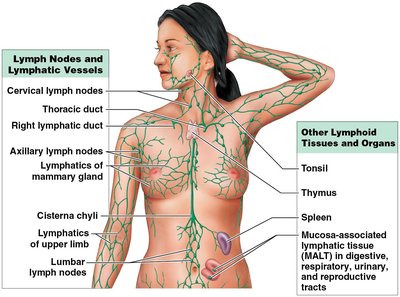
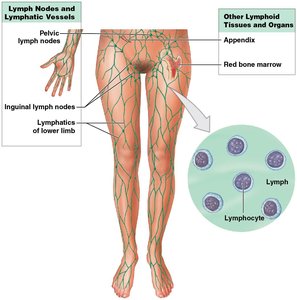
The lymphatic system is a vital component of the body's defense mechanisms, working closely with the circulatory and immune systems to protect against disease and maintain fluid balance. It consists of lymphatic vessels, lymph nodes, lymphoid tissues, and organs.
Lymph: A fluid similar to plasma but lacking plasma proteins, circulating through lymphatic vessels.
Lymphatic vessels: Transport lymph from peripheral tissues back to the venous system.
Lymphoid tissues and organs: Include lymph nodes, tonsils, thymus, spleen, and mucosa-associated lymphoid tissue (MALT).
Lymphoid cells: Mainly lymphocytes, phagocytes, and supportive cells.
Relationship with the Circulatory System
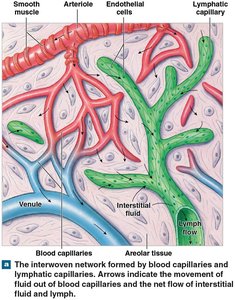
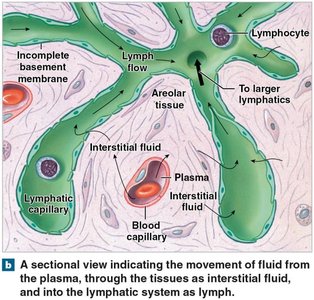
The lymphatic system maintains fluid balance by returning excess interstitial fluid to the bloodstream and transporting nutrients, hormones, and waste products.
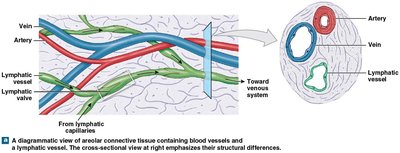
Lymphatic capillaries are closed at one end, have larger diameters, thinner walls, and irregular outlines compared to blood capillaries.
Endothelial cells in lymphatic capillaries overlap, forming one-way valves that allow entry of fluids, solutes, viruses, and bacteria, but prevent their return to intercellular spaces.
Lymphoid Tissues and Organs
Lymphoid Tissues and Nodules
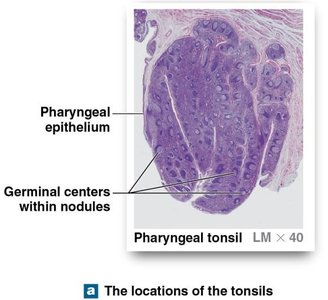
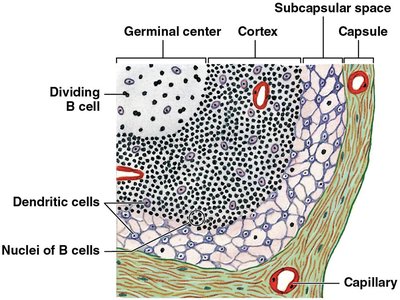
Lymphoid tissues are connective tissues dominated by lymphocytes. Lymphoid nodules are densely packed with lymphocytes and contain germinal centers where lymphocytes divide.
Distributed in lymph nodes, spleen, tonsils, and along digestive, urinary, and reproductive tracts.
Tonsils
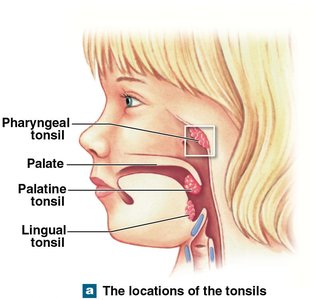
Tonsils are lymphoid tissues located in the pharynx, playing a role in immune defense.
Five tonsils: pharyngeal (adenoid), left and right palatine, and two lingual tonsils.
Tonsillitis is inflammation of the tonsils, especially the palatine tonsils.
Lymph Nodes
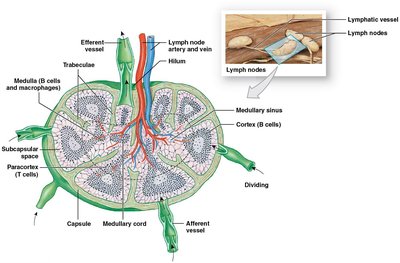
Lymph nodes are encapsulated lymphoid organs that filter lymph and initiate immune responses.
Trabeculae: Bundles of collagen fibers extending from the capsule into the interior.
Hilum: Indentation where blood vessels and nerves enter.
Afferent lymphatics: Carry lymph to the node.
Efferent lymphatics: Carry lymph away from the node to venous circulation.
Thymus
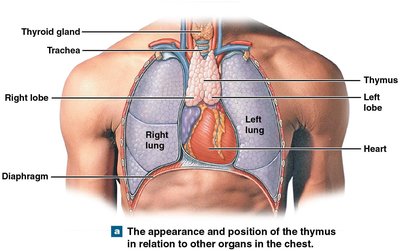
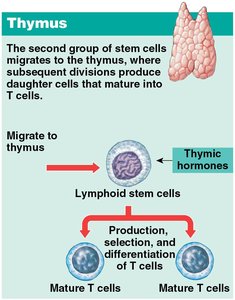
The thymus is a primary lymphoid organ where T lymphocytes mature.
Located in the mediastinum, above the heart.
Has an outer cortex (packed with lymphocytes) and inner medulla.
Produces hormones that regulate T cell development.
Spleen
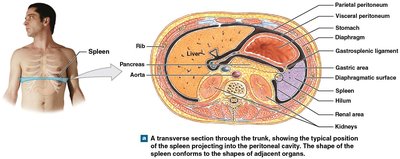
The spleen is the largest lymphoid organ, involved in filtering blood, recycling red blood cells, and initiating immune responses.
Contains red pulp (rich in RBCs) and white pulp (lymphoid tissue).
Located near the left kidney, diaphragm, and stomach.
Vulnerable to rupture due to its soft structure.
Lymphocytes: Types and Functions
Classes of Lymphocytes
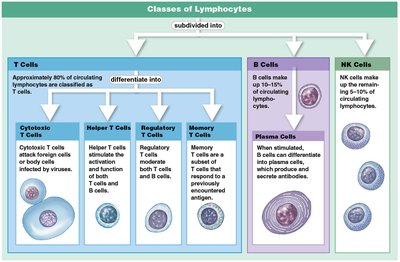
Lymphocytes are central to immune function and are classified into three main types:
T cells: Thymus-dependent, involved in cell-mediated immunity.
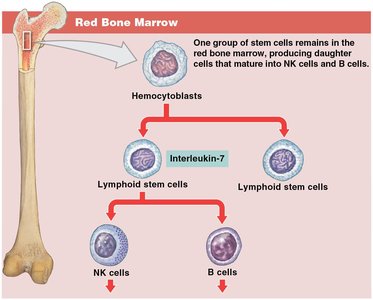
B cells: Bone marrow-derived, responsible for antibody-mediated immunity.
NK cells: Natural killer cells, provide immune surveillance.
Origin and Distribution of Lymphocytes
Lymphocytes originate from stem cells in the red bone marrow and mature in primary lymphoid organs.
Primary lymphoid tissues: Red bone marrow (B cells, NK cells), thymus (T cells).
Secondary lymphoid tissues: Tonsils, MALT, lymph nodes, spleen.
Lymphocytes circulate and are stored in various tissues, surviving for many years.
Immunity: Innate and Adaptive Defenses
Innate (Nonspecific) Immunity
Innate immunity provides immediate, nonspecific defense against pathogens.
Includes physical barriers, phagocytes, inflammatory response, and complement proteins.
Cannot distinguish between different pathogens.
Adaptive (Specific) Immunity
Adaptive immunity is specific to particular pathogens and develops after exposure.
Involves activities of lymphocytes (T cells and B cells).
Includes antibody-mediated and cell-mediated responses.
Key Terms and Their Classification
Term | Innate Immunity | Adaptive Immunity |
|---|---|---|
Phagocyte | ✔ | |
Inflammatory response | ✔ | |
Complement | ✔ | |
Antigen | ✔ | |
Antibody | ✔ | |
T-Cell | ✔ | |
B-Cell | ✔ |
Mechanisms of Immune Response
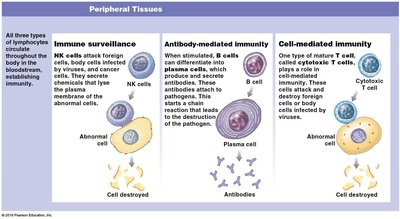
Antibody-mediated immunity: B cells differentiate into plasma cells, which produce antibodies that bind to antigens and neutralize pathogens.
Cell-mediated immunity: T cells (cytotoxic, helper, regulatory, memory) directly attack infected or abnormal cells.
Immune surveillance: NK cells destroy abnormal cells, such as cancer cells, by releasing chemicals that disrupt their membranes.
Integration of the Lymphatic System with Other Body Systems
The lymphatic system interacts with the circulatory, digestive, urinary, and reproductive systems, contributing to fluid balance, immune defense, and transport of nutrients and waste.
MALT is distributed in digestive, respiratory, urinary, and reproductive tracts, providing localized immune protection.
Lymphatic vessels return excess interstitial fluid to the bloodstream, maintaining blood volume and pressure.
Summary Table: Major Structures and Functions of the Lymphatic System
Structure | Main Function |
|---|---|
Lymphatic vessels | Transport lymph, return fluid to bloodstream |
Lymph nodes | Filter lymph, initiate immune response |
Tonsils | Protect against pathogens entering via mouth/nose |
Thymus | Maturation of T cells |
Spleen | Filter blood, recycle RBCs, immune response |
MALT | Localized immune defense in mucosal tissues |
Key Equations and Concepts
Fluid Movement Equation
The movement of fluid between blood capillaries and lymphatic capillaries is governed by hydrostatic and osmotic pressures:
Net filtration pressure (NFP) determines the direction of fluid movement.
Antibody Structure
Antibodies are Y-shaped proteins composed of two heavy and two light chains, with variable regions that bind to specific antigens.
Antibody-antigen binding triggers neutralization, agglutination, and activation of complement.
Conclusion
The lymphatic system is essential for immune defense, fluid balance, and integration with other body systems. Understanding its structure and function is crucial for comprehending the body's response to infection and disease.
