 Indietro
Male Reproductive System: Structure, Function, and Physiology
Guida di studio - Note intelligenti
 Appunti personalizzati basati sui tuoi materiali, ampliati con definizioni chiave, esempi e contesto.
Male Reproductive System
Overview and Function
The male reproductive system is specialized for the production, maturation, and delivery of male gametes (spermatozoa) and the secretion of sex hormones. Its primary functions include the survival of the species, production and transport of gametes, facilitation of fertilization, and support of progeny development.
Production of Gametes: The testes produce sperm cells through the process of spermatogenesis.
Transport and Delivery: A series of ducts and accessory glands transport and support sperm, culminating in deposition into the female reproductive tract.
Hormonal Regulation: The testes also secrete testosterone, which regulates male secondary sexual characteristics and reproductive function.
Human Life Cycle and Gametogenesis
Chromosome Inheritance and Meiosis
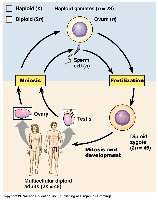
Humans inherit half of their chromosomes from each parent. The gonads (testes in males) undergo meiosis to produce haploid gametes, ensuring genetic diversity and the correct chromosome number in offspring.
Meiosis I: Homologous chromosomes are assorted and separated, reducing chromosome number from diploid (2n) to haploid (n).
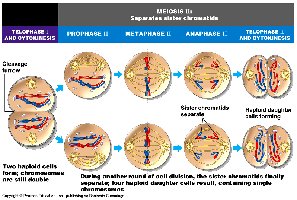
Meiosis II: Sister chromatids are separated, resulting in gametes with one chromatid per chromosome.
Stages of Meiosis
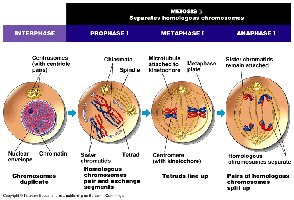
Meiosis consists of two sequential divisions: Meiosis I (separates homologous chromosomes) and Meiosis II (separates sister chromatids). This process is essential for gamete formation and genetic variation.
Interphase: Chromosomes duplicate.
Prophase I: Homologous chromosomes pair and exchange genetic material (crossing over).
Metaphase I: Tetrads align at the metaphase plate.
Anaphase I: Homologous chromosomes separate.
Meiosis II: Similar to mitosis, separates sister chromatids.
Mitosis vs. Meiosis
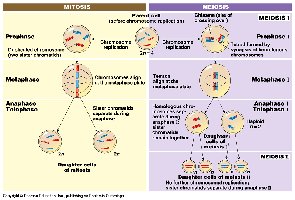
Mitosis and meiosis are both forms of cell division, but they serve different purposes and result in different outcomes.
Mitosis: Produces two genetically identical diploid cells for growth and repair.
Meiosis: Produces four genetically unique haploid gametes for sexual reproduction.
Male Reproductive Anatomy
Gross Anatomy of the Male Reproductive Tract
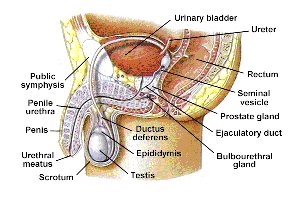
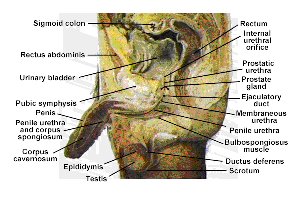
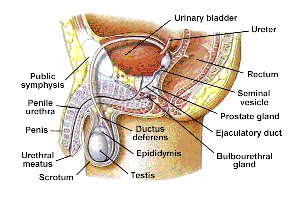
The male reproductive system includes the testes, duct system, accessory glands, and external genitalia. Each structure plays a specific role in the production, maturation, and delivery of sperm.
Testis: Site of sperm and testosterone production.
Epididymis: Sperm maturation and storage.
Ductus (vas) deferens: Transports sperm from epididymis to ejaculatory duct.
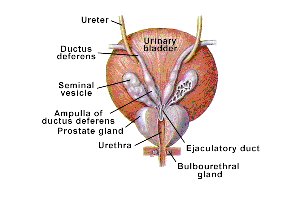
Accessory glands: Seminal vesicle, prostate gland, and bulbourethral gland add fluids to form semen.
Penis: Organ for copulation and sperm delivery.
Sperm Structure and Function
Human Sperm Anatomy
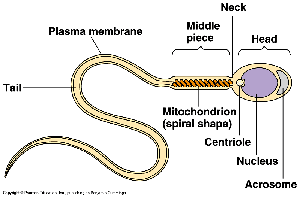
Spermatozoa are highly specialized cells designed for motility and fertilization. Each part of the sperm has a distinct function:
Head: Contains the nucleus (genetic material) and acrosome (enzymes for penetrating the egg).
Midpiece: Packed with mitochondria to provide energy for movement.
Tail (flagellum): Propels the sperm forward.
Spermatogenesis and Spermiogenesis
Spermatogenesis: Formation of Sperm
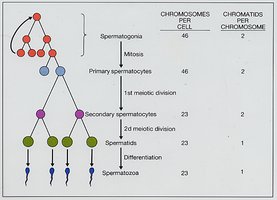
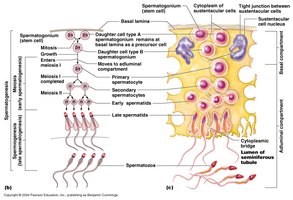
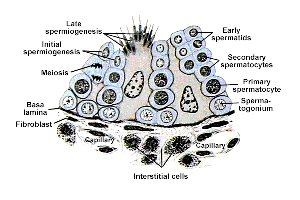
Spermatogenesis is the process by which sperm are produced in the seminiferous tubules of the testes. It involves mitosis, meiosis, and cellular differentiation.
Spermatogonia: Stem cells that divide by mitosis.
Primary spermatocytes: Undergo meiosis I to form secondary spermatocytes.
Secondary spermatocytes: Undergo meiosis II to form spermatids.
Spermatids: Differentiate into mature spermatozoa (spermiogenesis).
Spermiogenesis: Maturation of Sperm
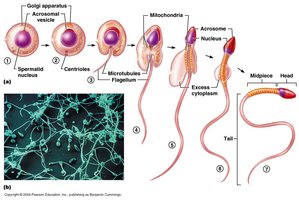
Spermiogenesis is the final stage of spermatogenesis, where spermatids undergo morphological changes to become mature spermatozoa.
Formation of acrosome: Contains enzymes for egg penetration.
Condensation of nucleus: Genetic material becomes tightly packed.
Development of flagellum: Enables motility.
Shedding of excess cytoplasm: Streamlines the cell for movement.
Testicular Structure and Function
Testis and Seminiferous Tubules
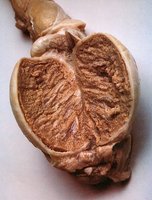
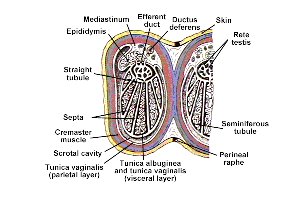
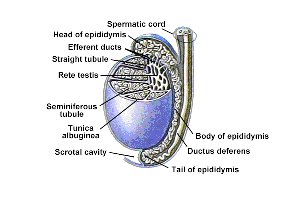
The testes are divided into lobules containing seminiferous tubules, where spermatogenesis occurs. The spermatic cord and associated structures support and regulate testicular function.
Seminiferous tubules: Site of sperm production.
Sertoli cells: Support and nourish developing sperm.
Leydig cells: Produce testosterone.
Male Duct System
Sperm Transport Pathway
Sperm produced in the seminiferous tubules are transported through a series of ducts before ejaculation.
Epididymis: Sperm mature and are stored here.
Ductus deferens: Transports sperm during ejaculation.
Ejaculatory duct: Receives sperm from ductus deferens and secretions from seminal vesicles.
Urethra: Conducts semen to the exterior.
Accessory Sex Glands
Seminal Fluid and Gland Functions
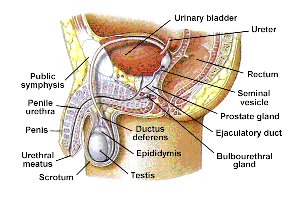
Accessory sex glands add seminal fluid to sperm, forming semen. These fluids nourish sperm, neutralize acidic environments, and facilitate sperm motility.
Seminal vesicles: Contribute ~60% of semen volume; provide fructose and prostaglandins.
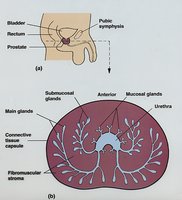
Prostate gland: Adds ~30% of semen volume; contains enzymes and alkaline fluid.
Bulbourethral (Cowper's) glands: Secrete mucus for lubrication and pH buffering.
Scrotum and Testicular Temperature Regulation
Scrotum and Spermatic Cord
The scrotum and spermatic cord provide physical support and regulate the temperature of the testes, which is essential for optimal spermatogenesis.
Cremaster muscle: Raises or lowers the testes to regulate temperature.
Pampiniform plexus: Acts as a countercurrent heat exchanger to cool arterial blood entering the testes.
Penis: Structure and Erectile Tissue
Penile Anatomy and Erectile Mechanism
The penis contains erectile tissues (corpora cavernosa and corpus spongiosum) that fill with blood during arousal, resulting in erection. The penis serves as the organ of copulation and sperm delivery.
Corpus cavernosum: Paired erectile bodies responsible for most of the rigidity during erection.
Corpus spongiosum: Surrounds the urethra and prevents its compression during erection.
Male Sexual Response
Phases of Sexual Response
The male sexual response consists of arousal (erection), plateau, orgasm (emission and ejaculation), and resolution. These phases are regulated by both the nervous and endocrine systems.
Arousal: Triggered by sensory and psychological stimuli; involves parasympathetic-mediated vasodilation and nitric oxide release.
Plateau: Increased blood flow and muscle tension; bulbourethral glands secrete lubricating fluid.
Orgasm: Emission (movement of semen into urethra) and ejaculation (expulsion of semen) are mediated by spinal reflexes and sympathetic stimulation.
Resolution: Return to baseline physiological state; refractory period follows ejaculation.
Summary Table: Key Structures and Functions
Structure | Function |
|---|---|
Testis | Produces sperm and testosterone |
Epididymis | Sperm maturation and storage |
Ductus deferens | Transports sperm during ejaculation |
Seminal vesicle | Secretes fructose-rich fluid |
Prostate gland | Secretes alkaline fluid and enzymes |
Bulbourethral gland | Secretes mucus for lubrication |
Penis | Organ of copulation and sperm delivery |
Key Equations
Chromosome Reduction in Meiosis:
$\text{Diploid} \ (2n) \xrightarrow{\text{Meiosis}} \text{Haploid} \ (n)$
Sperm Production: Each primary spermatocyte yields four spermatozoa after meiosis and differentiation.
Additional info: The notes above integrate foundational concepts from human anatomy and physiology, focusing on the male reproductive system, its structures, and physiological processes. Images were included only when directly relevant to the adjacent content for optimal educational clarity.
