 Indietro
Membrane Transport and Cell Membrane Structure: Study Notes for Anatomy & Physiology
Guida di studio - Note intelligenti
 Appunti personalizzati basati sui tuoi materiali, ampliati con definizioni chiave, esempi e contesto.
Les Transports Membranaires
Introduction
Membrane transport is a fundamental concept in cell biology and physiology, describing how substances move across the cell membrane. The cell membrane is not just a passive barrier; its structure enables selective permeability, communication, and recognition, all essential for cellular function.
La Membrane Plasmique
Structure et Fonctions
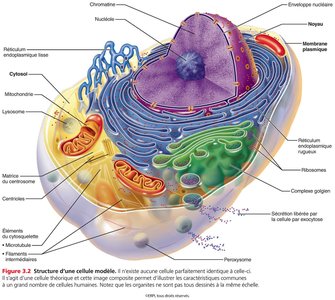
The plasma membrane is a thin, dynamic structure (7–10 nm) composed mainly of a double layer of phospholipids and cholesterol. It actively participates in cellular activities through several key functions:
Barrière physique: Delimits the cell and separates the cytoplasm from the extracellular fluid.
Perméabilité sélective: Controls what enters and exits the cell.
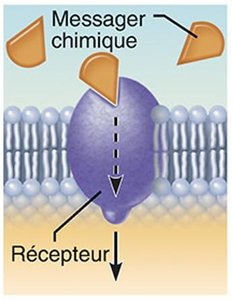
Communication: Membrane proteins respond to chemical signals.
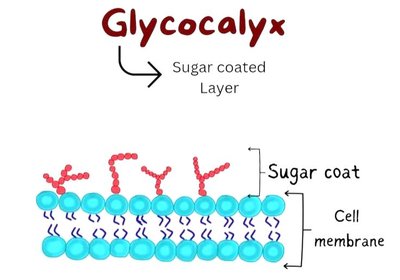
Reconnaissance cellulaire: Surface carbohydrates allow cells to recognize each other.
Les Lipides Membranaires
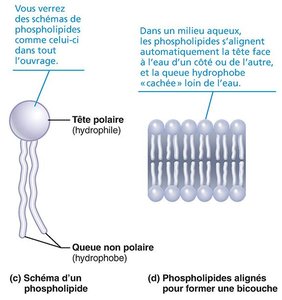
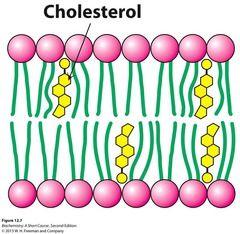
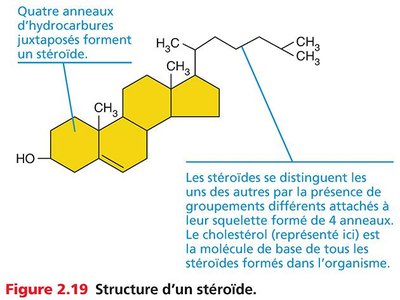
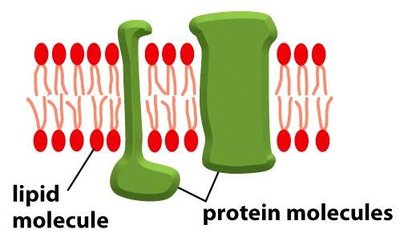
Phospholipids are amphipathic molecules with a hydrophilic (polar) head and hydrophobic (non-polar) tails. In aqueous environments, they form a bilayer, with heads facing water and tails hidden from it. Cholesterol, up to 20% of membrane lipids, inserts between phospholipids, stabilizing the membrane and reducing their mobility.
Phospholipides: Provide fluidity and structural integrity.
Cholestérol: Modulates membrane fluidity and stability.
Les Protéines Membranaires
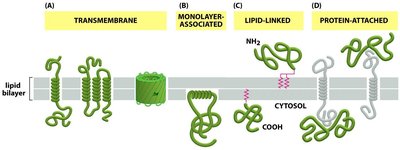
Membrane proteins constitute about half the mass of the plasma membrane and are responsible for most specialized functions. They are classified as:
Protéines intégrales: Embedded within the lipid bilayer, including transmembrane proteins.
Protéines périphériques: Attached to the membrane surface (cytoplasmic or extracellular).
Fonctions des Protéines Membranaires
Membrane proteins perform various functions:
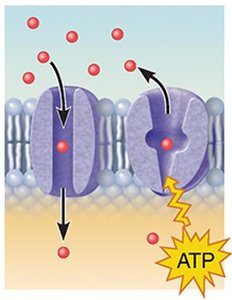
Transport membranaire: Facilitate movement of substances across the membrane.
Réception de signaux: Act as receptors for chemical messengers.
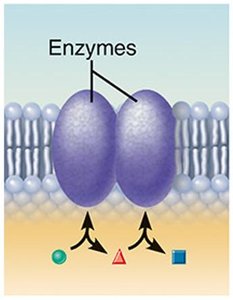
Activité enzymatique: Catalyze reactions at the membrane surface.
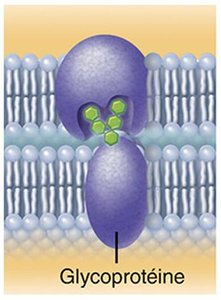
Reconnaissance intercellulaire: Glycoproteins serve as identification tags.
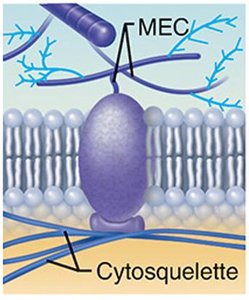
Ancrage: Attach to cytoskeleton or extracellular matrix (ECM).
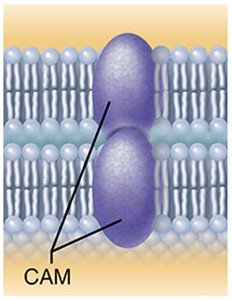
Connexion aux autres cellules: Form intercellular junctions.
Le Principe de la Diffusion
Définition et Facteurs
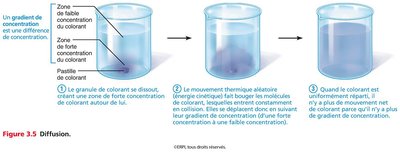
Diffusion is the movement of molecules and ions from an area of high concentration to low concentration, driven by their kinetic energy. Factors influencing diffusion speed include:
Taille des molécules: Smaller molecules diffuse faster.
Température: Higher temperature increases diffusion rate.
Gradient de concentration: Greater difference increases diffusion rate.
La Perméabilité Membranaire
Contrôle du Transit
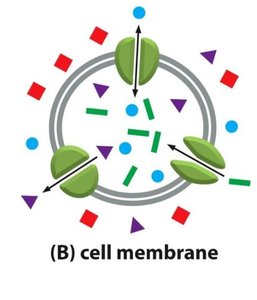
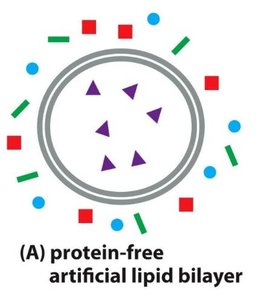
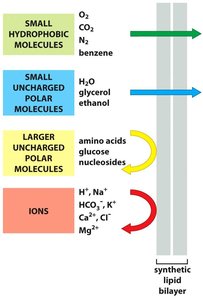
The plasma membrane acts as a chemical barrier, controlling the movement of molecules. It is:
Perméable: To small, non-polar, lipid-soluble molecules (e.g., O2, CO2).
Semi-perméable: To small, uncharged, polar molecules (e.g., H2O).
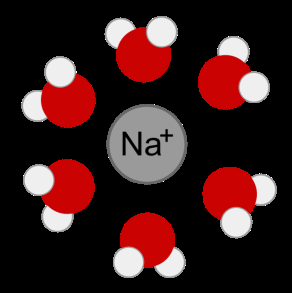
Imperméable: To large polar molecules (e.g., glucose) and ions (e.g., Na+, Cl-).
Le Transport Membranaire
Modes de Transport
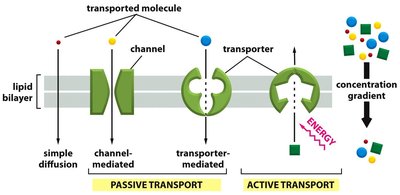
Substances move across the plasma membrane via two main modes:
Transport passif: Movement along the concentration gradient, no energy required.
Transport actif: Movement against the concentration gradient, requires energy (ATP).
Transport Passif
Passive transport includes:
Diffusion simple: Direct movement through the lipid bilayer (e.g., gases, alcohol, steroid hormones).
Diffusion facilitée: Movement via membrane proteins (transporters and channels) for polar molecules and ions.
Osmose: Diffusion of water through the membrane, either directly or via aquaporins.
Diffusion Facilitée
Facilitated diffusion occurs via:
Transporteurs: Specific binding and conformational change for polar molecules (e.g., glucose, amino acids).
Canaux protéiques: Form channels for ions (ion channels) or water (aquaporins).
L’Osmose
Osmosis is the net movement of water across a selectively permeable membrane. It requires:
A concentration gradient.
A semi-permeable membrane.
Water moves from regions of higher concentration to lower concentration, inversely proportional to solute concentration.
Le Transport Membranaire Actif
Définition et Types
Active transport moves solutes against their concentration gradient, requiring energy. Types include:
Transport actif primaire: Direct use of ATP (solute pumps).
Transport actif secondaire: Uses energy stored in ion gradients (cotransport).
Particularités de l’ATP
ATP (adenosine triphosphate) is the main energy transfer molecule in cells. Hydrolysis of its phosphate bonds releases energy.
AMP: Adenosine + 1 phosphate
ADP: Adenosine + 2 phosphates
ATP: Adenosine + 3 phosphates
Le Transport Actif Primaire
Primary active transport uses ATP hydrolysis to phosphorylate pumps, changing their conformation and enabling solute movement. Main systems:
Na+-K+ ATPase: Maintains intracellular Na+ and K+ concentrations.
Ca2+ ATPase: Removes Ca2+ from cells or stores it in organelles.
H+ ATPase: Acidifies organelles or extracellular space.
Le Transport Actif Secondaire
Secondary active transport uses cotransporters to couple the downhill movement of one solute (e.g., Na+) to the uphill movement of another. Cotransporters have two binding sites and are not ATPases.
Symport: Both substances move in the same direction.
Antiport: Substances move in opposite directions.
Les Gradients Ionique Cellulaires
Importance et Comparaison
Ion gradients are established by membrane pumps and selective permeability. They are essential for nutrient transport, cell volume maintenance, nerve impulse transmission, and muscle contraction.
Soluté | Extracellulaire | Intracellulaire |
|---|---|---|
Na+ | 142 mM | 10 mM |
K+ | 4 mM | 140 mM |
Ca2+ | 1.2 mM | 0.0001 mM |
Cl- | 105 mM | 4 mM |
HCO3- | 24 mM | 10 mM |
Glucose | 5 mM | 0-1 mM |
pH | 7.4 | 7.0 |
L’Osmolarité et la Tonicité
Définitions
Osmolarity measures the concentration of osmotically active particles in a solution. Tonicity describes a solution's ability to change cell shape by altering water volume.
Isotonique: Equal solute concentration as cells.
Hypertonique: Higher solute concentration than cells.
Hypotonique: Lower solute concentration than cells.
Le Transport Vésiculaire
Définition et Types
Vesicular transport involves moving large particles and macromolecules across the cell membrane in membrane-bound sacs (vesicles). It is an active process requiring ATP.
Endocytose: Import and degradation of extracellular molecules.
Exocytose: Export of molecules to the cell surface or outside.
Transcytose: Substance enters, traverses, and exits the cell.
Types d’Endocytose
Phagocytose: Ingestion of large insoluble particles via pseudopods.
Pinocytose: Ingestion of small droplets of liquid and solutes.
Endocytose par récepteurs: Specific uptake via membrane receptors.
Exocytose
Exocytosis expels intracellular substances into the interstitial fluid, enabling hormone secretion, neurotransmitter release, and mucus secretion. It involves v-SNARE and t-SNARE proteins for vesicle targeting.
Additional info: Some explanations and table entries were expanded for academic completeness.
