 Indietro
Membrane Transport and the Plasma Membrane: Structure and Function
Guida di studio - Note intelligenti
 Appunti personalizzati basati sui tuoi materiali, ampliati con definizioni chiave, esempi e contesto.
Membrane Transport and the Plasma Membrane
Plasma Membrane: Structure and Function
The plasma membrane is a dynamic barrier that separates the intracellular fluid (ICF) from the extracellular fluid (ECF). It plays a crucial role in cellular activity by regulating what enters and leaves the cell. The membrane is often described by the fluid mosaic model, which depicts a moving, flexible membrane composed of various molecules.
Phospholipid Bilayer: The membrane consists of a double layer of phospholipids, with hydrophilic (water-loving) phosphate heads facing outward and hydrophobic (water-hating) fatty acid tails facing inward.
Cholesterol: Interspersed among the phospholipids, cholesterol increases membrane stiffness and stability.
Proteins: Embedded proteins serve various functions, including transport, enzymatic activity, and cell signaling.
Carbohydrates: Surface sugars form the glycocalyx, which is important for cell recognition and protection.
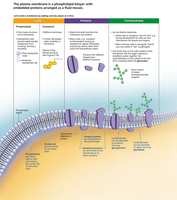
Example: The plasma membrane's selective permeability allows nutrients to enter while keeping out harmful substances and retaining essential molecules.
Phospholipid Structure
Phospholipids are the primary building blocks of the plasma membrane. Each phospholipid molecule has a polar, hydrophilic head and two nonpolar, hydrophobic tails.
Hydrophilic Head: Faces the water inside and outside the cell.
Hydrophobic Tails: Hide from water, forming the interior of the membrane.
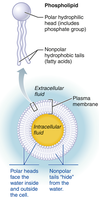
Example: This arrangement creates a barrier that prevents free passage of water-soluble substances.
Membrane Proteins
Membrane proteins are essential for communication, transport, and structural support. They make up about half the mass of the plasma membrane and are classified as integral or peripheral proteins.
Integral Proteins: Span the membrane and have both hydrophobic and hydrophilic regions. Functions include transport, enzymatic activity, and acting as receptors.
Peripheral Proteins: Loosely attached to integral proteins or membrane surface. Functions include enzymatic activity, cell shape changes, and cell-to-cell connections.
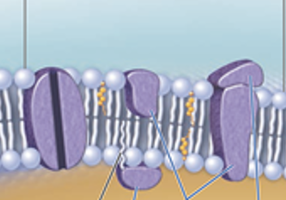
Example: Transport proteins form channels or carriers for molecules to cross the membrane.
Functions of Membrane Proteins
Membrane proteins perform a variety of tasks, including transport, signal reception, and enzymatic activity.
Transport: Proteins create hydrophilic channels or act as carriers to move substances across the membrane. Pumps use ATP to drive transport against concentration gradients.
Receptors: Proteins with extracellular binding sites receive chemical messengers (e.g., hormones), triggering signal transduction inside the cell.
Enzymes: Membrane-bound enzymes catalyze reactions, often as part of metabolic pathways.
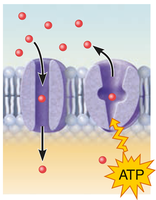
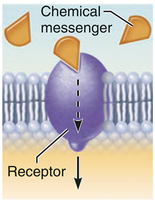
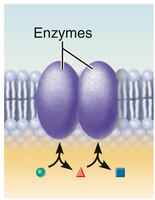
Example: The sodium-potassium pump is a transport protein that uses ATP to maintain cellular ion balance.
Membrane Transport Mechanisms
Substances cross the plasma membrane by passive or active transport mechanisms.
Passive Transport: Does not require energy. Includes simple diffusion, facilitated diffusion, and osmosis.
Active Transport: Requires energy (ATP) to move substances against their concentration gradient. Includes primary and secondary active transport, as well as vesicular transport.
Key Point: The plasma membrane's selective permeability is essential for maintaining cellular homeostasis.
Summary Table: Components and Functions of the Plasma Membrane
Component | Structure | Function |
|---|---|---|
Phospholipids | Bilayer with hydrophilic heads and hydrophobic tails | Barrier, selective permeability |
Cholesterol | Interspersed among phospholipids | Stabilizes membrane, increases stiffness |
Proteins | Integral and peripheral | Transport, receptors, enzymes, structural support |
Carbohydrates | Glycocalyx on membrane surface | Cell recognition, protection |
Additional info: The fluid mosaic model emphasizes the dynamic and adaptable nature of the plasma membrane, allowing cells to respond to environmental changes.
