 Indietro
Metabolism and Energy Balance: Study Notes for Anatomy & Physiology
Guida di studio - Note intelligenti
 Appunti personalizzati basati sui tuoi materiali, ampliati con definizioni chiave, esempi e contesto.
Metabolism and Energy Balance
Overview of Metabolic Pathways
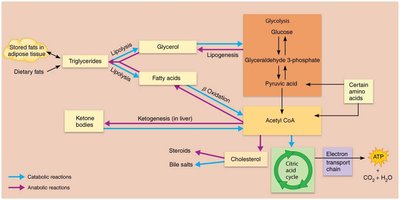
Metabolism encompasses all chemical reactions involved in maintaining the living state of cells and organisms. It includes both catabolic (breakdown) and anabolic (synthesis) processes, which are essential for energy production, storage, and utilization.
Catabolism: Breakdown of complex molecules to release energy.
Anabolism: Synthesis of complex molecules from simpler ones, requiring energy input.
Carbohydrate Metabolism
Carbohydrates are a primary energy source for cells. Their metabolism involves several key pathways:
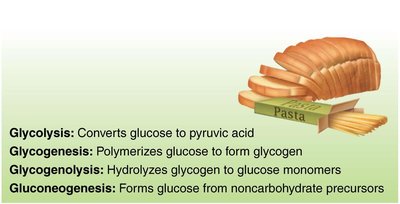
Glycolysis: Converts glucose to pyruvic acid, generating ATP.
Glycogenesis: Polymerizes glucose to form glycogen for storage.
Glycogenolysis: Hydrolyzes glycogen to release glucose monomers.
Gluconeogenesis: Forms glucose from noncarbohydrate precursors, such as amino acids and glycerol.
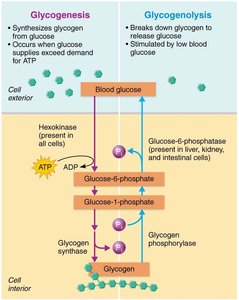
Glycogenesis and glycogenolysis are regulated by enzymes and occur primarily in the liver and skeletal muscle. Glycogenesis is catalyzed by glycogen synthase, while glycogenolysis is catalyzed by glycogen phosphorylase.
Gluconeogenesis
Gluconeogenesis is the process of synthesizing glucose from noncarbohydrate sources, mainly in the liver. It is crucial during periods of fasting or low carbohydrate intake to maintain blood glucose levels, especially for the nervous system.
Lipid Metabolism
Lipids provide a greater energy yield than carbohydrates or proteins. The main pathways include:
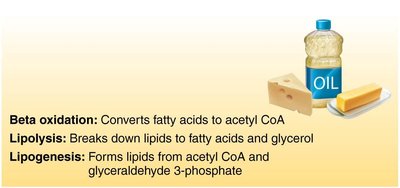
Lipogenesis: Synthesis of triglycerides from acetyl CoA and glyceraldehyde 3-phosphate, occurring when ATP and glucose levels are high.
Lipolysis: Breakdown of stored fats into fatty acids and glycerol, preferred by liver, cardiac muscle, and resting skeletal muscle for fuel.
Beta oxidation: Converts fatty acids to acetyl CoA, which enters the citric acid cycle (CAC).
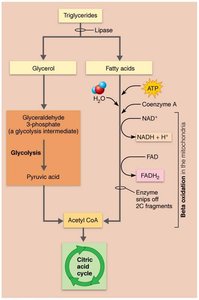
Triglycerides are hydrolyzed by lipase into glycerol and fatty acids. Glycerol enters glycolysis, while fatty acids undergo beta oxidation to produce acetyl CoA.
Protein Metabolism
Proteins are continually broken down and replaced. Amino acids are recycled or used for energy, but excess amino acids are not stored and are either oxidized or converted to fat.
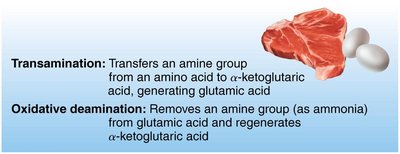
Transamination: Transfers an amine group from an amino acid to α-ketoglutaric acid, generating glutamic acid.
Oxidative deamination: Removes the amine group as ammonia, which is converted to urea for excretion.
Keto acid modification: Alters keto acids to produce metabolites that enter the citric acid cycle.
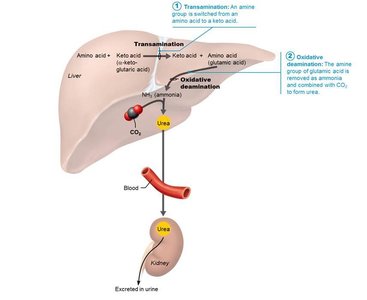
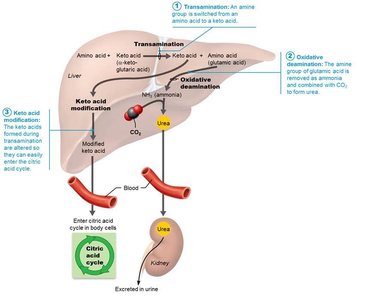
Deamination is the first step in amino acid breakdown, producing molecules that can be used for energy or gluconeogenesis.
Catabolic-Anabolic Steady State
The body maintains a dynamic steady state where organic molecules are continuously broken down and rebuilt. Nutrient pools of amino acids, carbohydrates, and fats are interconvertible, directed by the liver, adipose tissue, and skeletal muscle.
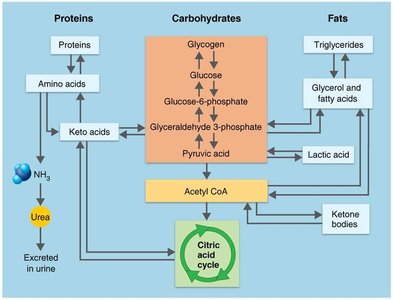
Absorptive and Postabsorptive States
Absorptive State
The absorptive state lasts about four hours after eating, during which anabolism exceeds catabolism and excess nutrients are stored.
Carbohydrates: Glucose is used for energy or stored as glycogen or fat.
Triglycerides: Used by tissues for energy or stored in adipose tissue.
Amino acids: Used for protein synthesis or converted to fat.
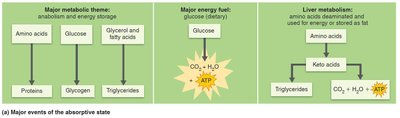
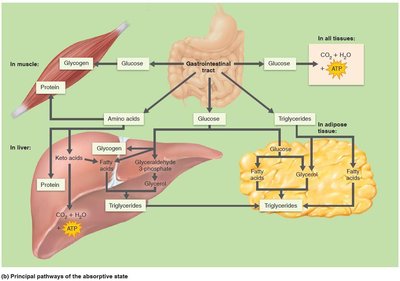
Hormonal Control of Absorptive State
Insulin is the primary hormone controlling the absorptive state. It promotes glucose uptake, glycogen and triglyceride formation, and protein synthesis, while inhibiting gluconeogenesis.
Postabsorptive State
The postabsorptive (fasting) state occurs when the GI tract is empty and energy sources are supplied by breakdown of reserves. The goal is to maintain blood glucose by making glucose available and promoting fat use for energy.
Sources of blood glucose: Glycogenolysis in liver and muscle, lipolysis in adipose tissue, and catabolism of cellular protein during prolonged fasting.
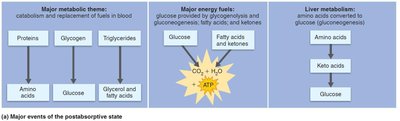
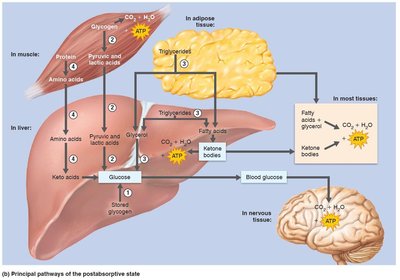
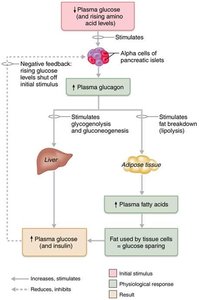
Hormonal and Neural Controls of Postabsorptive State
The sympathetic nervous system and hormones such as glucagon, epinephrine, growth hormone, thyroxine, and corticosteroids regulate the postabsorptive state. Glucagon stimulates glycogenolysis, gluconeogenesis, and lipolysis.
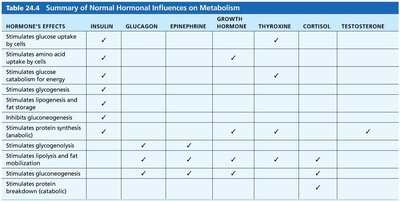
Hormone | Stimulates Glucose Uptake | Stimulates Glycogenolysis | Stimulates Gluconeogenesis | Stimulates Lipolysis | Stimulates Protein Synthesis |
|---|---|---|---|---|---|
Insulin | ✓ | ✓ | |||
Glucagon | ✓ | ✓ | ✓ | ||
Epinephrine | ✓ | ✓ | ✓ | ||
Growth Hormone | ✓ | ✓ | ✓ | ||
Thyroxine | ✓ | ✓ | |||
Cortisol | ✓ | ✓ | |||
Testosterone | ✓ |
Metabolic Role of the Liver
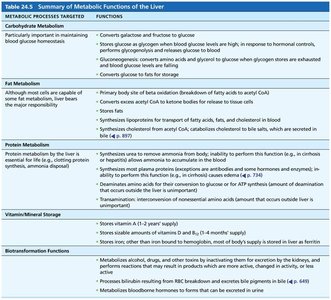
The liver is central to metabolism, processing nearly every class of nutrient and regulating plasma cholesterol levels. It stores vitamins and minerals, metabolizes alcohol, drugs, hormones, and bilirubin, and synthesizes transport lipoproteins.
Cholesterol Metabolism and Transport
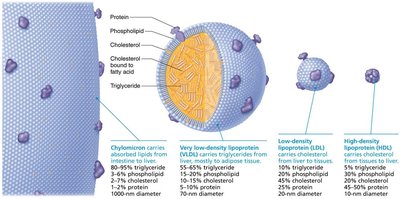
Cholesterol is not used for energy but is essential for bile salts, steroid hormones, and vitamin D. Lipoproteins transport cholesterol and triglycerides in the blood:
HDLs: High-density lipoproteins, highest protein content, remove cholesterol from blood.
LDLs: Low-density lipoproteins, highest cholesterol content, deposit cholesterol in vessels.
VLDLs: Very low-density lipoproteins, mostly triglycerides.
Chylomicrons: Almost entirely triglycerides, lowest density.
Factors Regulating Blood Cholesterol
Liver produces cholesterol at a basal level regardless of dietary intake. Saturated fats increase cholesterol synthesis, while unsaturated fats enhance excretion. Trans fats increase LDL and decrease HDL. Aerobic exercise and estrogen increase HDL and decrease LDL.
Energy Balance and Regulation of Food Intake
Energy Balance
Energy intake equals energy output for stable weight. Body mass index (BMI) is used to assess obesity:
BMI Formula:
Regulation of Food Intake
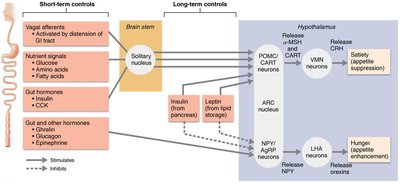
Food intake is regulated by neural and hormonal signals, as well as psychological and environmental factors. The hypothalamus integrates these signals to control hunger and satiety.
Metabolic Rate
Metabolic rate is the total heat produced by chemical reactions and mechanical work. Basal metabolic rate (BMR) reflects energy needed for essential activities and is influenced by age, gender, temperature, stress, and thyroxine levels.
Total Metabolic Rate (TMR)
TMR is the rate of kilocalorie consumption to fuel all ongoing activities, including BMR, skeletal muscle activity, and food-induced thermogenesis.
Clinical Considerations
Hyperthyroidism: High BMR, weight loss, muscle and bone weakening.
Hypothyroidism: Slowed metabolism, obesity, diminished thought processes.
Summary Table: Metabolic Functions of the Liver
Metabolic Process | Function |
|---|---|
Carbohydrate Metabolism | Converts galactose and fructose to glucose; stores glucose as glycogen; releases glucose as needed; converts glucose to fat. |
Fat Metabolism | Primary site of beta oxidation; generates ketone bodies; synthesizes lipoproteins and cholesterol; uses cholesterol for bile salts. |
Protein Metabolism | Synthesizes plasma proteins; deaminates amino acids; converts ammonia to urea; synthesizes nonessential amino acids. |
Vitamin/Mineral Storage | Stores vitamins A, D, B12, and iron. |
Biotransformation | Metabolizes alcohol, drugs, hormones, and bilirubin; detoxifies blood. |
