 Indietro
Metabolism and Nutrition: Study Guide for Anatomy & Physiology
Guida di studio - Note intelligenti
 Appunti personalizzati basati sui tuoi materiali, ampliati con definizioni chiave, esempi e contesto.
Metabolism and Nutrition
Introduction to Metabolism
Metabolism refers to the sum of all chemical reactions occurring in the body, organized into metabolic pathways. These reactions are catalyzed by enzymes and are essential for harnessing energy from nutrients, synthesizing macromolecules, and breaking down molecules for cellular function.
Metabolic Pathways: Series of enzyme-catalyzed reactions.
Calorie: Unit of heat; one calorie raises 1g of water by 1°C.
Kilocalorie: Raises 1kg of water by 1°C; used in dietary measurements.
Phases of Metabolism
Metabolism is divided into two main phases: catabolism and anabolism.
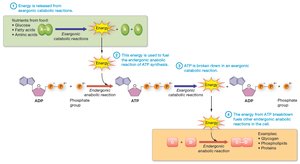
Catabolism: Breakdown of molecules, releasing energy. Includes breakdown of glucose, fatty acids, and amino acids.
Anabolism: Synthesis of larger molecules from smaller ones, requiring energy. Includes synthesis of proteins, nucleic acids, lipids, and carbohydrates.
Exergonic vs. Endergonic Reactions
Exergonic: Release energy (mostly catabolic).
Endergonic: Require energy input (mostly anabolic).
Adenosine Triphosphate (ATP) & Phosphorylation
ATP is the primary energy currency in cells. Its hydrolysis releases energy used for cellular processes and phosphorylation reactions.
ATP Structure: Contains three phosphate groups; bonds are unstable and release energy when broken.
Hydrolysis: ATP → ADP + Pi; highly exergonic, releases energy and heat.
Phosphorylation: ATP donates a phosphate group to a reactant, making it more reactive.
Oxidation–Reduction Reactions
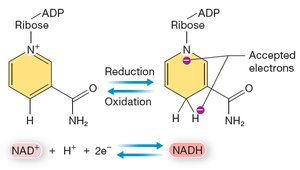
These reactions involve the transfer of electrons, releasing energy and heat. Catabolic pathways often involve oxidation of molecules, transferring electrons to electron carriers.
LEO goes GER: Loss of Electrons is Oxidation; Gain of Electrons is Reduction.
Electron Carriers: NAD and FAD accept electrons during catabolism.
Glucose Catabolism and ATP Generation
Steps of Glucose Catabolism
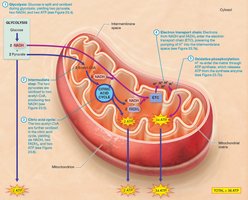
Glucose catabolism is the process of breaking down glucose to generate ATP. It consists of four main steps:
Glycolysis: Occurs in cytosol; produces pyruvate.
Intermediate Step: Pyruvate enters mitochondria and is converted to Acetyl CoA.
Citric Acid Cycle (Krebs Cycle): Acetyl CoA enters cycle; electrons are transferred to NADH and FADH2.
Electron Transport Chain (ETC): NADH and FADH2 transfer electrons, leading to ATP synthesis.
Glycolysis
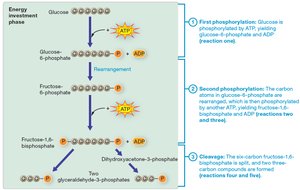
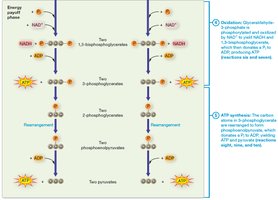
Glycolysis is the first step in glucose catabolism, converting glucose into pyruvate and generating ATP and NADH.
Energy Investment Phase: Glucose is phosphorylated and rearranged.
Energy Payoff Phase: ATP and NADH are produced; pyruvate is formed.
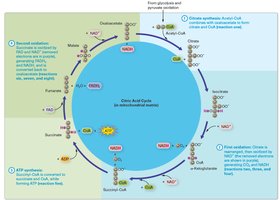
Citric Acid Cycle (Krebs Cycle)
The citric acid cycle occurs in the mitochondrial matrix and completes the oxidation of glucose derivatives, producing NADH, FADH2, and ATP.
Each glucose: Cycle turns twice, generating multiple electron carriers.
CO2: Released as a byproduct.
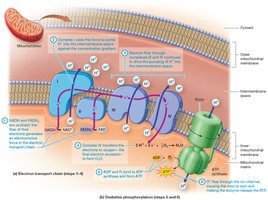
Electron Transport Chain (ETC) and Oxidative Phosphorylation
The ETC is located in the inner mitochondrial membrane and is responsible for the majority of ATP production via oxidative phosphorylation.
Electron Transfer: Electrons from NADH and FADH2 are passed through protein complexes.
ATP Synthase: Uses proton gradient to synthesize ATP.
Oxygen: Final electron acceptor, forming water.
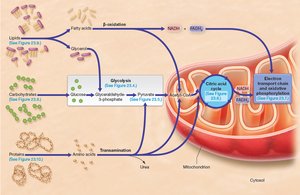
The Big Picture of Nutrient Catabolism
Catabolism of carbohydrates, lipids, and proteins converges on common pathways for ATP production.
Carbohydrates: Glycolysis → Citric Acid Cycle → ETC.
Lipids: β-oxidation → Acetyl CoA → Citric Acid Cycle.
Proteins: Transamination → Citric Acid Cycle intermediates.
Anabolic Pathways
Glucose Anabolism
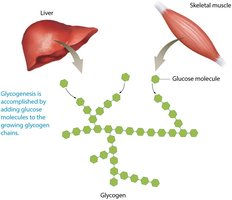
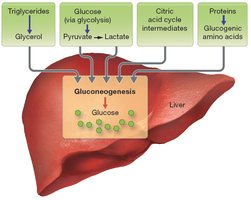
Anabolic processes store and synthesize glucose. Glycogenesis stores excess glucose as glycogen, while gluconeogenesis synthesizes glucose from non-carbohydrate sources.
Glycogenesis: Formation of glycogen from glucose; occurs in liver and skeletal muscle.
Gluconeogenesis: Synthesis of glucose from glycerol, pyruvate, lactate, citric acid cycle intermediates, and glucogenic amino acids.
The Big Picture of Nutrient Anabolism
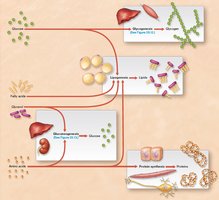
Anabolism is essential for nutrient storage, synthesis, and maintaining metabolic homeostasis.
Glycogen: Main storage form of glucose.
Adipose Tissue: Main storage form of triglycerides.
Regulation of Feeding and Metabolic Rate
Regulation of Feeding
Feeding behavior is controlled by hormonal and neural signals, primarily in the hypothalamus.
Satiety Center: Inhibits desire to eat.
Hunger Center: Stimulates desire to eat.
Leptin: Produced by adipocytes; stimulates satiety.
Ghrelin: Produced by stomach; stimulates hunger.
Insulin: Released after feeding; decreases food intake.
Metabolic Rate
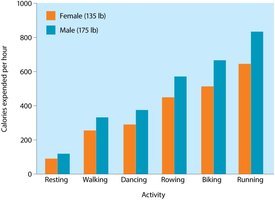
Metabolic rate is the total energy expended by the body. Basal metabolic rate (BMR) is the minimal rate for an awake individual under specific conditions.
Thermogenesis: Conversion of energy to heat.
BMR: Influenced by hormones, activity, gender, and muscle mass.
Thermoregulation
Heat Loss and Temperature Regulation
Body temperature is maintained within a narrow range for optimal function. Heat is lost via evaporation, insensible loss, and sweating.
Core Temperature: Reflects temperature of deep body structures.
Hypothermia: Decreased body temperature; can be fatal below 32°C.
Hyperthermia: Increased body temperature; fatal above 42.8°C.
Heat Stroke: Caused by environmental heat; requires immediate treatment.
Fever: Increase in set point due to pyrogens.
Nutrition
Macronutrients and Micronutrients
Nutrients are molecules required for metabolic processes. Macronutrients include carbohydrates, proteins, and lipids; micronutrients include vitamins and minerals.
Carbohydrates: Monosaccharides, disaccharides, polysaccharides; fiber is indigestible.
Lipids: Triglycerides, cholesterol, essential fatty acids (omega-6, omega-3).
Proteins: Constructed from 20 amino acids; 9 essential, 11 nonessential.
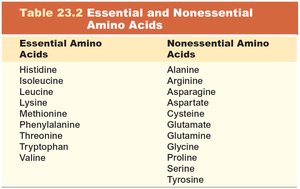
Essential Amino Acids | Nonessential Amino Acids |
|---|---|
Histidine | Alanine |
Isoleucine | Arginine |
Leucine | Asparagine |
Lysine | Aspartate |
Methionine | Cysteine |
Phenylalanine | Glutamate |
Threonine | Glutamine |
Tryptophan | Glycine |
Valine | Proline |
Serine | |
Tyrosine |
Micronutrients: Vitamins (fat-soluble: A, D, E, K; water-soluble: C, B) and minerals (major: Ca, Cl, Mg, P, K, Na, S; trace: I, Fe, Se).
Cholesterol and Lipoproteins
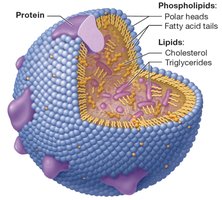
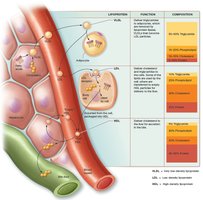
Cholesterol is a structural molecule and precursor for vitamin D, steroid hormones, and bile salts. It is transported in the blood by lipoproteins.
VLDLs: Transport triglycerides from liver to tissues.
LDLs: Deliver cholesterol to cells ("bad").
HDLs: Carry cholesterol from cells to liver ("good").
Disorders of Cholesterol Processing
Hypercholesterolemia is elevated blood cholesterol, increasing risk for atherosclerosis and cardiovascular disease. Treatment includes statins and other medications.
Diet and Body Mass
Body Mass and Energy Balance
Body mass is the amount of matter in the body; body weight is the force exerted by gravity. Body mass index (BMI) is used to assess relative body mass. Energy balance is the difference between energy intake and expenditure.
Positive Energy Balance: Weight gain.
Negative Energy Balance: Weight loss.
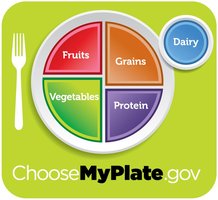
Example: Healthy Diet Guidelines
The USDA MyPlate provides guidance for balanced nutrition, emphasizing fruits, vegetables, grains, protein, and dairy.
Additional info: This study guide covers the essential concepts of metabolism and nutrition as outlined in Chapter 23 of a standard Anatomy & Physiology textbook, including relevant diagrams and tables for exam preparation.
