 Indietro
Metabolism and Thermoregulation: Structured Study Notes
Guida di studio - Note intelligenti
 Appunti personalizzati basati sui tuoi materiali, ampliati con definizioni chiave, esempi e contesto.
Metabolism & Thermoregulation
Metabolism: Overview and Definitions
Metabolism encompasses all biochemical reactions occurring within the body, divided into two main categories: anabolism and catabolism.
Anabolism: Reactions that build larger molecules or structures from smaller ones (e.g., synthesis of proteins from amino acids).
Catabolism: Processes that break down complex structures into simpler ones (e.g., hydrolysis of food in digestion).
Redox Reactions and ATP Production
Redox reactions (oxidation-reduction) are central to energy transfer in metabolism.
Oxidation: Loss of hydrogen or gain of oxygen; the oxidized substance loses electrons and energy.
Reduction: Gain of electrons and energy by another substance.
As food fuels are oxidized, their energy is transferred to ADP, forming ATP.
ATP Synthesis: Substrate-Level vs. Oxidative Phosphorylation
ATP can be synthesized by two main mechanisms:
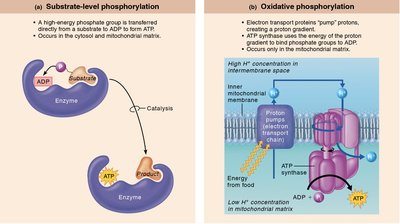
Substrate-level phosphorylation: Direct transfer of a phosphate group from a substrate to ADP. Occurs in the cytosol (glycolysis) and mitochondrial matrix (citric acid cycle).
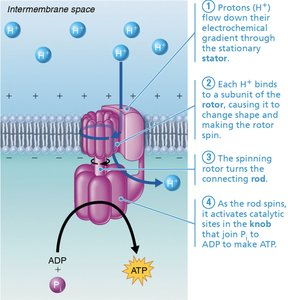
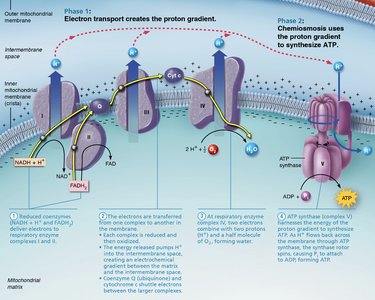
Oxidative phosphorylation: Electron transport proteins create a proton gradient across the inner mitochondrial membrane, driving ATP synthesis via ATP synthase. This process occurs only in mitochondria and produces most cellular ATP.
Summary Equation for Glucose Catabolism
The complete catabolism of glucose is summarized by the following chemical equation:
Glycolysis: Events, Location, and Products
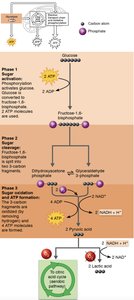
Glycolysis is the breakdown of glucose to pyruvic acid in the cytosol. It consists of three phases:
Phase 1: Sugar Activation – Glucose is phosphorylated twice (using 2 ATP) to form fructose-1,6-bisphosphate.
Phase 2: Sugar Cleavage – The 6-carbon sugar is split into two 3-carbon isomers: glyceraldehyde 3-phosphate and dihydroxyacetone phosphate.
Phase 3: Sugar Oxidation and ATP Formation – The 3-carbon fragments are oxidized, generating NADH and ATP. Four ATP are produced, but two are consumed, resulting in a net gain of 2 ATP.
Products: 2 pyruvic acid, 2 NADH + 2 H+, and 2 ATP (net).
Fate of Pyruvate: Aerobic vs. Anaerobic Conditions
With O2: NADH + H+ delivers hydrogen to the electron transport chain, forming water.
Without O2: NADH + H+ reduces pyruvic acid to lactic acid, which may diffuse to the liver for processing.
The Citric Acid Cycle (Krebs/TCA Cycle)
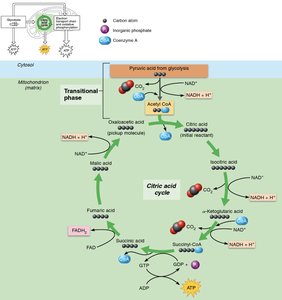
The citric acid cycle occurs in the mitochondrial matrix and completes the oxidation of organic molecules.
Products per turn: 2 CO2, 3 NADH + 3 H+, 1 FADH2, 1 ATP (via substrate-level phosphorylation).
Each glucose yields two turns of the cycle.
Electron Transport Chain (ETC) and Chemiosmosis
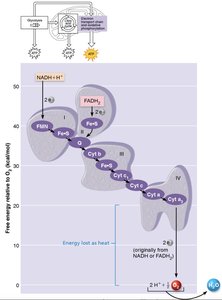
The ETC is located in the inner mitochondrial membrane and is responsible for most ATP production.
Electrons from NADH and FADH2 are transferred through complexes, releasing energy to pump H+ into the intermembrane space.
The resulting proton gradient drives ATP synthesis via ATP synthase.
Oxygen is the final electron acceptor, forming water.
Products: Water and about 28 ATP per glucose.
Summary of ATP Yield from Glucose Catabolism
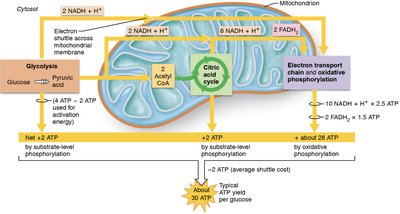
ATP is generated by both substrate-level and oxidative phosphorylation during glucose catabolism.
Net ATP from glycolysis: 2
Net ATP from citric acid cycle: 2
Net ATP from oxidative phosphorylation: ~28
Total ATP per glucose: About 30-32 ATP
Metabolic Pathways: Glycolysis, Glycogenesis, Glycogenolysis, Gluconeogenesis
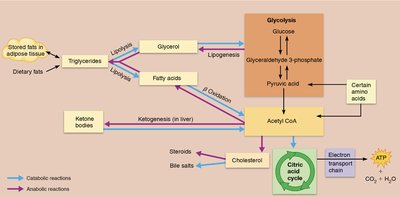
Glycolysis: Converts glucose to pyruvic acid.
Glycogenesis: Synthesis of glycogen from glucose (storage form).
Glycogenolysis: Breakdown of glycogen to glucose (mobilization).
Gluconeogenesis: Formation of glucose from non-carbohydrate sources (e.g., amino acids, glycerol).
Lipid Metabolism: Beta-Oxidation, Lipolysis, Lipogenesis, Ketosis
Beta-oxidation: Fatty acids are broken into two-carbon fragments (acetyl-CoA) in mitochondria, which enter the citric acid cycle.
Lipolysis: Breakdown of triglycerides into glycerol and fatty acids for energy use.
Lipogenesis: Synthesis of triglycerides from acetyl-CoA and glycerol when energy is abundant.
Ketosis: Excess acetyl-CoA is converted to ketone bodies during starvation, diabetes, or carbohydrate restriction.
Key Tissue Compartments in Metabolism
Brain: High, constant energy demand; prefers glucose, can use ketones during starvation.
Skeletal muscle: Uses fatty acids at rest, glucose during exertion; stores glycogen.
Heart muscle: Aerobic, prefers fatty acids.
Adipose tissue: Stores triglycerides, releases fatty acids and glycerol.
Liver: Central in glycogen storage, gluconeogenesis, and lipid metabolism.
Metabolic States: Absorptive vs. Postabsorptive
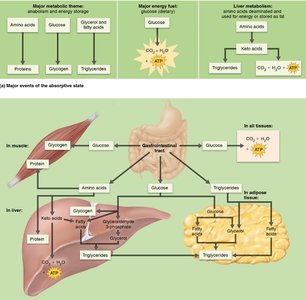
Absorptive (fed) state: Lasts ~4 hours after eating; anabolism exceeds catabolism; excess nutrients stored as fat.
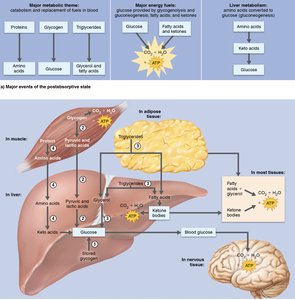
Postabsorptive (fasting) state: GI tract is empty; body relies on stored reserves for energy.
Utilization of Nutrients in Different States
Absorptive state: Carbohydrates used for energy, stored as glycogen; fats stored as triglycerides; proteins used for synthesis.
Postabsorptive state: Glycogenolysis and gluconeogenesis maintain blood glucose; lipolysis provides fatty acids; proteins may be used for gluconeogenesis during prolonged fasting.
Hormonal and Neural Regulation of Metabolism
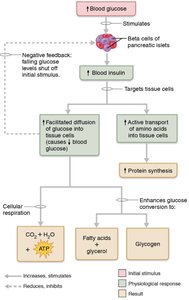
Absorptive state: Insulin is the primary regulator, promoting glucose uptake, glycogenesis, lipogenesis, and protein synthesis.
Postabsorptive state: Glucagon, epinephrine, and sympathetic nervous system stimulate glycogenolysis, gluconeogenesis, and lipolysis.
Thermoregulation: Heat Production and Loss
Heat generation at rest: Mainly by liver, heart, brain, kidneys, and endocrine organs.
Thermal compartments: Core (internal organs) and shell (skin and surface tissues).
Core temperature: Maintained constant; shell temperature fluctuates.
Mechanisms of Heat Exchange
Radiation: Loss of heat as infrared waves; accounts for most heat loss at rest.
Conduction: Direct transfer of heat between objects in contact.
Convection: Transfer of heat by movement of air or fluid.
Evaporation: Heat loss as water vapor; dependent on low humidity.
Feedback Regulation of Body Temperature
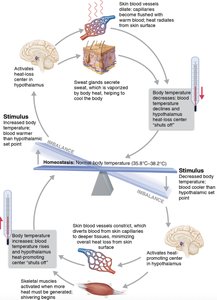
Negative feedback: Maintains thermal balance via hypothalamic control.
Thermoregulatory centers: Located in the hypothalamus; receive input from peripheral and central thermoreceptors.
Effectors: Skin, skeletal muscles, sweat glands.
Heat-Promoting and Heat-Loss Mechanisms
Heat-promoting: Vasoconstriction, shivering, increased metabolic rate, enhanced thyroxine release.
Heat-loss: Vasodilation, enhanced sweating.
Homeostatic Imbalances in Temperature Regulation
Hypothermia: Low core temperature due to prolonged cold exposure; can lead to unconsciousness and death.
Hyperthermia: High core temperature from heat exposure; can progress to heat exhaustion or heat stroke.
Heat exhaustion: Excessive sweating, low blood pressure, rapid pulse; treat with fluids and cooling.
Heat stroke: Failure of heat loss mechanisms, high core temperature, no sweating; medical emergency.
Fever: Regulated elevation of core temperature due to infection; hypothalamic set point is increased by cytokines and prostaglandins.
