 Indietro
Metabolism, Nutrition, and Energetics: Study Notes for Anatomy & Physiology
Guida di studio - Note intelligenti
 Appunti personalizzati basati sui tuoi materiali, ampliati con definizioni chiave, esempi e contesto.
Metabolism, Nutrition, and Energetics
Introduction to Metabolism and Energetics
Metabolism refers to the sum of all chemical and physical changes that occur in body tissues. It encompasses both catabolic (breakdown) and anabolic (synthesis) reactions, which are essential for maintaining cellular function and overall homeostasis. Energetics is the study of how the body balances heat gains and losses, and how energy is produced, stored, and utilized.
Metabolic activity: Organic molecules are broken down to obtain energy, which is stored as ATP and used to construct new organic molecules.
Energetics: Involves the balance of heat and energy within the body.
Nutrients: Essential elements and molecules required for metabolic reactions, including water, vitamins, mineral ions, and organic substrates.
Metabolism of Organic Nutrients and Nutrient Pools
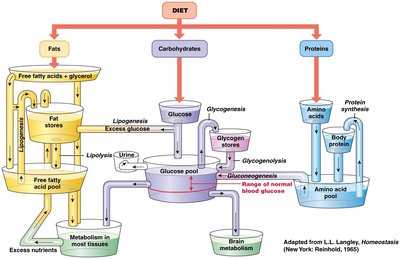
The nutrient pool consists of all available nutrient molecules distributed in the blood. These nutrients are derived from dietary sources and are used for energy production, storage, and synthesis of new molecules.
Catabolism: Converts large molecules into smaller ones, releasing energy used to synthesize ATP.
Anabolism: Converts small molecules into larger ones, forming new chemical bonds and supporting growth, maintenance, and storage.
Nutrient reserves: Include triglycerides (lipids), glycogen (carbohydrates), and proteins.
Carbohydrate Metabolism
Cellular Respiration Overview
Carbohydrate catabolism generates ATP and other high-energy compounds through cellular respiration, which involves glycolysis, the citric acid cycle, and the electron transport chain. One molecule of glucose provides a net gain of 30–32 molecules of ATP.
Cellular respiration equation:
Key steps: Glycolysis, citric acid cycle, electron transport chain
Glycolysis
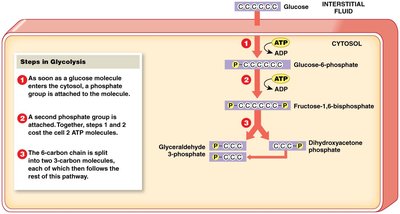
Glycolysis is the first step in cellular respiration, occurring in the cytosol. It breaks down glucose into two molecules of pyruvate, producing a net gain of 2 ATP and 2 NADH.
Step 1: Glucose is phosphorylated to glucose-6-phosphate.
Step 2: A second phosphate group is added, forming fructose-1,6-bisphosphate.
Step 3: The 6-carbon chain is split into two 3-carbon molecules.
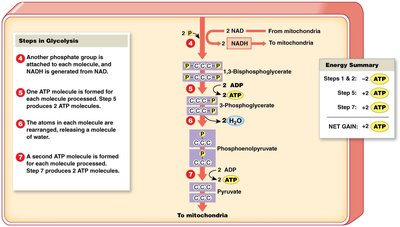
Step 4: Another phosphate group is attached, and NADH is generated.
Step 5: ATP is produced from ADP.
Step 6: Atoms are rearranged, releasing water.
Step 7: A second ATP is produced, resulting in pyruvate.
Net gain: 2 ATP per glucose molecule.
The Citric Acid Cycle (Krebs Cycle)
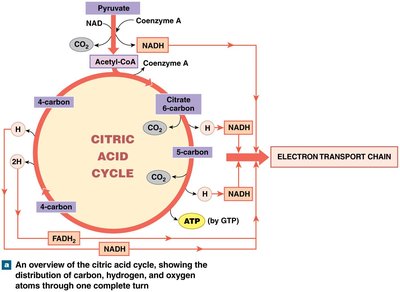
The citric acid cycle occurs in the mitochondria and releases energy stored in nutrients through the oxidation of acetyl-CoA. It generates NADH and FADH2 for oxidative phosphorylation and supplies hydrogen atoms for the electron transport chain.
Main purpose: To supply hydrogen atoms for the electron transport chain.
Products: NADH, FADH2, ATP (by GTP), CO2
Oxidative Phosphorylation and Electron Transport Chain (ETC)
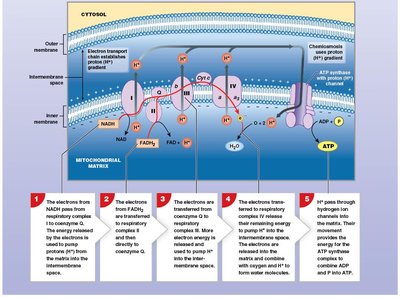
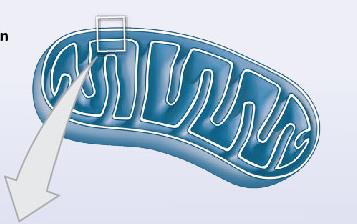
Oxidative phosphorylation is the generation of ATP through the transfer of electrons from NADH and FADH2 to oxygen via a sequence of electron carriers within mitochondria. The electron transport chain consists of protein complexes in the inner mitochondrial membrane, where key reactions occur.
ETC components: Four respiratory protein complexes, coenzyme Q, cytochrome molecules
ATP production: Over 90% of ATP used by the body is produced here.
Water formation:
Gluconeogenesis, Glycogenesis, and Glycogenolysis
These processes regulate glucose levels and storage in the body.
Gluconeogenesis: Synthesis of glucose from noncarbohydrate molecules (e.g., 3-carbon molecules other than pyruvate).
Glycogenesis: Formation of glycogen from excess glucose, requiring uridine triphosphate (UTP).
Glycogenolysis: Breakdown of glycogen to glucose monomers, occurring quickly via a single enzymatic step.
Lipid Metabolism
Lipid Catabolism (Lipolysis)
Lipid catabolism breaks lipids down into pieces that can be converted to pyruvate or channeled directly into the citric acid cycle. Hydrolysis splits triglycerides into glycerol and fatty acids, and enzymes in the cytosol convert glycerol to pyruvate.
Beta-oxidation: Sequence of reactions inside mitochondria that breaks down fatty acids.
Energy yield: One 18-carbon fatty acid molecule can yield 120 ATP, which is almost 1.3 times the energy from three 6-carbon glucose molecules.
Lipid Synthesis (Lipogenesis) and Storage
Lipid synthesis can use almost any organic substrate and is important for energy reserves. Lipid storage provides large amounts of ATP but is slow and difficult for water-soluble enzymes to access.
Lipid transport: Cells require lipids for plasma membranes and steroid hormone distribution.
Lipoproteins
Lipoproteins are lipid–protein complexes that transport lipids in the blood. They are classified into four groups:
Chylomicrons
Very low-density lipoproteins (VLDLs)
Low-density lipoproteins (LDLs): "bad cholesterol"
High-density lipoproteins (HDLs): "good cholesterol"
Protein Metabolism
Protein Synthesis and Functions
The body synthesizes 100,000 to 140,000 different proteins, each with unique structures and functions. All proteins are built from 20 amino acids, 8 of which are essential and must be obtained from the diet, while 2 are insufficiently synthesized.
Essential amino acids: isoleucine, leucine, lysine, threonine, tryptophan, phenylalanine, valine, methionine
Insufficiently synthesized: arginine, histidine
Functions: Enzymes, hormones, structural elements, neurotransmitters
Energy source: Very little protein is used as an energy source
Amino Acids and ATP Production
When glucose and lipid reserves are inadequate, liver cells break down internal proteins and absorb additional amino acids from the blood. Amino acids are deaminated, and their carbon chains are sent to mitochondria for ATP production. Not all amino acids enter the cycle at the same point, so ATP benefits vary.
Deamination: Removal of the amino group from amino acids
ATP production: Varies depending on the entry point into the citric acid cycle
Summary Table: Metabolic Pathways and Energy Yield
Pathway | Main Substrate | Key Products | ATP Yield |
|---|---|---|---|
Glycolysis | Glucose | Pyruvate, NADH, ATP | 2 ATP (net) |
Citric Acid Cycle | Acetyl-CoA | NADH, FADH2, CO2, ATP | 2 ATP (per glucose) |
Electron Transport Chain | NADH, FADH2 | ATP, H2O | ~28 ATP (per glucose) |
Beta-oxidation | Fatty acids | Acetyl-CoA, NADH, FADH2 | ~120 ATP (per 18-carbon fatty acid) |
Protein Catabolism | Amino acids | Carbon chains, NH3 | Variable |
Additional info: The above table summarizes the main metabolic pathways, their substrates, products, and approximate ATP yield for each process.
