Indietro
Movements at Synovial Joints: Anatomy & Physiology Study Guide
Guida di studio - Note intelligenti
 Appunti personalizzati basati sui tuoi materiali, ampliati con definizioni chiave, esempi e contesto.
Movements at Synovial Joints
Overview of Synovial Joint Movements
Synovial joints are highly mobile joints in the human body, allowing a wide range of movements essential for daily activities and complex motions. These movements are classified into gliding, angular, rotational, and special movements, each with distinct characteristics and examples.
Gliding Movements
Definition and Examples
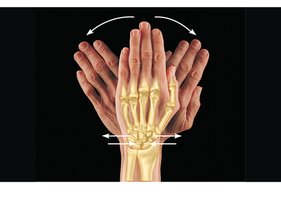
Gliding movements occur when one flat bone surface glides or slips over another similar surface. This movement is typically limited in range but is important for flexibility and small adjustments in position.
Key Point 1: Gliding is seen in intercarpal joints (wrist), intertarsal joints (ankle), and between articular processes of vertebrae.
Key Point 2: The movement is non-axial, meaning it does not occur around a specific axis.
Example: Sliding of wrist bones during hand movement.
Angular Movements
Movements Along the Sagittal Plane
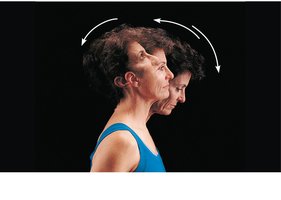
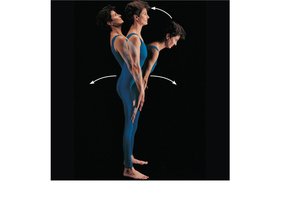
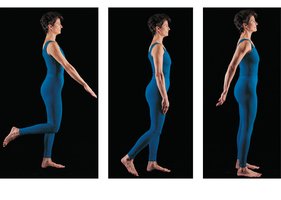
Angular movements change the angle between two bones. These movements occur along the sagittal plane and include flexion, extension, and hyperextension.
Flexion: Decreases the angle of the joint, bringing bones closer together.
Extension: Increases the angle of the joint, moving bones farther apart.
Hyperextension: Extension beyond the normal range of motion.
Example: Bending the neck forward (flexion), straightening it (extension), and bending it backward (hyperextension).
Movements Along the Frontal Plane
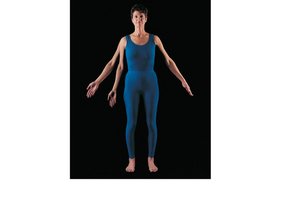
Angular movements along the frontal plane include abduction, adduction, and circumduction.
Abduction: Movement away from the midline of the body.
Adduction: Movement toward the midline of the body.
Circumduction: Combination of flexion, abduction, extension, and adduction, resulting in a circular motion.
Example: Raising the arm sideways (abduction), lowering it (adduction), and moving it in a circular motion (circumduction).
Rotational Movements
Rotation Around the Long Axis
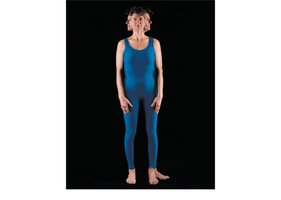
Rotation is the turning of a bone around its own long axis. This movement is essential for actions such as turning the head or rotating the limbs.
Medial Rotation: Rotating toward the midline.
Lateral Rotation: Rotating away from the midline.
Example: Rotation between the first and second cervical vertebrae (C1 and C2), rotation of the humerus and femur.
Special Movements
Supination and Pronation
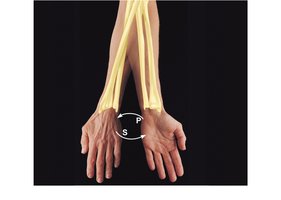
These movements involve the radius and ulna of the forearm.
Supination: Turning the palm upward; radius and ulna are parallel.
Pronation: Turning the palm downward; radius rotates over ulna.
Example: Rotating the forearm to turn the palm up or down.
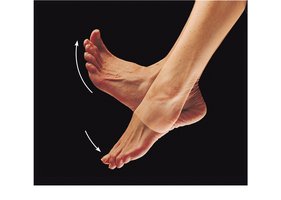
Dorsiflexion and Plantar Flexion
These movements occur at the ankle joint.
Dorsiflexion: Upward movement of the foot.
Plantar Flexion: Downward movement of the foot.
Example: Pointing the toes upward (dorsiflexion) or downward (plantar flexion).
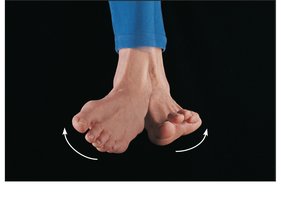
Inversion and Eversion
These movements involve turning the sole of the foot.
Inversion: Turning the sole medially (toward the midline).
Eversion: Turning the sole laterally (away from the midline).
Example: Twisting the foot inward (inversion) or outward (eversion).
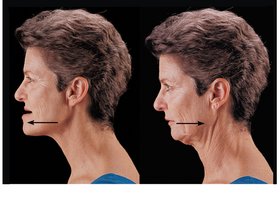
Protraction and Retraction
These movements occur in the transverse plane, often involving the jaw or shoulder.
Protraction: Moving a body part anteriorly (forward).
Retraction: Moving a body part posteriorly (backward).
Example: Pushing the jaw forward (protraction) or pulling it back (retraction).
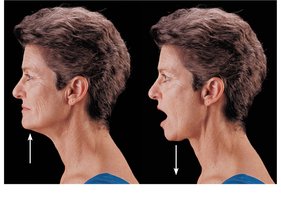
Elevation and Depression
Elevation and depression refer to lifting or lowering a body part.
Elevation: Lifting a body part superiorly.
Depression: Moving a body part inferiorly.
Example: Raising the jaw (elevation) or lowering it (depression).
Opposition
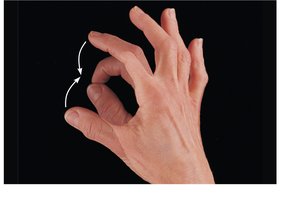
Opposition is a movement unique to the thumb, allowing it to touch the tips of the other fingers. This movement is crucial for grasping and manipulating objects.
Key Point: Occurs at the saddle joint of the thumb.
Example: Touching the thumb to the tip of the index finger.