 Indietro
Muscle Actions and Strength in Anatomy & Physiology
Guida di studio - Note intelligenti
 Appunti personalizzati basati sui tuoi materiali, ampliati con definizioni chiave, esempi e contesto.
Muscle Actions
Types of Muscle Action
Muscle actions are fundamental to movement and force generation in the human body. They are classified based on the nature of muscle contraction and the resulting movement or tension.
Isometric: Muscle generates tension without changing length; no visible movement occurs. Useful for stabilizing joints and maintaining posture.
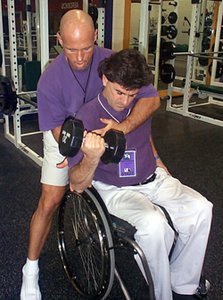
Isotonic: Muscle changes length while maintaining constant tension. Includes concentric (muscle shortens) and eccentric (muscle lengthens) actions.
Concentric: Muscle shortens as it contracts, producing acceleration.
Eccentric: Muscle lengthens as it contracts, producing deceleration.
Isokinetic: Muscle contracts at a constant speed throughout the range of motion, often using specialized equipment.
Plyometric: Involves rapid stretching and contracting of muscles, utilizing the stretch-shortening cycle for explosive movements.
Isometric Contraction
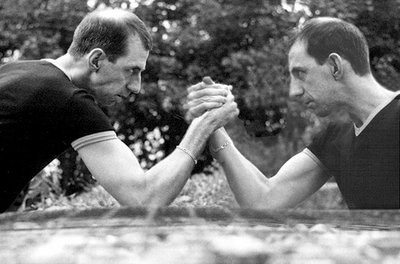
Isometric contractions occur when muscle tension is generated without visible movement of the external load or change in muscle length. No work is performed since distance is zero, but significant tension and energy are used.
Definition: Isometric means 'same length'.
Example: Arm-wrestling, where opponents generate equal forces without movement.
Dynamic Contraction
Dynamic contractions involve visible movement of the external load and changes in muscle length. They are further divided into isotonic, auxotonic, isokinetic, and plyometric actions.
Isotonic: 'Same tension'—muscle maintains constant tension while changing length. Includes concentric and eccentric actions.
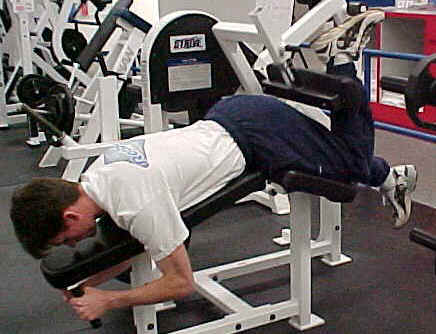
Auxotonic: Tension changes due to variations in joint angle and muscle length.
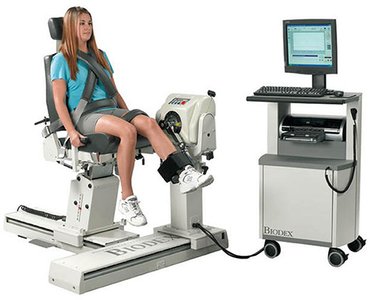
Isokinetic: Muscle contracts at a constant velocity, often measured with devices like the Biodex system.
Plyometric: Utilizes the stretch-shortening cycle, involving eccentric, amortization, and concentric phases for explosive power.
Factors Influencing Muscle Contraction
Determinants of Muscle Force
Several factors affect the ability of muscles to generate force and contract efficiently. Understanding these determinants is crucial for optimizing performance and training.
Health: Overall physical health impacts muscle function.
Training Status: Well-trained muscles produce greater force.
Age: Muscle strength typically decreases with age.
Biological Sex: Males generally have greater muscle mass and strength.
Joint Angle: Force production varies with joint position.
Muscle Cross-Sectional Area: Larger muscles generate more force.
Speed of Movement: Faster movements reduce force output.
Muscle Fiber Type: Fast-twitch fibers produce more force but fatigue quickly; slow-twitch fibers are more endurance-oriented.
Muscle Cross-Sectional Area and Strength
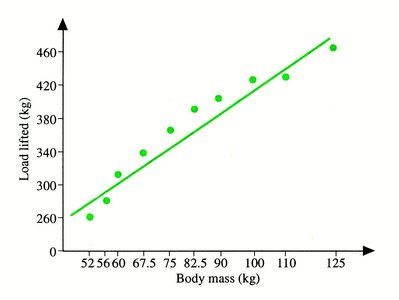
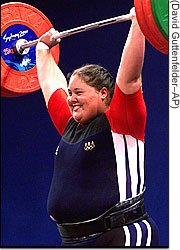
The cross-sectional area of a muscle is directly related to its ability to generate force. Athletes with greater active body mass typically exhibit higher absolute strength.
Absolute Strength: Total force generated regardless of body mass.
Relative Strength: Force generated relative to body mass, calculated as:
Speed of Movement and Force Production
Force-Velocity Relationship
As the speed of muscle contraction increases, the force generated decreases. This is due to limitations in cross-bridge cycling within muscle fibers.
Maximal Strength: Highest force produced in a single contraction.
Power: Combination of speed and strength; calculated as:
Muscular Endurance: Ability to sustain contractions over time.
Muscular Strength, Power, and Endurance
Muscular Strength
Muscular strength is the ability to perform maximal voluntary contractions to overcome powerful external resistances. It is often measured by the One Repetition Maximum (1RM).
1RM: The greatest force exerted in one repetition for a given activity.
Muscular Power
Muscular power refers to the ability to overcome resistance by developing a high rate of contraction, also known as 'speed-strength'.

Muscular Endurance
Muscular endurance is the ability to resist fatigue during strength performance of longer duration. It is essential for activities requiring repeated contractions.
Relationship Between Muscular Strength and Power
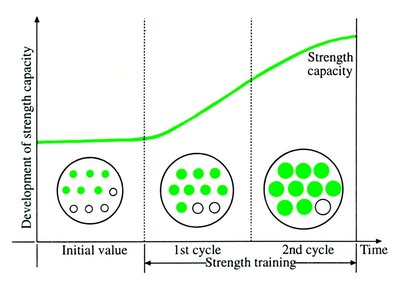
Strength training enhances power by increasing muscle hypertrophy and intra-muscular coordination. Power improves with increased strength and speed.
Relationship Between Muscular Strength and Endurance
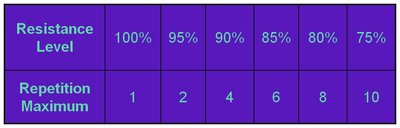
The number of repetitions performed against high resistance depends on maximal strength. Increasing muscular strength can improve endurance at a given load.
Resistance Level | 100% | 95% | 90% | 85% | 80% | 75% |
|---|---|---|---|---|---|---|
Repetition Maximum | 1 | 2 | 4 | 6 | 8 | 10 |
Muscular Strength and Endurance Training
Training Effects
Training for strength and endurance can have opposing effects. Vigorous cardiovascular training may decrease the diameter of fast-twitch muscle fibers, reducing muscle volume. Maximal strength training increases strength but may decrease endurance.

Combining Strength and Endurance Training
Some athletes must train for both maximal strength and muscular endurance. This can be achieved by scheduling training sessions appropriately to balance adaptations.
Summary Table: Types of Muscle Action
Type | Definition | Movement | Example |
|---|---|---|---|
Isometric | Tension without length change | No movement | Arm-wrestling |
Isotonic | Constant tension, length changes | Movement | Bicep curl |
Concentric | Muscle shortens | Movement | Lifting weight |
Eccentric | Muscle lengthens | Movement | Lowering weight |
Isokinetic | Constant speed contraction | Movement | Isokinetic machine exercise |
Plyometric | Rapid stretch-shortening | Movement | Jump training |
Additional info: Academic context was added to clarify definitions, relationships, and examples for each muscle action and training effect.
