 Indietro
Muscle Structure and Function: Anatomy & Physiology Study Guide
Guida di studio - Note intelligenti
 Appunti personalizzati basati sui tuoi materiali, ampliati con definizioni chiave, esempi e contesto.
Muscle Structure and Function
Types of Muscle Tissue
Muscle tissue is classified into three main types, each with distinct anatomical and functional characteristics. These types are essential for various bodily movements and physiological processes.
Skeletal Muscle: Attached to the skeleton via tendons or aponeuroses, responsible for voluntary movements. Activation is controlled consciously and repeated use can lead to fatigue.
Smooth Muscle: Found in blood vessels, respiratory tract, gastrointestinal tract, and the iris. It is under involuntary control and highly resistant to fatigue.
Cardiac Muscle: Located exclusively in the heart, controlled involuntarily by pacemaker cells, and highly fatigue resistant.
Components of Skeletal Muscle
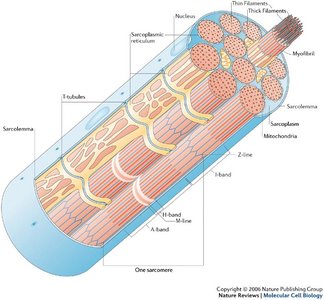
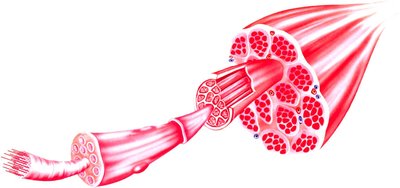
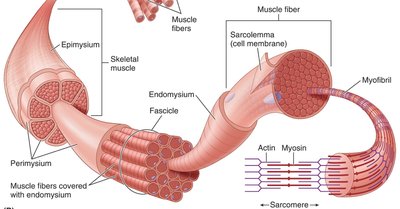
Skeletal muscle is organized hierarchically, from the whole muscle down to the molecular level. Understanding these components is crucial for grasping muscle function and contraction.
Muscle: The entire organ, composed of bundles of fascicles.
Muscle Fascicle: A bundle of muscle fibers surrounded by connective tissue.
Muscle Fiber: A single muscle cell, multinucleated and elongated.
Myofibrils: Rod-like units within muscle fibers, composed of repeating sarcomeres.
Myofilaments: Protein filaments (actin and myosin) responsible for contraction.
Motor Units and Neuromuscular Junction
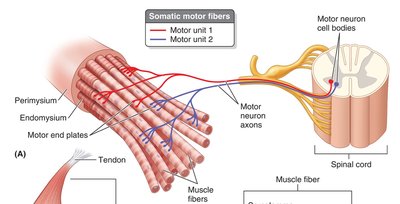
The motor unit is the fundamental functional unit of muscle contraction, consisting of a motor neuron and the muscle fibers it innervates. The neuromuscular junction is where nerve impulses trigger muscle contraction.
Motor End Plate: Specialized region of the muscle fiber membrane where the motor neuron communicates.
Motor Unit: A group of muscle fibers activated by a single motor neuron.
Capillaries: Supply oxygen and nutrients to muscle fibers.
Skeletal Muscle Actions
Types of Muscle Actions
Muscle actions are classified based on how the muscle changes length and generates force during movement.
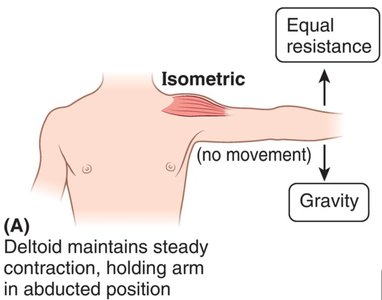
Isometric: Muscle generates force without changing length; no movement occurs.
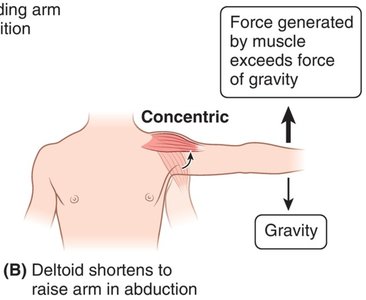
Concentric: Muscle shortens while generating force, producing movement.
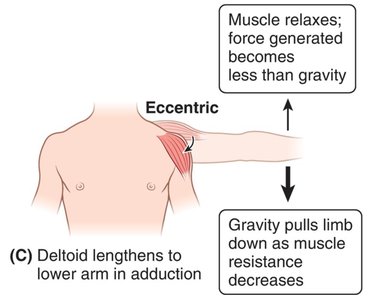
Eccentric: Muscle lengthens while generating force, often controlling or decelerating movement.

Muscle Teamwork
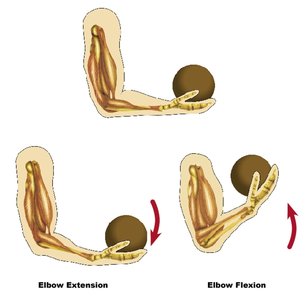
Muscles work together in coordinated groups to produce smooth and controlled movements. The roles of each muscle in a movement are defined as follows:
Agonist: The prime mover responsible for a specific movement.
Antagonist: Opposes the action of the agonist.
Synergist: Assists the agonist in performing the movement.
Stabilizer: Supports and stabilizes the body during movement.
Skeletal Muscle Fiber Types
Classification of Muscle Fibers
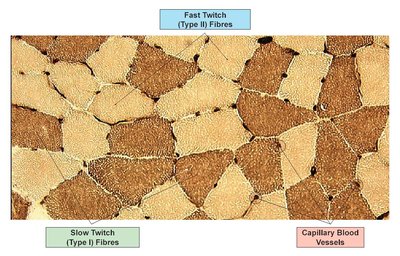
Muscle fibers are classified based on their contraction speed, force production, and metabolic properties. These differences are important for understanding athletic performance and muscle function.
Slow Oxidative (Type I): Low force and speed, suited for endurance activities (e.g., long-distance running).
Fast Oxidative (Type IIa): Intermediate properties, capable of both endurance and power.
Fast Glycolytic (Type IIb, IIx): High force and speed, suited for explosive activities (e.g., sprinting, jumping).
Motor Unit Recruitment and the All or None Principle
Muscle contraction is regulated by the recruitment of motor units and follows the all-or-none principle. This ensures precise control of force and movement.
Motor Unit Recruitment: The process by which more motor units are activated to increase force production.
All or None Principle: A motor unit contracts fully when the threshold stimulus is reached; otherwise, it does not contract at all.
Adaptations to Training
Muscle tissue adapts to training through biological changes that enhance performance. These adaptations occur at different rates depending on the system and training intensity.
Enzyme Adaptation: Occurs within hours.
Cardiovascular Adaptation: Occurs within 10-14 days.
Structural Protein Growth: Occurs within 4-6 weeks.
Summary Table: Muscle Fiber Types
The following table summarizes the main properties of muscle fiber types:
Fiber Type | Force Production | Speed | Fatigue Resistance | Example Activity |
|---|---|---|---|---|
Type I (Slow Oxidative) | Low | Slow | High | Marathon running |
Type IIa (Fast Oxidative) | Moderate | Fast | Moderate | Middle-distance running |
Type IIb/IIx (Fast Glycolytic) | High | Fastest | Low | Sprinting, jumping |
Key Equations
Muscle force generation can be described by the following equation:
Where F is force, m is mass, and a is acceleration.
Muscle contraction is governed by the sliding filament theory:
Additional info: Expanded explanations and context were added to ensure completeness and clarity for exam preparation.
