 Indietro
Muscles of the Human Body: Lab 6 Study Guide
Guida di studio - Note intelligenti
 Appunti personalizzati basati sui tuoi materiali, ampliati con definizioni chiave, esempi e contesto.
Muscles of the Face
Overview of Facial Muscles
The muscles of the face are responsible for facial expressions, mastication (chewing), and movements of the lips and eyelids. These muscles are unique because most of them insert into the skin, allowing for a wide range of expressive movements.
Orbicularis oculi: Encircles the eye; responsible for closing the eyelids.
Orbicularis oris: Encircles the mouth; allows for movements such as puckering the lips.
Zygomaticus: Originates from the zygomatic bone and inserts into the orbicularis oris; elevates the corners of the mouth for smiling.
Temporalis: Elevates and retracts the mandible; important for chewing.
Masseter: Originates from the zygomatic bone and inserts at the angle of the mandible; primary muscle for mastication.
Example: The zygomaticus muscle contracts when you smile, pulling the corners of your mouth upward.

Muscles of the Anterior Neck and Throat
Overview of Neck and Throat Muscles
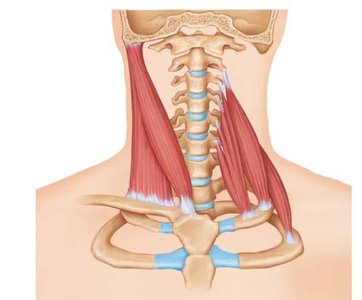
The anterior neck and throat muscles are involved in movements of the head, neck, and jaw, as well as swallowing and speech. These muscles include the sternocleidomastoid, digastric, and scalenes.
Sternocleidomastoid: Originates from the manubrium and clavicle, inserts at the mastoid process; flexes the neck and rotates the head.
Digastric: Originates from the mandible, inserts at the hyoid bone; opens the mouth by depressing the mandible.
Scalenes: Located laterally on the neck; assist in flexion and lateral movement of the neck.
Example: The sternocleidomastoid contracts to turn your head to the opposite side.

Muscles of the Thorax and Abdomen
Overview of Thoracic and Abdominal Muscles
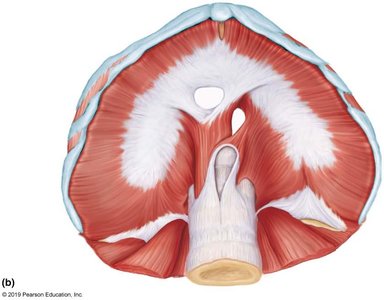
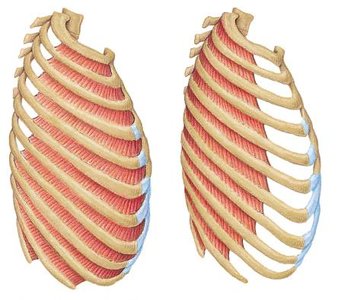
The muscles of the thorax and abdomen are essential for respiration, trunk movement, and protection of internal organs. Key muscles include the rectus abdominus, diaphragm, and intercostals.
Rectus abdominus: Originates from the pubic crest/symphysis, inserts at the xiphoid process/costal cartilage; flexes the spine.
Transversus abdominus: Deepest abdominal muscle; compresses abdominal contents.
Internal and external oblique: Rotate and laterally flex the trunk.
Diaphragm: Main muscle for breathing; contracts to increase thoracic volume.
External and internal intercostals: Located between the ribs; assist in breathing by elevating or depressing the rib cage.
Example: The diaphragm contracts during inhalation, creating negative pressure to draw air into the lungs.

Muscles of the Shoulder
Superficial and Deep Shoulder Muscles
The shoulder muscles are divided into superficial and deep groups, responsible for movements of the scapula and humerus. These muscles include the trapezius, deltoid, rhomboid major, and others.
Trapezius: Originates from the spinous processes of vertebrae, inserts at the spine of scapula; adducts the scapula.
Deltoid: Originates from the clavicle and scapula, inserts at the deltoid tuberosity of humerus; abducts the arm.
Rhomboid major: Retracts the scapula.
Levator scapulae: Elevates the scapula.
Example: The deltoid muscle is activated when you lift your arm sideways away from your body.


Summary Table: Major Muscles and Their Functions
Muscle | Origin | Insertion | Action |
|---|---|---|---|
Zygomaticus | Zygomatic bone | Orbicularis oris | Smiling |
Masseter | Zygomatic bone | Angle of mandible | Chewing |
Sternocleidomastoid | Manubrium, clavicle | Mastoid process | Neck flexion |
Rectus abdominus | Pubic crest/symphysis | Xiphoid process/costal cartilage | Flexion of spine |
Trapezius | Spinous processes of vertebrae | Spine of scapula | Adducts scapula |
Deltoid | Clavicle, scapula | Deltoid tuberosity of humerus | Abduction of arm |
Additional info: The images included above are directly relevant to the anatomical structure and function of the muscles discussed in each section, providing visual reinforcement for identification and understanding of muscle location and action.
