 Indietro
Muscles of the Lower Limb: Structure, Function, and Innervation
Guida di studio - Note intelligenti
 Appunti personalizzati basati sui tuoi materiali, ampliati con definizioni chiave, esempi e contesto.
Muscles of the Lower Limb
Overview of Lower Limb Muscle Groups
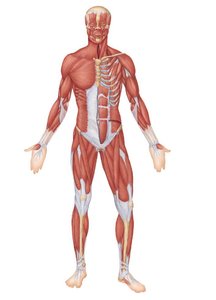
The lower limb muscles are organized into distinct compartments based on their anatomical location and function. These compartments include the thigh, leg, and foot, each with further subdivisions. Understanding these groups is essential for comprehending movement, innervation, and clinical relevance.
Thigh: Anterior, Medial, Posterior, Lateral compartments
Leg: Anterior, Lateral, Posterior compartments
Foot: Dorsum and Sole
Anterior Thigh Muscles
The anterior thigh muscles are primarily responsible for flexion of the thigh and extension of the leg. They are innervated by the femoral nerve.
Iliopsoas: Combination of Iliacus and Psoas major. Main action is thigh flexion and trunk flexion (bowing).
Sartorius: Responsible for lateral rotation, flexion, and abduction of the thigh.
Quadriceps Femoris: Includes Rectus femoris, Vastus medialis, Vastus intermedius, and Vastus lateralis. All extend the leg; rectus femoris also flexes the thigh.
Associated Structures: Quadriceps tendon, patellar ligament
Medial Thigh Muscles
Medial thigh muscles are primarily adductors of the thigh and are innervated by the obturator nerve. They originate from the pubis and insert on the femur.
Gracilis
Pectineus
Adductor Longus, Brevis, Magnus: Deep to pectineus and posterior to other adductors.
Posterior Thigh Muscles
The posterior thigh muscles include the gluteal group and hamstrings. They are involved in thigh extension, abduction, and leg flexion, and are innervated by gluteal and sciatic nerves.
Gluteus Maximus: Main extensor of the thigh.
Gluteus Medius & Minimus: Abduct and medially rotate the thigh; stabilize pelvis.
Hamstrings: Biceps femoris, Semitendinosus, Semimembranosus. Flex the leg and extend the thigh.
Lateral Thigh Muscles
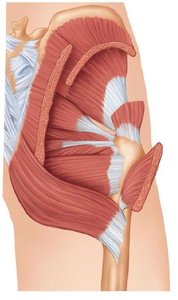
The lateral thigh muscles stabilize the trunk and hip during movement. The main muscle is the tensor fasciae latae, which inserts into the iliotibial band.
Tensor Fasciae Latae: Stabilizes trunk, makes IT band taut.
Iliotibial Band: Dense connective tissue running from iliac crest to tibia, stabilizes hip and knee.
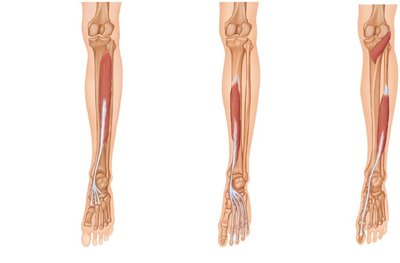
Anterior Leg Muscles
Anterior leg muscles are responsible for dorsiflexion and toe extension. They are innervated by the deep fibular nerve.
Tibialis Anterior: Prime mover of dorsiflexion.
Extensor Digitorum Longus (EDL): Extends toes II–V.
Extensor Hallucis Longus (EHL): Extends hallux (big toe).
Lateral Leg Muscles
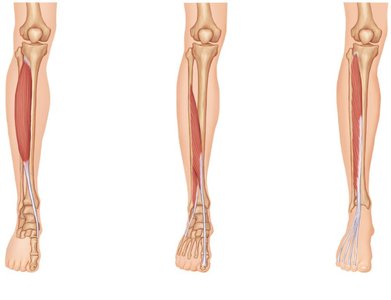
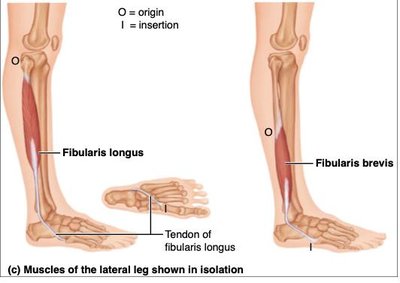
Lateral leg muscles are involved in plantar flexion and eversion of the foot. They are innervated by the superficial fibular nerve.
Fibularis Longus
Fibularis Brevis: Deep to longus
Posterior Leg Muscles
Posterior leg muscles are responsible for plantar flexion, toe flexion, and foot inversion. They are innervated by the tibial nerve.
Gastrocnemius: Plantar flexion of foot; originates from femur, inserts on calcaneus via calcaneal tendon.
Soleus: Plantar flexion; shares calcaneal tendon.
Flexor Digitorum Longus (FDL): Flexes toes II–V, plantar flexion, inversion.
Tibialis Posterior: Prime mover of foot inversion.
Flexor Hallucis Longus (FHL): Flexes hallux.
Innervation of Lower Limb Muscles
Lower limb muscles are innervated by nerves from the lumbar and sacral plexuses. Each compartment has a primary nerve supply.
Compartment | Primary Nerve | Muscles |
|---|---|---|
Anterior Thigh | Femoral | Iliopsoas, Sartorius, Quadriceps |
Medial Thigh | Obturator | Gracilis, Pectineus, Adductors |
Posterior Thigh | Sciatic | Hamstrings |
Gluteal Region | Gluteal | Gluteus maximus, medius, minimus |
Anterior Leg | Deep Fibular | Tibialis anterior, EDL, EHL |
Lateral Leg | Superficial Fibular | Fibularis longus, brevis |
Posterior Leg | Tibial | Gastrocnemius, Soleus, FDL, Tibialis posterior, FHL |
Key Terms and Definitions
Origin: The fixed attachment point of a muscle.
Insertion: The movable attachment point of a muscle.
Prime Mover (PM): The muscle primarily responsible for a specific movement.
Flexion: Decreasing the angle between two body parts.
Extension: Increasing the angle between two body parts.
Abduction: Moving a limb away from the midline.
Adduction: Moving a limb toward the midline.
Eversion: Turning the sole of the foot outward.
Inversion: Turning the sole of the foot inward.
Additional info:
Muscle actions are often coordinated by multiple muscles working together, with some acting as synergists or antagonists.
Understanding innervation is crucial for diagnosing nerve injuries and their effects on movement.
