 Indietro
Muscular System: Anatomy of Major Muscles of the Limbs and Trunk
Guida di studio - Note intelligenti
 Appunti personalizzati basati sui tuoi materiali, ampliati con definizioni chiave, esempi e contesto.
The Muscular System
Overview of the Muscular System
The muscular system is responsible for movement, posture, and heat production in the human body. It consists of three main types of muscle tissue: skeletal, cardiac, and smooth muscle. This section focuses on the anatomy of major skeletal muscles, particularly those of the limbs and trunk, which are essential for voluntary movements.
Muscles of the Upper Limb
Muscles of the Arm and Forearm
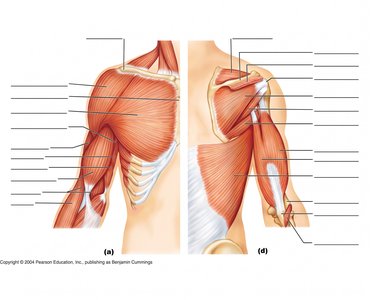
The upper limb contains several important muscle groups that facilitate movement at the shoulder, elbow, wrist, and fingers. These muscles are organized into compartments based on their primary actions (flexors and extensors).
Biceps brachii: Located in the anterior compartment of the arm, responsible for flexion of the elbow and supination of the forearm.
Triceps brachii: Located in the posterior compartment, responsible for extension of the elbow.
Brachialis: Lies deep to the biceps, also assists in elbow flexion.
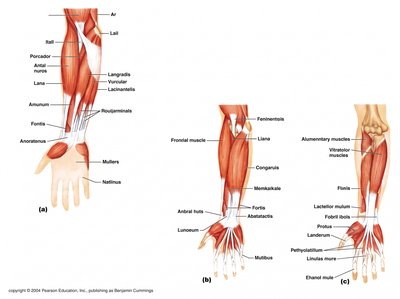
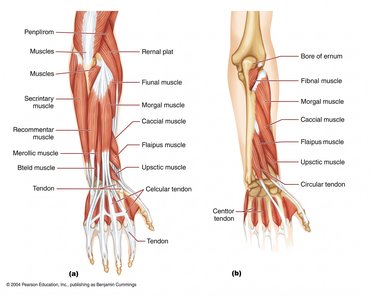
Forearm flexors and extensors: These muscle groups control movements of the wrist and fingers.
Muscles of the Hand and Wrist
The hand contains intrinsic muscles that allow for fine motor movements, as well as extrinsic muscles originating from the forearm. These muscles are responsible for flexion, extension, abduction, and adduction of the fingers and wrist.
Flexor digitorum superficialis/profundus: Flex the fingers.
Extensor digitorum: Extends the fingers.
Thenar and hypothenar muscles: Control thumb and little finger movements, respectively.
Muscles of the Lower Limb
Anterior and Posterior Thigh Muscles
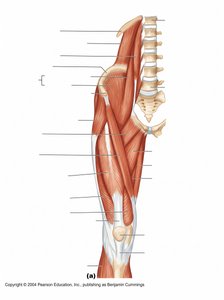
The muscles of the thigh are divided into anterior, medial, and posterior compartments, each with distinct functions related to movement of the hip and knee joints.
Quadriceps femoris: A group of four muscles on the anterior thigh responsible for knee extension.
Hamstrings: Located in the posterior thigh, responsible for knee flexion and hip extension.
Adductors: Medial thigh muscles that adduct the thigh.
Muscles of the Leg (Lower Leg)
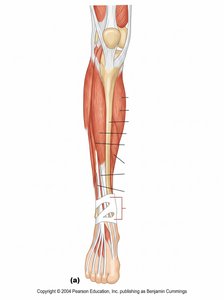
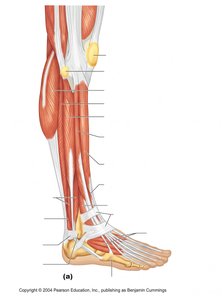
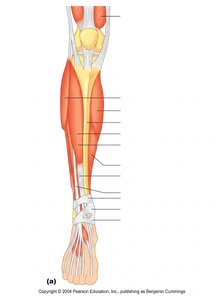
The lower leg contains muscles that control movements of the ankle, foot, and toes. These are divided into anterior, lateral, and posterior compartments.
Tibialis anterior: Dorsiflexes and inverts the foot.
Gastrocnemius and soleus: Plantarflex the foot at the ankle joint.
Fibularis (peroneus) muscles: Evert the foot.
Muscles of the Foot
The foot contains intrinsic muscles that support the arches and allow for toe movements. These muscles are essential for balance and locomotion.
Flexor digitorum brevis: Flexes the toes.
Abductor hallucis: Abducts the big toe.
Lumbricals: Flex the metatarsophalangeal joints and extend the interphalangeal joints.
Muscles of the Trunk
Muscles of the Back and Hip
The trunk muscles include those of the back, which support posture and movement of the vertebral column, and the hip muscles, which stabilize and move the pelvis and femur.
Erector spinae: Extends and laterally flexes the vertebral column.
Gluteus maximus: Extends and laterally rotates the hip.
Iliopsoas: Flexes the hip.
Summary Table: Major Muscle Groups and Functions
Region | Major Muscles | Primary Actions |
|---|---|---|
Upper Arm | Biceps brachii, Triceps brachii, Brachialis | Elbow flexion/extension |
Forearm | Flexor and extensor groups | Wrist/finger movement |
Thigh | Quadriceps, Hamstrings, Adductors | Knee extension/flexion, hip movement |
Leg | Tibialis anterior, Gastrocnemius, Soleus, Fibularis muscles | Ankle and foot movement |
Trunk | Erector spinae, Gluteus maximus, Iliopsoas | Posture, hip movement |
Key Terms and Concepts
Origin: The fixed attachment point of a muscle.
Insertion: The movable attachment point of a muscle.
Agonist (prime mover): The main muscle responsible for a movement.
Antagonist: Muscle that opposes the action of the agonist.
Synergist: Muscle that assists the agonist in performing its action.
Clinical Application
Understanding the anatomy of the muscular system is essential for diagnosing and treating musculoskeletal injuries, planning physical therapy, and improving athletic performance. Knowledge of muscle attachments and actions is also crucial for surgical procedures and rehabilitation.
