 Indietro
Neoplasia and Cancer: Pathophysiology, Hallmarks, and Cellular Mechanisms
Guida di studio - Note intelligenti
 Appunti personalizzati basati sui tuoi materiali, ampliati con definizioni chiave, esempi e contesto.
Neoplasia: Introduction and Definitions
Overview of Neoplasia
Neoplasia refers to the process of new, abnormal growth of cells or tissues. It is a fundamental concept in pathology and is central to understanding cancer biology.
Benign neoplasm: Localized growth, does not invade surrounding tissues.
Malignant neoplasm: Invades surrounding tissues, can metastasize to distant organs.
Oncology: The study of tumors.
How Cells Become Neoplastic
Neoplastic transformation requires mutations that allow cells to escape normal growth boundaries and produce their own blood supply. Malignant neoplasms must also invade basement membranes, enter the bloodstream, and colonize distant organs.
Genetically altered: Mutations in DNA are heritable and passed to daughter cells.
Autonomous growth: Tumor cells are less responsive to normal growth controls.
Invasion: Malignant tumors grow beyond normal boundaries.
The Hallmarks of Cancer
Classic Hallmarks
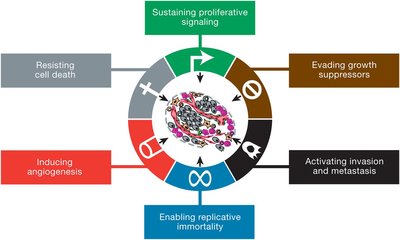
Cancer cells acquire a set of properties known as the hallmarks of cancer, which enable their survival, proliferation, and spread.
Resisting programmed cell death (apoptosis)
Sustaining proliferative signaling
Evading growth suppressors
Activating invasion and metastasis
Enabling replicative immortality
Inducing angiogenesis
Expanded Hallmarks and Emerging Characteristics
Recent research has expanded the hallmarks to include deregulating cellular metabolism, avoiding immune destruction, genome instability, tumor-promoting inflammation, unlocking phenotypic plasticity, non-mutational epigenetic reprogramming, polymorphic microbiomes, and senescent cells. 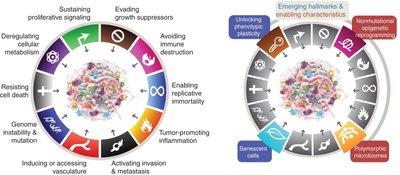
Therapeutic Targeting of Cancer Hallmarks
Targeted Therapies
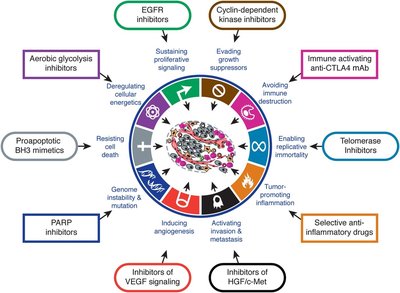
Modern cancer therapies aim to target specific hallmarks, such as inhibiting growth factor signaling, blocking angiogenesis, and reactivating apoptosis.
EGFR inhibitors: Block proliferative signaling.
VEGF inhibitors: Block angiogenesis.
PARP inhibitors: Target DNA repair pathways.
Immune checkpoint inhibitors: Enhance immune destruction.
Cell Cycle Regulation and Cancer
Cell Cycle Checkpoints
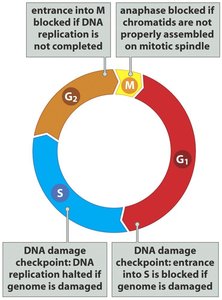
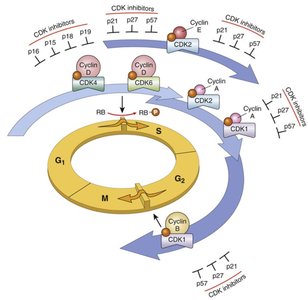
The cell cycle is tightly regulated by checkpoints that ensure proper DNA replication and division. Disruption of these checkpoints is a key feature of cancer.
G1/S checkpoint: Regulated by RB protein.
DNA damage checkpoints: Halt cell cycle if genome is damaged.
Characteristics of Cancer Cells
Morphologic Deviations
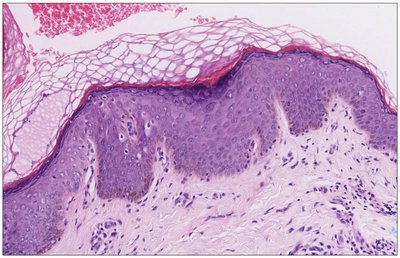
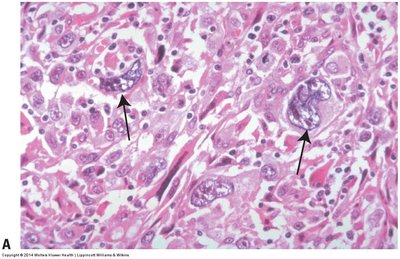
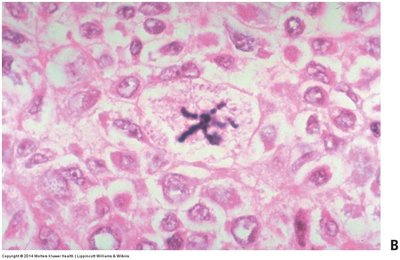
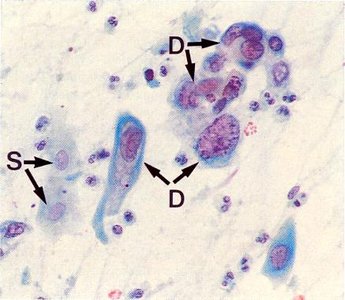
Cancer cells exhibit pleomorphism, abnormal nuclear size and shape, irregular staining, and undifferentiated features.
Pleomorphism: Variation in size, shape, and nuclear features.
Undifferentiated/anaplastic: Primitive appearance, loss of normal function.
Cellular and Growth Deviations
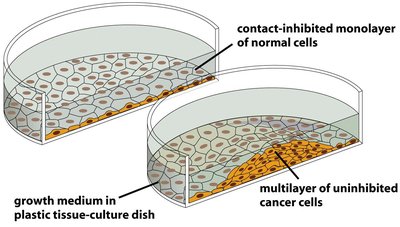
Cancer cells lose contact inhibition, fail to mature, and have immortal lifespans due to preserved telomeres.
Loss of contact inhibition: Cancer cells grow in multilayers.
Immortal lifespan: Due to telomerase activation.
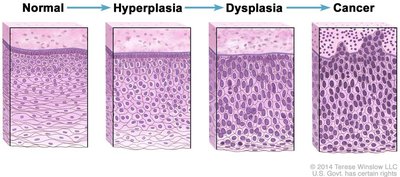
Hyperplasia, Dysplasia, and Neoplastic Progression
Definitions and Progression
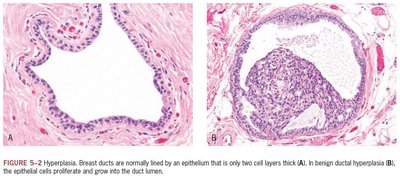
Hyperplasia: Increased cell number, cells appear normal.
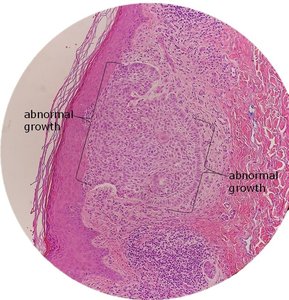
Dysplasia: Abnormal cell organization, not cancer but may progress to cancer.
Neoplasia: New, abnormal growth; can be benign or malignant.
Genetic and Molecular Basis of Cancer
Proto-Oncogenes and Oncogenes
Proto-oncogenes: Normal genes that regulate cell growth.
Oncogenes: Mutated proto-oncogenes that drive cancer.
Oncoproteins: Hyperactive proteins encoded by oncogenes.
Tumor Suppressor Genes
Tumor suppressor genes: Inhibit cell division (e.g., p53, Rb, TGF-β).
Loss of function: Leads to uncontrolled cell growth.
Genetic Alterations
Mutations: Missense, nonsense, frameshift, insertions, deletions.
Amplification: Multiple copies of a gene.
Chromosomal translocations: Rearrangement of chromosomes.
Aneuploidy: Abnormal chromosome number.
Stepwise Transition from Normal to Malignant Tissue
Progressive Transformation
Cancer develops through a series of genetic and morphologic changes, starting from a single initiated cell, progressing through hyperplasia and dysplasia, and culminating in invasive malignancy.
Initiation: Mutation in a cancer-related gene.
Hyperplasia/Dysplasia: Increased proliferation, abnormal organization.
Invasion: Tumor cells breach basement membrane.
Terminology and Nomenclature of Neoplasia
Benign vs. Malignant Tumors
Adenoma: Benign neoplasm from glandular cells.
Sarcoma: Malignant neoplasm from mesenchymal cells.
Carcinoma: Malignant neoplasm from epithelial cells.
Lymphoma: Malignant neoplasm from lymphocytes.
Melanoma: Malignant neoplasm from melanocytes.
Germ cell tumor: Malignant neoplasm from germ cells.
Feature | Benign | Malignant |
|---|---|---|
Invasiveness | Noninvasive | Invasive through basement membrane |
Differentiation | Highly differentiated | Poorly differentiated |
Tissue organization | More organized | Less organized |
Growth rate | Slow | Rapid |
Encapsulation | Encapsulated | Nonencapsulated |
Metastasis | Nonmetastatic | May be metastatic |
Key Molecular Pathways in Cancer
RAS and ABL Oncoproteins
RAS: Most commonly mutated oncogene; activates proliferation pathways.
ABL: Involved in chromosomal translocations (e.g., BCR-ABL in leukemia).
RB: Governor of the Cell Cycle
RB protein: Regulates G1/S checkpoint; loss leads to uncontrolled growth.
Knudson’s two-hit hypothesis: Both alleles must be inactivated for tumor formation.
TP53: Guardian of the Genome
p53: Most commonly mutated gene in cancer; regulates cell cycle arrest, senescence, and apoptosis.
Loss of p53: Leads to accumulation of mutations and malignant transformation.
TGF-β Pathway
TGF-β: Inhibits proliferation by activating CDKIs and suppressing growth-promoting genes.
Loss of function: Compromised in many tumors.
Altered Cellular Metabolism
The Warburg Effect
Cancer cells preferentially use aerobic glycolysis, converting glucose to lactate even in the presence of oxygen. This provides metabolic intermediates for rapid cell division.
Signaling cascades: Deregulated by mutations in oncogenes and tumor suppressors.
Evasion of Cell Death (Apoptosis)
Mechanisms of Apoptosis Resistance
Mutations: Disable intrinsic pathway of apoptosis.
Pro-apoptotic proteins: BAX, BAK.
Anti-apoptotic proteins: BCL2, BCL-XL, MCL1.
BH3-only proteins: BAD, BID, PUMA.
Sustained Angiogenesis
Vascularization of Tumors
Tumor growth requires new blood vessel formation (angiogenesis), regulated by factors such as VEGF and HIF-1⍺.
VEGF inhibitors: Used in cancer therapy.
p53: Induces angiogenesis inhibitor thrombospondin-I.
Enabling Replicative Immortality
Role of Telomerase
Normal cells: Lack telomerase, leading to senescence after repeated divisions.
Cancer cells: Reactivate telomerase, preventing mitotic catastrophe and achieving immortality.
Activating Invasion and Metastasis
Phases of Metastasis
Invasion of ECM: Loosening of cell connections, degradation of basement membrane, locomotion.
Vascular dissemination and homing: Tumor cells enter bloodstream and colonize distant organs.
Evasion of Immune Surveillance
Immune Evasion Mechanisms
Alterations: Prevent CTL responses (e.g., loss of MHC I expression).
PD-L1/PD-1 pathway: Tumor cells express PD-L1, inhibiting CTL function.
Immune checkpoint inhibitors: Block PD-1 or CTLA-4 to restore CTL activity.
Carcinogenic Agents
Chemical Carcinogens
Direct-acting agents: Damage DNA without metabolic conversion.
Indirect-acting agents: Require metabolic activation.
Tumor promoters: Stimulate proliferation of mutated cells.
Radiation
Ionizing radiation: Causes chromosome breakage and mutations.
UV radiation: Induces pyrimidine dimers, leading to skin cancers.
Viral and Microbial Oncogenesis
HTLV-1: Causes adult T-cell leukemia/lymphoma.
HPV: Associated with cervical cancer; E6 and E7 proteins inactivate p53 and Rb.
HBV/HCV: Cause hepatocellular carcinoma via chronic inflammation and DNA damage.
H. pylori: Implicated in gastric adenocarcinoma and MALT lymphoma.
Cancer Statistics and Trends
Incidence and Mortality
Cancer is a leading cause of death in the United States, with trends affected by factors such as the COVID-19 pandemic and socioeconomic status.
Most common cancers: Prostate, lung, colorectal (men); breast, lung, colorectal (women).
Incidence: Dropped in 2020 due to reduced screening, returned to normal in 2021.
Summary Table: Benign vs. Malignant Features
Feature | Benign | Malignant |
|---|---|---|
Invasiveness | Noninvasive | Invasive through basement membrane |
Differentiation | Highly differentiated | Poorly differentiated |
Tissue organization | More organized | Less organized |
Growth rate | Slow | Rapid |
Encapsulation | Encapsulated | Nonencapsulated |
Metastasis | Nonmetastatic | May be metastatic |
Key Learning Objectives
Compare controlled cell proliferation and neoplastic cell proliferation.
Summarize roles of proto-oncogenes, tumor suppressor genes, and telomerase.
Describe stepwise transition from normal tissue to cancer.
Define dysplasia and neoplasia.
Discuss differences between benign and malignant tumors.
Explain how cancer causes illness and death.
Describe tumor heterogeneity.
Know hallmarks of cancer and enabling characteristics.
Describe cancer as a genetic disorder caused by DNA mutations.
