 Indietro
Orientation to Human Anatomy and Physiology: Structural Hierarchy, Homeostasis, and Anatomical Language
Guida di studio - Note intelligenti
 Appunti personalizzati basati sui tuoi materiali, ampliati con definizioni chiave, esempi e contesto.
Orientation to Anatomy and Physiology
An Overview of Anatomy and Physiology
Anatomy and physiology are foundational sciences for understanding the structure and function of the human body. Anatomy focuses on the physical structures, while physiology explores how these structures operate and interact.
Anatomy: The study of body structures, including muscles, bones, and organs. Subdivisions include gross (macroscopic), microscopic, and developmental anatomy.
Physiology: The science of how body parts function individually and together.
Complementarity of Structure and Function: Structure determines function, and function reflects structure. For example, bones are rigid due to mineral deposits, enabling protection and support; blood flows in one direction due to valves.
The Hierarchy of Structural Organization
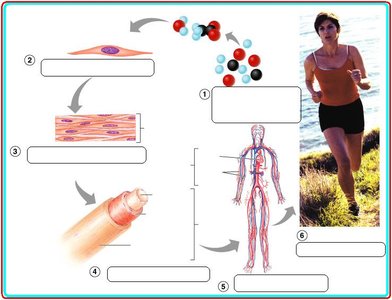
The human body is organized into a hierarchy of structural levels, each building upon the previous.
Chemical Level: Atoms combine to form molecules (e.g., H2O, sugars, proteins).
Cellular Level: Molecules form organelles, which make up cells. Cells vary in size and shape according to their function.
Tissue Level: Groups of similar cells with a common function. Four basic tissue types: connective, muscle, epithelium, and nervous.
Organ Level: Discrete structures formed by two or more tissue types (e.g., stomach).
Organ System Level: Organs cooperate for a common goal (e.g., urinary system: kidney, ureters, bladder, urethra).
Organismal Level: The living human being, the sum of all levels working together.
Summary of Body Organ Systems
The body is organized into several organ systems, each with specific functions:
Integumentary
Skeletal
Muscular
Nervous
Endocrine
Cardiovascular
Lymphatic
Immune
Respiratory
Digestive
Urinary
Reproductive
Maintenance of Life
Functional Characteristics of Life
To sustain life, the human body must perform several essential functions:
Maintenance of Boundaries: Separates internal and external environments (e.g., skin protects internal organs).
Movement: Muscles pull on bones for locomotion; muscle contraction propels blood, food, and urine.
Responsiveness: Ability to sense and respond to changes (e.g., pain, increased CO2 triggers increased breathing).
Digestion: Breakdown of food into absorbable molecules (e.g., carbohydrates to glucose).
Metabolism: All chemical reactions in cells, including catabolism and anabolism. ATP is generated for cellular energy. Equation:
Excretion: Removal of waste (e.g., urea in urine, CO2 via lungs, feces via defecation).
Reproduction: Mitosis for cell division; union of sperm and ova for offspring.
Growth: Increase in cell size or number.
Survival Needs
Nutrients: Chemicals for energy and cell building (carbohydrates, fats, proteins, minerals, vitamins).
Oxygen: Essential for ATP production.
Water: Most abundant chemical; site of chemical reactions.
Normal Body Temperature: Affects rate of chemical reactions.
Appropriate Atmospheric Pressure: Necessary for breathing and gas exchange.
Homeostasis: Dynamic Equilibrium
Definition and Importance
Homeostasis is the maintenance of a stable internal environment despite external changes. It involves complex interactions among organ systems and is regulated by chemical, thermal, and neural factors.
General Characteristics of Control Mechanisms
Communication: Essential for homeostasis; nervous system (impulses) and endocrine system (hormones) are key.
Components:
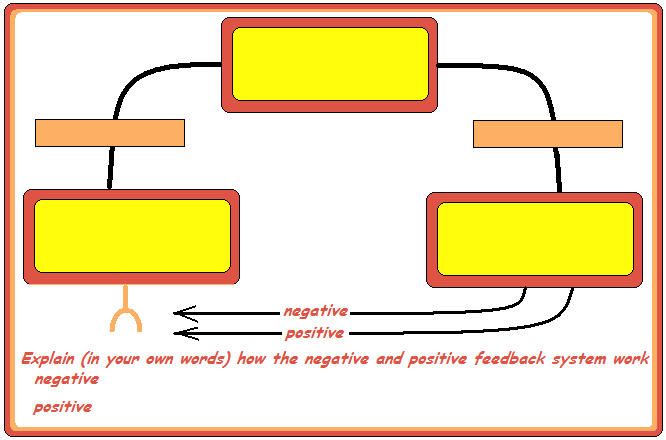
Receptor: Monitors environment and sends input to control center via afferent pathway.
Control Center: Determines set point, analyzes input, and initiates response.
Effector: Responds to control center's output via efferent pathway, producing an effect.
Feedback: Negative feedback depresses/stops original stimulus; positive feedback enhances/amplifies it.
Negative Feedback Mechanism
Negative feedback responds in the opposite direction to the original stimulus, reducing or stopping it. It is the most common mechanism for maintaining homeostasis.
Example: Regulation of blood glucose. Increased blood sugar stimulates insulin release, which lowers blood sugar until homeostasis is restored.
Other Examples: Control of heart rate, blood pressure, and breathing.
Positive Feedback Mechanism
Positive feedback responds in the same direction as the original stimulus, amplifying it. It is less common and often involved in processes that need rapid completion.
Example: Labor contractions during childbirth. Increased pressure on the cervix stimulates oxytocin release, which intensifies contractions until delivery.
The Language of Anatomy
Anatomical Position and Directional Terms
Anatomical position is the universal reference for describing locations and directions in the body.
Anatomical Position: Body erect, arms at sides, palms forward, feet together, head and toes forward.
Directional Terms: Superior/inferior, anterior/posterior, medial/lateral/intermediate, proximal/distal, superficial/deep.
Regional Terms
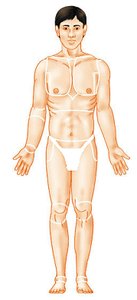
Axial: Head, neck, and trunk.
Appendicular: Limbs.
Body Planes and Sections
Body planes are imaginary lines used to divide the body for anatomical study.
Sagittal/Midsagittal/Parasagittal: Divides body into left and right sections.
Frontal (Coronal): Divides body into anterior and posterior sections.
Transverse (Horizontal): Divides body into superior and inferior sections.
Oblique: Cuts at an angle between horizontal and vertical.
Body Cavities and Membranes
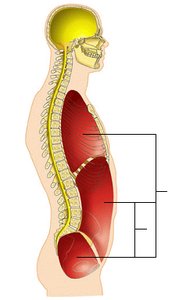
The body contains dorsal and ventral cavities, each housing specific organs.
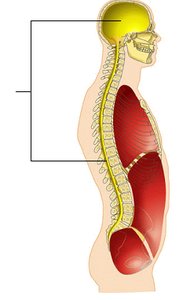
Dorsal Body Cavity:
Cranial cavity: Skull, contains brain.
Spinal cavity: Vertebrae, contains spinal cord.
Ventral Body Cavity:
Thoracic cavity: Rib cage, contains lungs (pleural cavities) and heart (pericardial cavity).
Abdominopelvic cavity: Separated by diaphragm; abdominal cavity (stomach, intestines, liver), pelvic cavity (reproductive organs, bladder).
Serous Membranes
Serous membranes cover ventral cavity walls and organ surfaces, consisting of two layers:
Parietal serosa: Lines cavity wall.
Visceral serosa: Covers organ surface.
Serous fluid: Separates parietal and visceral layers, reducing friction.
Abdominopelvic Regions and Quadrants
Abdominopelvic Regions
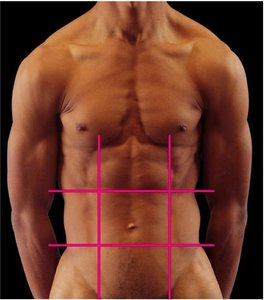
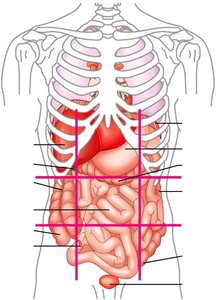
The abdominopelvic area is divided into nine regions for precise anatomical reference:
Right hypochondriac
Epigastric
Left hypochondriac
Right lumbar
Umbilical
Left lumbar
Right iliac
Hypogastric
Left iliac
Abdominopelvic Quadrants
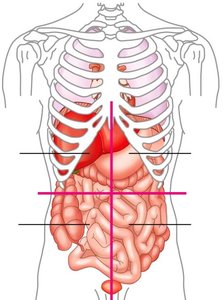
The abdominopelvic area is also divided into four quadrants:
Right Upper Quadrant (RUQ)
Left Upper Quadrant (LUQ)
Right Lower Quadrant (RLQ)
Left Lower Quadrant (LLQ)
Summary Table: Structural Hierarchy of the Human Body
Level | Description | Example |
|---|---|---|
Chemical | Atoms and molecules | H2O, glucose |
Cellular | Organelles and cells | Muscle cell |
Tissue | Groups of similar cells | Muscle tissue |
Organ | Two or more tissue types | Stomach |
Organ System | Organs working together | Digestive system |
Organismal | All systems combined | Human body |
