 Indietro
Osmolarity, Tonicity, Diffusion, and Membrane Transport in Human Physiology
Guida di studio - Note intelligenti
 Appunti personalizzati basati sui tuoi materiali, ampliati con definizioni chiave, esempi e contesto.
Introduction to Human Physiology
Definition and Scope
Human physiology is the science of the mechanical, physical, and biochemical functions of the human body. It is studied at various levels of organization, from cells to tissues, organs, and systems. Understanding physiology is foundational for comprehending how the body maintains internal balance and responds to external changes.
Homeostasis
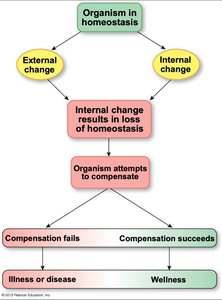
Homeostasis refers to the body's ability to maintain a stable internal environment despite external or internal changes. It is a central concept in physiology, ensuring optimal conditions for cellular function.
Key Point: Homeostasis involves feedback mechanisms that detect changes and initiate responses to restore balance.
Example: Regulation of body temperature, blood glucose, and pH.
Fluid Compartments in the Human Body
Intracellular and Extracellular Fluid
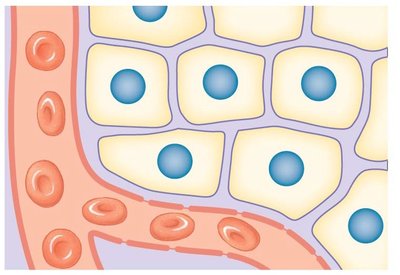
The body’s fluids are divided into compartments: intracellular fluid (ICF) inside cells and extracellular fluid (ECF) outside cells. The cell membrane separates these compartments, maintaining distinct environments for cellular processes.
Key Point: ICF makes up about two-thirds of total body water, while ECF (including interstitial fluid and plasma) makes up one-third.
Example: Plasma is the fluid component of blood; interstitial fluid surrounds tissue cells.
Ion Distribution
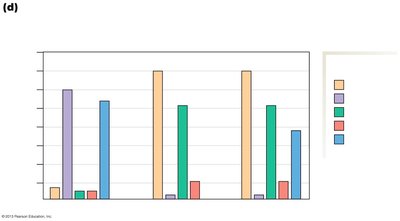
Different ions are distributed unevenly between ICF and ECF, creating concentration gradients essential for physiological functions such as nerve impulse transmission and muscle contraction.
Key Point: Sodium (Na+) is high in ECF, potassium (K+) is high in ICF.
Example: The sodium-potassium pump maintains these gradients.
Osmolarity and Tonicity
Osmolarity
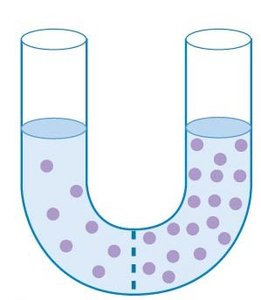
Osmolarity is the measure of the total number of solute particles per liter of solution. It determines the movement of water across membranes and is crucial for maintaining cell volume and function.
Key Point: Osmolarity is calculated as: where = number of solute particles (mOsm), = volume (L), = solute concentration (mOsm/L).
Example: If ECF has 300 mOsm/L in 1L, total solutes = 300 mOsm.
Tonicity
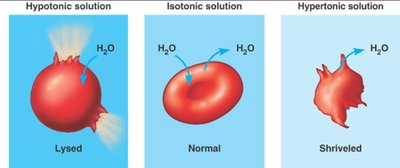
Tonicity describes the effect of a solution on cell volume, based on the movement of water. It is determined by the concentration of non-penetrating solutes.
Key Point: Hypotonic solutions cause cells to swell, hypertonic solutions cause cells to shrink, and isotonic solutions maintain cell size.
Example: Red blood cells placed in hypotonic, isotonic, or hypertonic solutions.
Diffusion and Fick’s Law
Diffusion
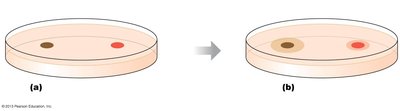
Diffusion is the passive movement of molecules from an area of high concentration to an area of low concentration. It is a fundamental process for the transport of gases, nutrients, and waste products across cell membranes.
Key Point: Diffusion rate depends on concentration gradient, membrane permeability, surface area, and molecular size.
Example: Dyes diffusing in an agar plate.
Fick’s Law of Diffusion
Fick’s Law quantifies the rate of diffusion across a membrane:
Key Point:
Factors affecting permeability: Lipid solubility, molecular size, concentration gradient, membrane surface area, and composition of lipid layer.
Membrane Transport and Communication
Types of Membrane Proteins
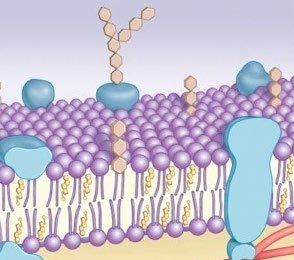
Membrane proteins are essential for structural support, enzymatic activity, signal transduction, and transport of molecules across the cell membrane.
Structural proteins: Maintain cell shape and integrity.
Enzymes: Catalyze reactions at the membrane surface.
Receptor proteins: Transmit signals from the external environment to the cell interior.
Transporters: Facilitate movement of ions and molecules.

Membrane Transporters
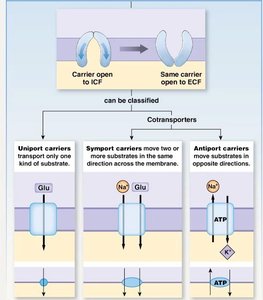
Transporters are classified as channel proteins and carrier proteins. Channel proteins create water-filled pores, while carrier proteins bind substrates and change conformation to transport them.
Channel proteins: Allow rapid movement of ions and water.
Carrier proteins: Transport specific molecules, never forming an open channel.
Types of Channel Proteins
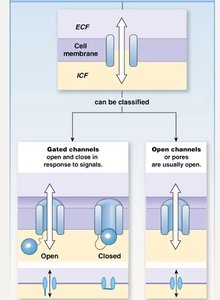
Gated channels: Open and close in response to signals.
Open channels: Usually remain open, allowing continuous flow.
Types of Carrier Proteins
Uniport carriers: Transport one type of substrate.
Symport carriers: Move two or more substrates in the same direction.
Antiport carriers: Move substrates in opposite directions.
Facilitated Diffusion and Co-Transport
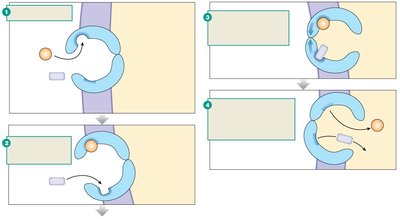
Facilitated diffusion uses carrier proteins to move substances down their concentration gradient without energy input. Co-transport involves the simultaneous movement of two substances, often using the gradient of one to drive the transport of another.
Example: Glucose transport via GLUT and SGLT proteins.
Key Point: SGLT uses Na+ gradient to transport glucose against its concentration gradient.
Review and Summary
Osmolarity: Number of solutes per unit volume; drives fluid movement and osmotic pressure.
Tonicity: Determines whether fluid moves into or out of cells.
Diffusion: Movement from high to low concentration; depends on membrane permeability and molecular size.
Membrane Transport: Includes channels and carriers, each with specific roles in cellular communication and transport.
