 Indietro
Pathology of the Skeletal System: Osteoporosis and Bone Injuries
Guida di studio - Note intelligenti
 Appunti personalizzati basati sui tuoi materiali, ampliati con definizioni chiave, esempi e contesto.
Pathology of the Skeletal System
Overview of Skeletal System Injuries and Diseases
The skeletal system is susceptible to a variety of diseases and injuries that can significantly impact human health and mobility. This section focuses on common pathological conditions including osteoporosis, bone fractures, sprains, carpal tunnel syndrome, bursitis, tendinitis, and arthritis. Understanding these conditions is essential for recognizing their causes, symptoms, and treatment options.
Osteoporosis
Bone Breaks (Fractures)
Sprains
Carpal Tunnel Syndrome
Bursitis
Tendinitis
Arthritis
Osteoporosis
Definition, Causes, Symptoms, and Treatments
Osteoporosis is a common skeletal disorder characterized by a significant loss of bone mass, resulting in fragile bones that are prone to fractures. It primarily affects older women due to a natural decline in estrogen levels after menopause, which disrupts the balance between bone resorption and formation.
Causes: Imbalance between the activity of osteoclasts (cells that break down bone) and osteoblasts (cells that build bone).
Symptoms:
Brittle bones
Hunched posture
Difficulty walking
Increased incidence of fractures, especially in hips and spine
Prevention:
Ensure adequate intake of calcium (1,000–1,500 mg/day) and vitamin D
Maintain regular weight-bearing exercise (e.g., walking, lifting weights)
Treatment:
Hormone replacement therapy (estrogen and calcitonin)
Medications that inhibit osteoclast activity
Teriparatide (a fragment of parathyroid hormone, PTH) to stimulate osteoblasts and increase bone density
Example: A postmenopausal woman experiencing frequent hip fractures may be diagnosed with osteoporosis and prescribed calcium supplements, vitamin D, and medications to reduce bone resorption.
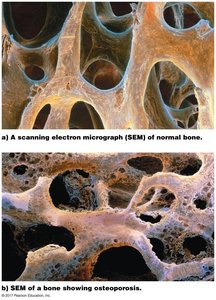
Figure: Scanning electron micrographs (SEM) comparing normal bone (top) and osteoporotic bone (bottom). Osteoporotic bone shows larger holes and thinner trabeculae, indicating reduced bone density and structural integrity.
Bone Fractures (Breaks)
Types, Symptoms, and Repair Process
Bone fractures are common injuries that vary in severity and impact on surrounding tissues. Understanding the types of fractures and the repair process is crucial for effective treatment and recovery.
Types of Fractures:
Simple: Bone ends do not significantly damage surrounding tissues.
Complete: Bone separates into two pieces, damaging soft tissue.
Compound: Broken bone ends or shards puncture the skin, increasing risk of infection.
Symptoms:
Bleeding (hematoma formation)
Inflammation, swelling, and pain
Repair Process:
Formation of a hematoma at the fracture site
Migration of fibroblasts, which become chondroblasts and produce a callus (hard, raised ring)
Arrival of osteoclasts to remove dead bone fragments and blood cells
Osteoblasts encourage crystallization of calcium phosphate minerals, restoring bone structure
Treatment: Immobilization (casting) to prevent movement and allow healing and "re-knitting" of bone tissue.
Example: A compound fracture of the forearm requires immediate medical attention, immobilization, and careful monitoring for infection.
Summary Table: Osteoporosis vs. Bone Fractures
Condition | Causes | Symptoms | Treatment |
|---|---|---|---|
Osteoporosis | Imbalance between osteoclast and osteoblast activity; estrogen decline | Brittle bones, hunched posture, frequent fractures | Calcium/Vitamin D, exercise, hormone therapy, medications |
Bone Fractures | Trauma, weakened bone structure | Pain, swelling, hematoma, loss of function | Immobilization, surgical repair, rehabilitation |
Additional info:
Osteoclasts and osteoblasts are specialized bone cells responsible for bone resorption and formation, respectively. Their balanced activity is essential for maintaining bone health. Disruption in this balance leads to conditions such as osteoporosis. Calcium phosphate is the primary mineral component of bone, providing strength and rigidity.
