 Indietro
Pathology of the Skeletal System: Sprains, Carpal Tunnel Syndrome, Bursitis, and Tendinitis
Guida di studio - Note intelligenti
 Appunti personalizzati basati sui tuoi materiali, ampliati con definizioni chiave, esempi e contesto.
Pathology of the Skeletal System
Sprains
Sprains are a common injury involving the stretching or tearing of ligaments, which are strong bands of connective tissue that connect bones at joints. Due to the limited blood supply to ligaments, sprains often take a long time to heal.
Causes: Sudden twisting or impact that forces a joint beyond its normal range of motion.
Symptoms: Internal bleeding, bruising, swelling, pain, and reduced mobility.
Treatment: The standard approach is "RICE":
Rest: Avoid using the affected joint.
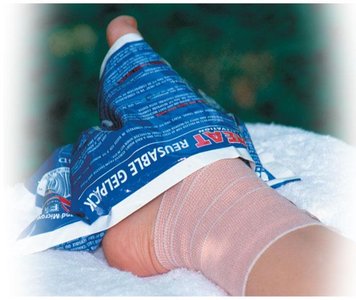
Ice: Apply cold packs to reduce swelling.
Compression: Use bandages to limit swelling.
Elevation: Keep the injured area raised above heart level.
Healing: Slow due to poor blood flow to ligaments.
Carpal Tunnel Syndrome (CTS)
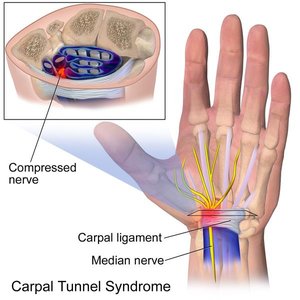
Carpal Tunnel Syndrome is a repetitive strain injury affecting the wrist, commonly caused by activities such as typing. The carpal tunnel is a passageway in the wrist formed by carpal bones and a connective tissue sheath, through which nerves, blood vessels, and tendons pass.
Pathophysiology: Overuse leads to inflammation of tendons, compressing the median nerve within the tunnel.
Symptoms:
Early: Pain, tingling, numbness in the hand and wrist, especially the thumb, index, and middle fingers.
Progression: Decreased grip strength, difficulty making a fist, trouble grasping small objects.
Other: May wake up needing to "shake out" hands.
Risk Factors:
Women are three times more likely to develop CTS.
Dominant hand is usually affected first.
Higher risk in adults, diabetics, and those with metabolic disorders.
Treatment:
Non-Surgical: Anti-inflammatory medications, steroid injections, exercise (strengthening and stretching), yoga (shown to improve grip strength and reduce pain).
Alternative Medicine: Acupuncture and chiropractic are unproven.
Surgical: Carpal tunnel release (severing the band of tissue to relieve pressure), performed if symptoms persist for 6+ months. Recurrence is rare; most patients recover fully.
Bursitis
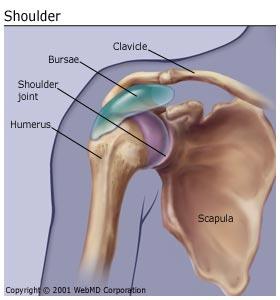
Bursitis is the inflammation of a bursa, a fluid-filled sac that reduces friction between tissues of the body, especially around joints. It is commonly caused by overuse, sudden injury, or prolonged pressure on a joint.
Pathophysiology: The bursa fills with excess fluid, increasing pressure on surrounding tissues.
Symptoms: Pain, swelling, inflammation, tenderness, restricted movement, and muscle weakness due to joint pain.
Risk Factors: Older age, manual labor, athletes.
Treatment:
Ice for the first 24 hours, followed by heat.
Rest and over-the-counter pain relievers.
Steroid injections.
Removal of excess fluid.
Physical therapy and ultrasound.
Tendinitis
Tendinitis is the inflammation of a tendon, the fibrous tissue that connects muscle to bone. Due to poor blood supply, tendons heal slowly. The knees and shoulders are most commonly affected.
Symptoms: Pain, swelling, inflammation.
Treatment: Ice followed by heat, rest, pain relievers, and anti-inflammatory medications.
Summary Table: Pathologies of the Skeletal System
Condition | Structure Affected | Causes | Symptoms | Treatment |
|---|---|---|---|---|
Sprain | Ligament | Twisting, impact | Bruising, swelling, pain | RICE |
Carpal Tunnel Syndrome | Median nerve in wrist | Repetitive use, inflammation | Pain, numbness, weakness | Medications, exercise, surgery |
Bursitis | Bursa | Overuse, injury, pressure | Pain, swelling, restricted movement | Ice/heat, rest, steroids, fluid removal |
Tendinitis | Tendon | Overuse, injury | Pain, swelling | Ice/heat, rest, anti-inflammatories |
Additional info:
Ligaments and tendons are both connective tissues, but ligaments connect bone to bone, while tendons connect muscle to bone.
Bursae are present in many joints, including the shoulder, hip, and knee, and play a crucial role in joint movement.
