 Indietro
Respiratory System Physiology: Axial Skeleton and Pulmonary Function
Guida di studio - Note intelligenti
 Appunti personalizzati basati sui tuoi materiali, ampliati con definizioni chiave, esempi e contesto.
Respiratory System Physiology
Overview of the Respiratory System
The respiratory system is responsible for gas exchange, supplying oxygen to the blood and removing carbon dioxide. It consists of the lungs, airways, and associated muscles, including the diaphragm and intercostal muscles. - Key Point 1: The process of breathing involves inspiration (inhaling) and expiration (exhaling), regulated by muscular contractions. - Key Point 2: The rib cage and diaphragm play crucial roles in changing thoracic volume to facilitate airflow. 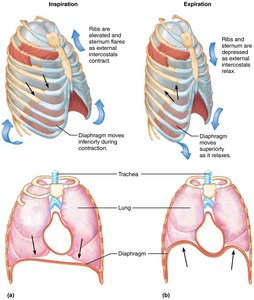
Mechanics of Breathing
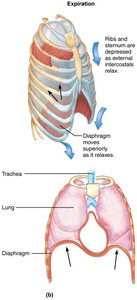
Breathing is divided into two phases: inspiration and expiration. During inspiration, the diaphragm contracts and moves downward, while the external intercostal muscles elevate the ribs, increasing thoracic volume and decreasing pressure, allowing air to flow in. Expiration occurs when these muscles relax, decreasing thoracic volume and increasing pressure, forcing air out. - Inspiration: Diaphragm contracts, rib cage elevates, thoracic volume increases. - Expiration: Diaphragm relaxes, rib cage depresses, thoracic volume decreases. - Example: During exercise, both phases become more pronounced to meet increased oxygen demand. 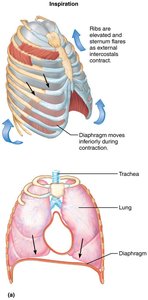
Respiratory Volumes and Capacities
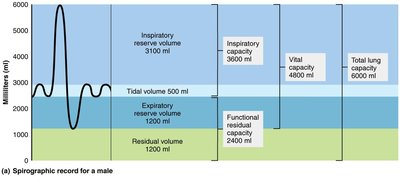
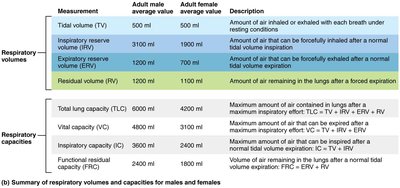
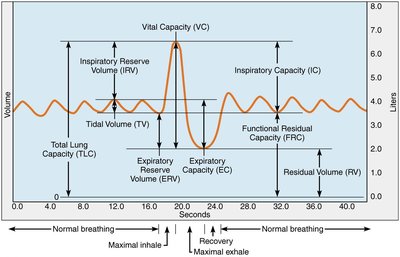
Respiratory volumes and capacities are measurements used to assess lung function. These include tidal volume, inspiratory reserve volume, expiratory reserve volume, and residual volume. Capacities are combinations of these volumes, such as vital capacity and total lung capacity. - Tidal Volume (TV): Amount of air inhaled or exhaled during normal breathing (~500 mL). - Inspiratory Reserve Volume (IRV): Maximum air that can be inhaled after a normal inspiration. - Expiratory Reserve Volume (ERV): Maximum air that can be exhaled after a normal expiration. - Residual Volume (RV): Air remaining in lungs after maximal exhalation. - Vital Capacity (VC): Total amount of air that can be exhaled after maximal inhalation. 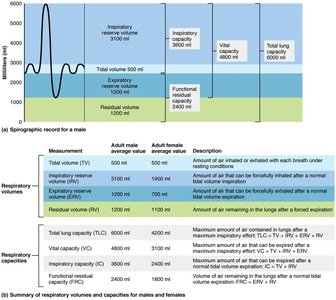
Measurement | Adult Male Avg. | Adult Female Avg. | Description |
|---|---|---|---|
Tidal Volume (TV) | 500 mL | 500 mL | Air inhaled/exhaled with each breath |
Inspiratory Reserve Volume (IRV) | 3100 mL | 1900 mL | Max air inhaled after normal inspiration |
Expiratory Reserve Volume (ERV) | 1200 mL | 700 mL | Max air exhaled after normal expiration |
Residual Volume (RV) | 1200 mL | 1100 mL | Air remaining after forced expiration |
Total Lung Capacity (TLC) | 6000 mL | 4200 mL | Max air contained in lungs |
Vital Capacity (VC) | 4800 mL | 3100 mL | Max air exhaled after max inhalation |
Inspiratory Capacity (IC) | 3600 mL | 2400 mL | Max air inspired after normal expiration |
Functional Residual Capacity (FRC) | 2400 mL | 1800 mL | Air remaining after normal expiration |
Spirometry and Pulmonary Function Testing
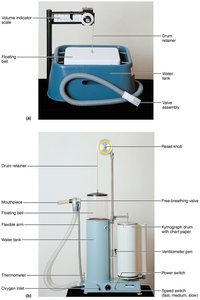
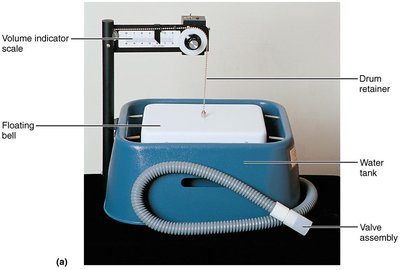
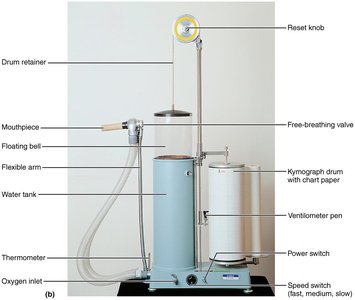
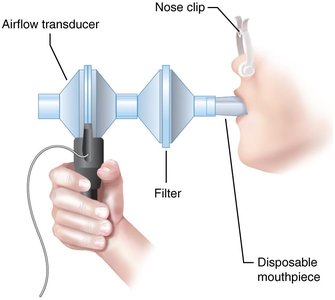
Spirometry is a common method for measuring respiratory volumes and capacities. Devices such as the Wright handheld dry spirometer and wet spirometers are used to record lung function. - Wright Spirometer: Measures volume of air exhaled; used for quick assessments. - Wet Spirometer: Uses water displacement to measure lung volumes; provides detailed recordings. - Example: Spirometry is used clinically to diagnose obstructive and restrictive lung diseases. 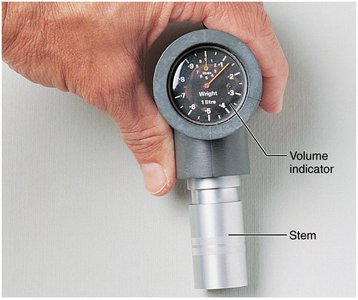
Interpretation of Spirometry Data
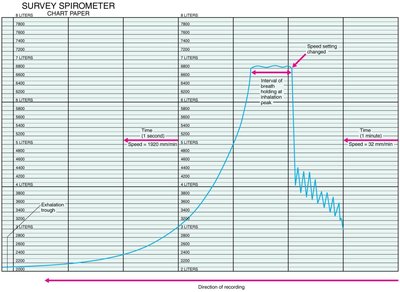
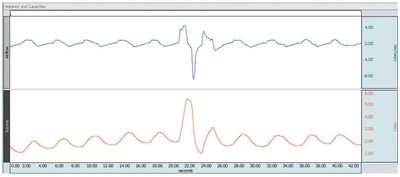
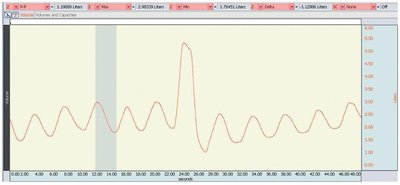
Spirometry produces graphical records of breathing patterns, including tidal volume, inspiratory capacity, expiratory reserve volume, and vital capacity. Forced vital capacity (FVC) and forced expiratory volume (FEV) are important for assessing lung function. - FVC: Maximum volume of air forcibly exhaled after full inhalation. - FEV: Volume exhaled in a specific time interval (e.g., 1 second). - Clinical Application: Reduced FEV may indicate obstructive lung disease. 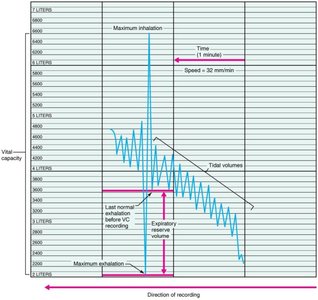
Modern Pulmonary Function Equipment
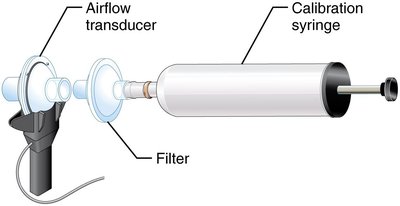
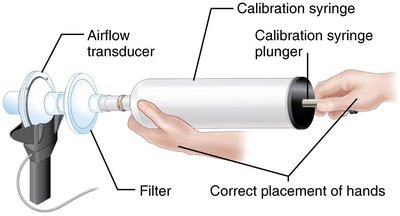
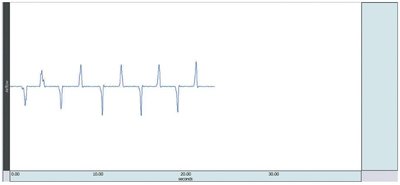
Modern spirometry uses electronic equipment such as the BIOPAC® system, which includes airflow transducers and calibration syringes for accurate measurement. - Key Point: Proper calibration and setup are essential for reliable data. - Example: Calibration ensures that measured volumes correspond to actual lung volumes. 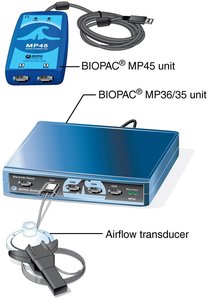
Gas Exchange at the Tissues
Oxygen is released from hemoglobin and diffuses into tissues, while carbon dioxide is picked up and transported back to the lungs. This process involves chemical reactions and transport proteins. - Oxygen Transport: O2 binds to hemoglobin in red blood cells and is released at tissues. - Carbon Dioxide Transport: CO2 is carried as bicarbonate, carbaminohemoglobin, or dissolved in plasma. - Example: The chloride shift facilitates CO2 transport in blood. 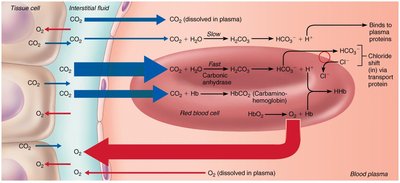
Key Equations in Respiratory Physiology
Several equations are used to calculate respiratory volumes and capacities: - Vital Capacity (VC): - Total Lung Capacity (TLC): - Inspiratory Capacity (IC): - Functional Residual Capacity (FRC): Additional info: These equations are fundamental for interpreting spirometry results and understanding lung function. ----------------------------------------
