 Indietro
Sensory Pathways and the Somatic Nervous System: Study Guide
Guida di studio - Note intelligenti
 Appunti personalizzati basati sui tuoi materiali, ampliati con definizioni chiave, esempi e contesto.
Sensory Pathways and the Somatic Nervous System
Overview of Sensory Pathways
The sensory pathways are essential for transmitting information from the environment to the central nervous system (CNS), allowing the body to perceive and respond to various stimuli. These pathways consist of nerves, nuclei, and tracts, and can be classified as ascending (sensory) or descending (motor) pathways.
Afferent division: Carries sensory information from receptors to the CNS.
Efferent division: Transmits motor commands from the CNS to effectors (muscles and glands).
Neural pathway: Involves sensory neurons, interneurons, and motor neurons.
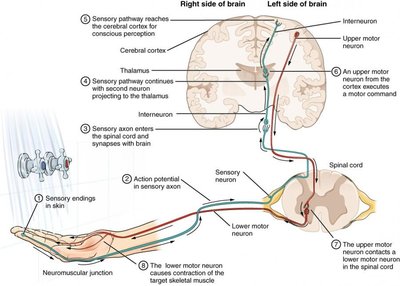
Sensory Receptors and Their Role
Sensory receptors connect the internal and external environments with the nervous system. They detect specific stimuli and convert them into electrical signals that are processed by the CNS.
Sensory receptor: Specialized cell or nerve ending that responds to a specific type of stimulus.
Transduction: The process by which a stimulus is converted into an electrical signal.
Perception: Interpretation of sensory information by the brain.
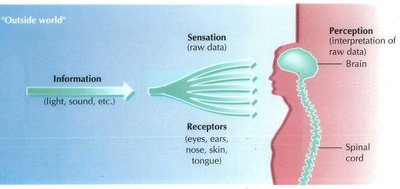
Events Along Sensory and Motor Pathways
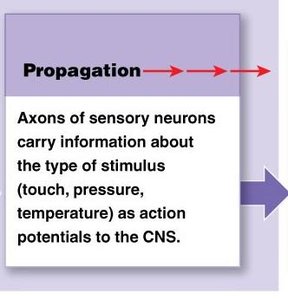
The journey of a sensory impulse involves several steps, from detection to perception and response. Sensory information is processed and can lead to both involuntary and voluntary motor responses.
Detection: Sensory receptors detect stimuli.
Transmission: Sensory neurons carry impulses to the CNS.
Processing: CNS interprets and integrates sensory information.
Response: Motor pathways initiate involuntary or voluntary actions.
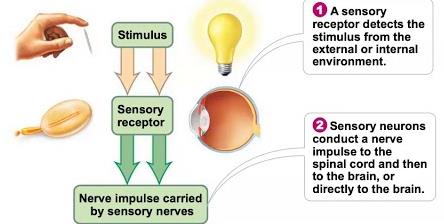
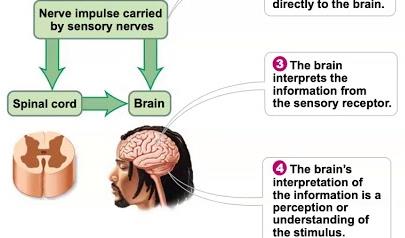
The Five Major Senses and Their Brain Pathways
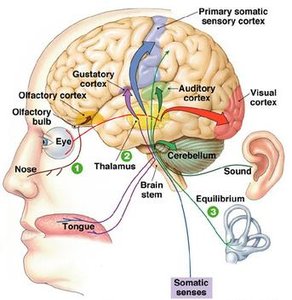
Each major sense has a unique pathway to the brain, where the information is processed in specialized regions.
Vision: Thalamus to occipital lobe
Hearing: Thalamus to temporal lobe
Taste (gustation): Thalamus to gustatory cortex (frontal lobe)
Smell (olfaction): Amygdala, hippocampus, and frontal lobe
General senses: Thalamus to somatosensory cortex

General Senses
General senses provide information about the body's internal and external environment, including temperature, pain, touch, pressure, vibration, and proprioception.
Temperature
Pain
Touch
Pressure
Vibration
Proprioception: Awareness of body position
Special Senses
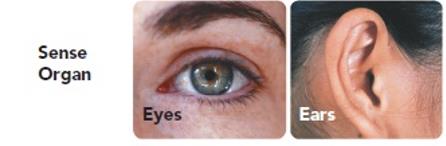
Special senses are mediated by specialized sensory organs and receptors, providing sensations such as vision, hearing, taste, and smell.
Special sensory receptors: Located in sense organs (e.g., eyes, ears, nose, tongue)
Special senses: Vision, hearing, taste, smell, equilibrium
Sensory Receptor Types and Response to Stimuli
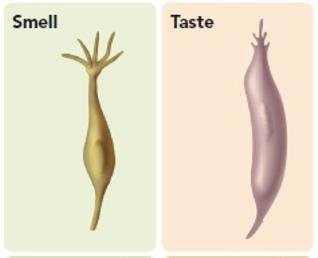
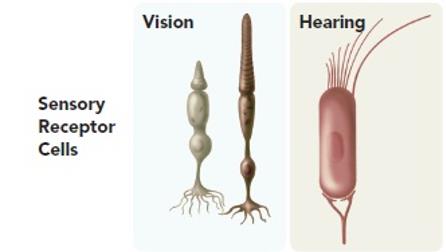
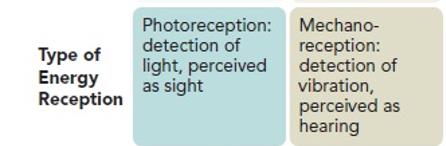
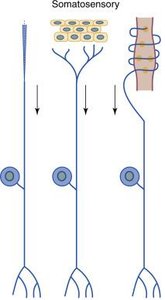
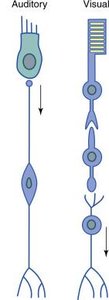
Sensory receptors can be classified by structure and function. They convert environmental stimuli into electrical signals, either as specialized sensory cells or as sensory nerve endings.
Specialized sensory cells: Non-neuronal cells (e.g., photoreceptors) that synapse with neurons.
Sensory processors: Specialized nerve endings that directly transduce signals (e.g., pain receptors).
Transduction and Receptor Potentials
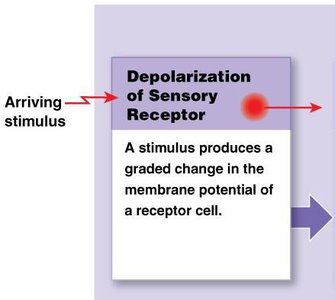
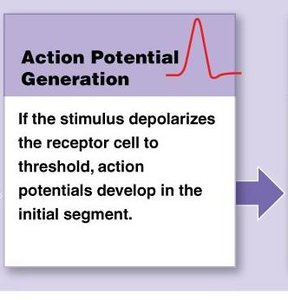
Transduction is the conversion of a stimulus into an electrical signal. Receptors respond to stimuli by generating graded potentials, which may lead to action potentials if the threshold is reached.
Receptor specificity: Each receptor has a characteristic sensitivity.
Generator potential: Graded potential in sensory neuron endings.
Receptor potential: Graded potential in specialized receptor cells.
Receptor Adaptation: Tonic vs. Phasic Receptors
Receptor adaptation describes how sensory receptors respond over time to a constant stimulus. Tonic receptors continue to fire, while phasic receptors adapt quickly and stop responding.
Tonic receptors: Slowly adapting, signal presence and intensity of stimulus.
Phasic receptors: Rapidly adapting, detect movement or changes.
General Sensory Receptors by Function
General sensory receptors are classified by the nature of the stimulus they detect:
Nociceptors: Pain receptors
Thermoreceptors: Temperature receptors
Mechanoreceptors: Physical distortion receptors
Chemoreceptors: Chemical concentration receptors
Nociceptors (Pain Receptors)
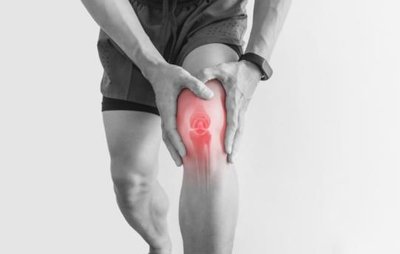
Nociceptors are found in superficial skin, joint capsules, and blood vessel walls. They respond to temperature extremes, mechanical damage, and chemicals released by injured cells.
Type A fibers: Myelinated, carry fast pain (sharp, prickling)
Type C fibers: Unmyelinated, carry slow pain (burning, aching)
Double pain: Fast pain followed by slow pain after injury
Thermoreceptors (Temperature Receptors)
Thermoreceptors are free nerve endings located in the dermis, skeletal muscles, liver, and hypothalamus. They detect changes in temperature and share pathways with pain receptors.
Location: Dermis, muscles, liver, hypothalamus
Pathways: Reticular formation, thalamus, somatosensory cortex

Mechanoreceptors (Physical Distortion Receptors)
Mechanoreceptors respond to physical stimuli such as stretching, compression, and twisting. They contain mechanically gated ion channels.
Tactile senses: Touch, pressure, vibration
Proprioceptors: Monitor muscle length, tension, and joint movement
Baroreceptors: Monitor pressure changes in organs

Chemoreceptors (Chemical Concentration Receptors)
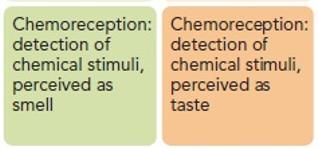
Chemoreceptors detect chemical stimuli and are involved in sensations such as taste and smell.
Location: Sense organs (nose, tongue)
Function: Detect chemical changes in the environment
Summary Table: General Sensory Receptors
Receptor Type | Stimulus Detected | Location | Example |
|---|---|---|---|
Nociceptors | Pain | Skin, joints, blood vessels | Sharp pain from injury |
Thermoreceptors | Temperature | Dermis, muscles, liver, hypothalamus | Feeling hot/cold |
Mechanoreceptors | Physical distortion | Skin, muscles, joints | Touch, vibration, proprioception |
Chemoreceptors | Chemical concentration | Nose, tongue | Taste, smell |
Key Concepts and Definitions
Sensation: The detection of a stimulus by sensory receptors.
Perception: The interpretation of sensory information by the brain.
Transduction: Conversion of a physical stimulus into a neural signal.
Receptor potential: Graded change in membrane potential in a receptor cell.
Generator potential: Graded change in membrane potential in a sensory neuron.
Equations and Academic Context
Membrane potential changes are central to sensory transduction:
Graded potential: (Change in membrane potential is proportional to current and resistance)
Action potential threshold: (Action potential generated when membrane potential exceeds threshold)
Study Guide Questions
Identify general senses vs special senses.
Which structure in the brain do most sensory signals pass before reaching the sensory cortex? Which sensation directly reaches the sensory cortex?
Identify general vs special sensory receptor types.
Explain stimulus detection and transduction.
Difference between receptor potential and generator potential.
What are the 4 types of general sensory receptors based on stimulus type?
What are proprioceptors and where are they located?
What is the difference between slow and fast nociceptors?
What are the types of mechanoreceptors? What are mechanoreceptors sensitive to?
Which receptors detect fine touch, crude touch, pain, and temperature?
