 Indietro
Sodium, Potassium, and Calcium Balance in the Body
Guida di studio - Note intelligenti
 Appunti personalizzati basati sui tuoi materiali, ampliati con definizioni chiave, esempi e contesto.
Sodium Balance
Overview of Sodium Homeostasis
Sodium (Na+) is the primary solute in the extracellular fluid (ECF) and is essential for maintaining normal osmotic pressure and the function of excitable cells such as neurons and muscle fibers. Imbalances in sodium concentration can lead to hypernatremia (high plasma sodium) or hyponatremia (low plasma sodium).
Hypernatremia: Elevated plasma sodium concentration.
Hyponatremia: Reduced plasma sodium concentration.
Physiological Importance: Sodium is critical for osmotic balance and electrical signaling in cells.
Mechanisms of Sodium Reabsorption in the Renal Tubule
Sodium is freely filtered at the glomerulus and is primarily reabsorbed in the proximal tubules, distal tubules, and collecting ducts. There is no secretion of sodium in the nephron. The reabsorption process is regulated by hormones such as aldosterone and atrial natriuretic peptide (ANP), particularly at the principal cells of the distal tubules and collecting ducts.
Active Reabsorption: Driven by the Na+/K+ pump on the basolateral membrane.
Regulation: Aldosterone increases reabsorption; ANP decreases reabsorption.
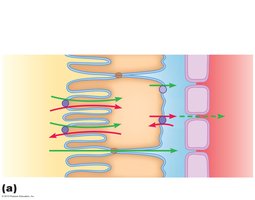
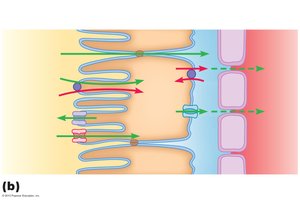
The Effects of Aldosterone
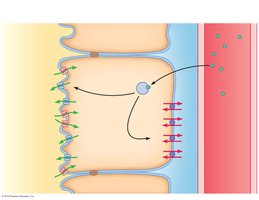
Aldosterone is a steroid hormone secreted by the adrenal cortex. It acts on principal cells of the distal tubules and collecting ducts to increase sodium reabsorption by:
Increasing the number of Na+/K+ pumps on the basolateral membrane
Increasing the number of open Na+ and K+ channels on the apical membrane
Renin-Angiotensin-Aldosterone System (RAAS)
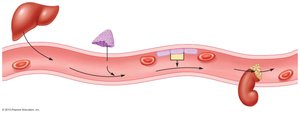
The RAAS is a hormone cascade pathway that helps regulate blood pressure and sodium balance:
Granular cells of the juxtaglomerular apparatus secrete renin in response to low blood pressure or low sodium.
Renin converts angiotensinogen (from the liver) into angiotensin I.
Angiotensin I is converted to angiotensin II by angiotensin-converting enzyme (ACE), mainly in the lungs.
Angiotensin II stimulates aldosterone production, increases vasoconstriction, and promotes sodium and water reabsorption.
Atrial Natriuretic Peptide (ANP)
ANP is secreted by atrial cells in response to increased plasma volume and atrial wall stretch. It acts to increase sodium excretion by:
Increasing glomerular filtration rate (GFR) via dilation of afferent arterioles and constriction of efferent arterioles
Decreasing sodium reabsorption by closing Na+ channels in the apical membrane
Overall effect: increased sodium and water excretion, reducing blood volume and pressure
Potassium Balance
Overview of Potassium Homeostasis
Potassium (K+) is crucial for the function of excitable cells. Imbalances can result in hyperkalemia (high plasma potassium) or hypokalemia (low plasma potassium).
Hyperkalemia: Elevated plasma potassium concentration.
Hypokalemia: Reduced plasma potassium concentration.
Renal Handling of Potassium Ions
Potassium is freely filtered at the glomerulus, reabsorbed in the proximal tubules, and both reabsorbed and secreted in the distal tubules and collecting ducts. Secretion in the distal nephron is regulated by aldosterone, which is directly stimulated by plasma potassium levels.
As plasma K+ increases, more aldosterone is released, increasing K+ secretion.
Calcium Balance
Overview of Calcium Homeostasis
Calcium (Ca2+) balance is critical for physiological processes such as exocytosis, secretion, muscle contraction, and increasing contractility of cardiac and smooth muscle. Imbalances include hypercalcemia (high plasma calcium) and hypocalcemia (low plasma calcium).
Hypercalcemia: Elevated plasma calcium concentration.
Hypocalcemia: Reduced plasma calcium concentration.
Routes of Calcium Exchange
Calcium is exchanged between the bone, digestive tract, plasma, and kidneys. Key processes include:
Calcification: Deposition of calcium into bone (stimulated by calcitonin).
Resorption: Release of calcium from bone (stimulated by parathyroid hormone (PTH) and 1,25-(OH2)D3).
Absorption: Uptake of calcium from the digestive tract (stimulated by 1,25-(OH2)D3).
Filtration and Reabsorption: Calcium is filtered at the glomerulus and reabsorbed in the kidneys (PTH stimulates, calcitonin inhibits).
Hormonal Control of Plasma Calcium Concentrations
Parathyroid Hormone (PTH): Released from parathyroid glands in response to low plasma Ca2+. Increases Ca2+ reabsorption in kidneys, stimulates activation of 1,25-dihydroxycholecalciferol, and increases bone resorption.
1,25-dihydroxycholecalciferol (Calcitriol): Steroid hormone derived from vitamin D3; increases calcium absorption in the digestive tract.
Calcitonin: Secreted from C cells of the thyroid gland in response to high plasma Ca2+; increases bone formation and decreases calcium reabsorption by kidneys.
Summary Table: Hormonal Regulation of Calcium
Hormone | Stimulus | Action | Effect on Plasma Ca2+ |
|---|---|---|---|
Parathyroid Hormone (PTH) | Low plasma Ca2+ | Increases bone resorption, kidney reabsorption, and vitamin D activation | Increases |
Calcitriol (1,25-(OH2)D3) | PTH, low plasma Ca2+ | Increases intestinal absorption of Ca2+ | Increases |
Calcitonin | High plasma Ca2+ | Increases bone formation, decreases kidney reabsorption | Decreases |
Key Equations:
Filtration of Ca2+ at the glomerulus:
