 Indietro
Structure and Functions of the Skeletal System: Axial and Appendicular Divisions
Guida di studio - Note intelligenti
 Appunti personalizzati basati sui tuoi materiali, ampliati con definizioni chiave, esempi e contesto.
Structure and Growth of Bones
Axial and Appendicular Divisions of the Skeletal System
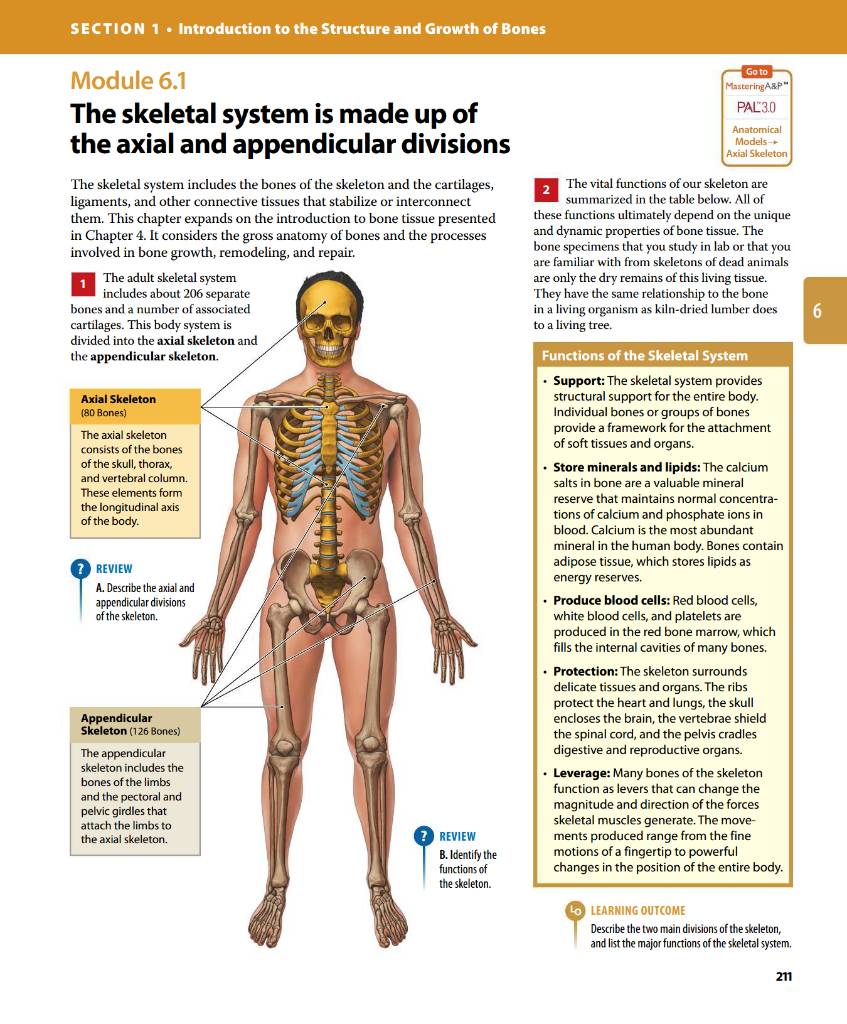
The skeletal system is a complex framework that provides support, protection, and movement for the human body. It consists of bones, cartilages, ligaments, and other connective tissues. The adult human skeleton is divided into two main divisions: the axial skeleton and the appendicular skeleton.
Axial Skeleton: Composed of 80 bones, it includes the bones of the skull, thorax, and vertebral column. These elements form the longitudinal axis of the body and provide support and protection for the brain, spinal cord, and organs in the thorax.
Appendicular Skeleton: Composed of 126 bones, it includes the bones of the limbs and the pectoral and pelvic girdles. These girdles attach the limbs to the axial skeleton and facilitate movement.
Functions of the Skeletal System
The skeletal system performs several vital functions that are essential for maintaining the body's structure and health. These functions depend on the unique and dynamic properties of bone tissue.
Support: Provides structural support for the entire body. Bones serve as a framework for the attachment of soft tissues and organs.
Store Minerals and Lipids: Bones store calcium salts, which are a valuable mineral reserve for maintaining normal concentrations of calcium and phosphate ions in the blood. Bones also contain adipose tissue, which stores lipids as energy reserves.
Produce Blood Cells: Red blood cells, white blood cells, and platelets are produced in the red bone marrow, which fills the internal cavities of many bones. This process is known as hematopoiesis.
Protection: The skeleton surrounds and protects delicate tissues and organs. For example, the ribs protect the heart and lungs, the skull encloses the brain, the vertebrae shield the spinal cord, and the pelvis cradles digestive and reproductive organs.
Leverage: Many bones act as levers that change the magnitude and direction of forces generated by skeletal muscles. This enables a wide range of movements, from fine motions of a fingertip to powerful changes in body position.
Summary Table: Functions of the Skeletal System
Function | Description |
|---|---|
Support | Provides structural framework for the body and attachment points for soft tissues and organs. |
Store Minerals and Lipids | Maintains mineral homeostasis (calcium, phosphate) and stores energy in adipose tissue. |
Produce Blood Cells | Red bone marrow produces red and white blood cells and platelets. |
Protection | Encloses and shields vital organs (brain, heart, lungs, spinal cord, digestive and reproductive organs). |
Leverage | Facilitates movement by acting as levers for muscle action. |
Key Terms and Definitions
Axial Skeleton: The central part of the skeleton, including the skull, thorax, and vertebral column.
Appendicular Skeleton: The part of the skeleton that includes the limbs and girdles.
Hematopoiesis: The process of blood cell production in the red bone marrow.
Mineral Homeostasis: The regulation of mineral concentrations in the blood, primarily calcium and phosphate.
Example: The ribs (axial skeleton) protect the heart and lungs, while the femur (appendicular skeleton) enables movement and supports body weight.
