 Indietro
Study Guide: Introduction to the Nervous System (Anatomy & Physiology)
Guida di studio - Note intelligenti
 Appunti personalizzati basati sui tuoi materiali, ampliati con definizioni chiave, esempi e contesto.
Nervous System: Overview
Functions of the Nervous System
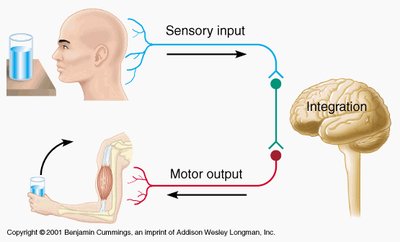
The nervous system is the body's primary control center and communications network, responsible for collecting, processing, and responding to information. It is essential for maintaining homeostasis and coordinating bodily functions.
Sensory Function: Collects information from internal and external environments via sensory receptors.
Integrative Function: Processes and evaluates sensory input, allowing for decision-making and response planning.
Motor Function: Responds to information by activating muscles or glands (effectors).
Example: When you see a glass of water, your sensory system detects it, your brain integrates the information, and your motor system allows you to reach for it.
Organization of the Nervous System
Structural Divisions
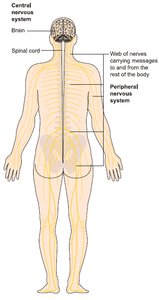
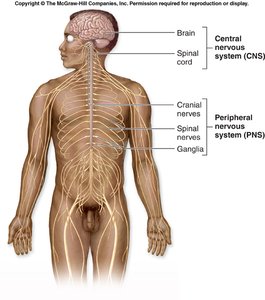
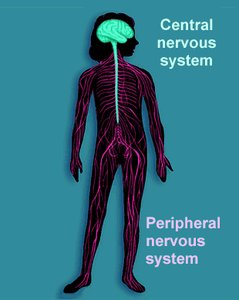
The nervous system is divided into two main structural components: the Central Nervous System (CNS) and the Peripheral Nervous System (PNS).
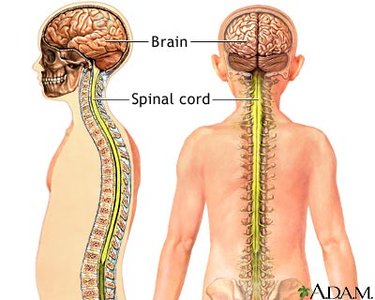
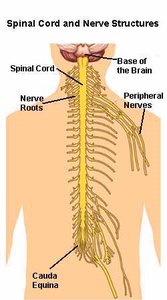
Central Nervous System (CNS): Consists of the brain and spinal cord. It is the main processing center for the entire nervous system.
Peripheral Nervous System (PNS): Composed of all nerves outside the CNS, including cranial nerves, spinal nerves, and ganglia. It connects the CNS to the rest of the body.
Functional Divisions
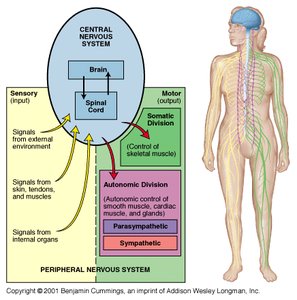
The nervous system is also divided functionally into sensory (afferent) and motor (efferent) divisions.
Sensory (Afferent) Division: Brings information from sensory receptors to the CNS.
Motor (Efferent) Division: Carries commands from the CNS to effectors (muscles and glands).
Somatic Nervous System: Controls voluntary movements of skeletal muscles.
Autonomic Nervous System: Controls involuntary functions of smooth muscle, cardiac muscle, and glands. Includes sympathetic and parasympathetic divisions.
Peripheral Nervous System (PNS)
Cranial and Spinal Nerves
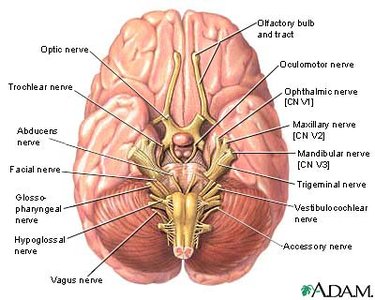
The PNS includes 12 pairs of cranial nerves and 31 pairs of spinal nerves, as well as ganglia (clusters of neuron cell bodies).
Cranial Nerves: Emerge directly from the brain and are primarily responsible for sensory and motor functions of the head and neck.
Spinal Nerves: Emerge from the spinal cord and serve the rest of the body.
Ganglia: Groups of neuron cell bodies in the PNS.
Nervous Tissue
Cell Types
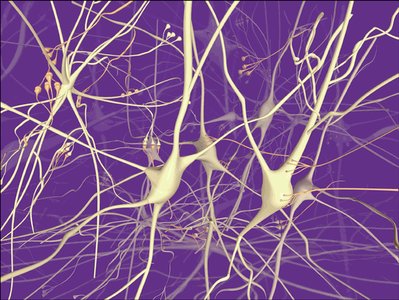
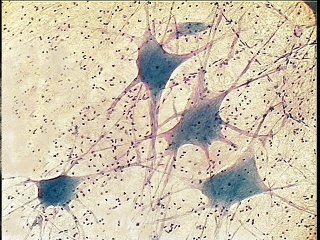
Nervous tissue consists of two main cell types: neurons and neuroglial (glial) cells.
Neurons: The basic structural and functional units of the nervous system. They conduct electrical impulses and are specialized for communication.
Neuroglial Cells: Support, protect, and nourish neurons. They can multiply and divide, and are involved in repair and defense.
Structure of a Typical Neuron
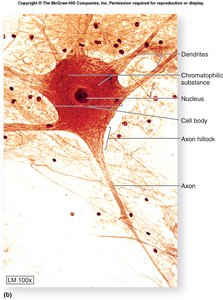
Neurons have a specialized structure that enables them to transmit signals efficiently.
Cell Body (Soma): Contains the nucleus and organelles.
Dendrites: Receive incoming signals and transmit them toward the cell body.
Axon: Propagates electrical impulses away from the cell body.
Myelin Sheath: Insulates the axon, increasing the speed of impulse conduction.
Nodes of Ranvier: Gaps in the myelin sheath where action potentials are regenerated.
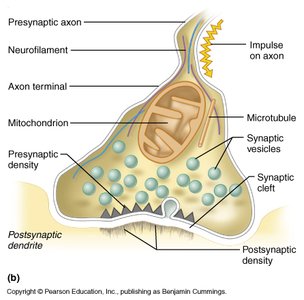
Axon Terminals: Release neurotransmitters to communicate with other neurons or effectors.
Neuronal Communication
Synapses
Synapses are functional junctions where neurons communicate with other neurons, muscles, or glands. Communication can be electrical or chemical.
Presynaptic Cell: Sends the signal.
Postsynaptic Cell: Receives the signal.
Synaptic Cleft: The gap between the two cells where neurotransmitters are released.
Central Nervous System (CNS)
Brain and Spinal Cord
The CNS consists of the brain and spinal cord, which are responsible for processing and integrating information, and coordinating responses.
Brain: The main organ for processing sensory information, initiating motor commands, and higher cognitive functions.
Spinal Cord: Conducts signals between the brain and the rest of the body, and serves as a reflex center.
Gray Matter and White Matter
The CNS is organized into gray matter and white matter.
Gray Matter: Contains neuron cell bodies, dendrites, unmyelinated axons, axon terminals, and neuroglia.
White Matter: Composed of myelinated axons, responsible for transmitting signals over long distances.
Summary Table: Structural and Functional Divisions of the Nervous System
Division | Components | Function |
|---|---|---|
Central Nervous System (CNS) | Brain, Spinal Cord | Integration, processing, coordination |
Peripheral Nervous System (PNS) | Cranial nerves, Spinal nerves, Ganglia | Communication between CNS and body |
Sensory (Afferent) Division | Sensory receptors, nerves | Transmit sensory information to CNS |
Motor (Efferent) Division | Motor nerves | Transmit motor commands from CNS to effectors |
Somatic Nervous System | Skeletal muscles | Voluntary control |
Autonomic Nervous System | Smooth muscle, cardiac muscle, glands | Involuntary control |
Key Terms and Definitions
Neuron: A nerve cell specialized for transmitting electrical impulses.
Neuroglia: Supporting cells in the nervous system.
Afferent: Conducting toward the CNS.
Efferent: Conducting away from the CNS.
Synapse: Junction between two neurons.
Myelin Sheath: Insulating layer around axons.
Ganglia: Clusters of neuron cell bodies in the PNS.
Additional info:
The nervous system is essential for rapid communication and coordination of bodily functions.
Neurons are highly specialized and do not divide; neuroglia can divide and are involved in repair and defense.
Myelin increases the speed of nerve impulse conduction via saltatory conduction.
