 Indietro
Study Guide: Muscles of the Head, Neck, and Torso
Guida di studio - Note intelligenti
 Appunti personalizzati basati sui tuoi materiali, ampliati con definizioni chiave, esempi e contesto.
Muscles of the Head, Neck, and Torso
Head and Facial Muscles
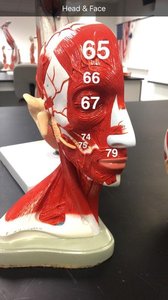
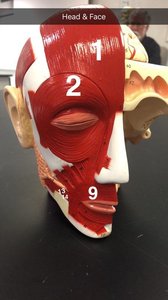
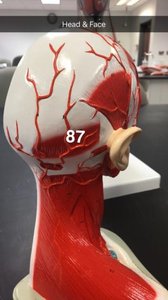
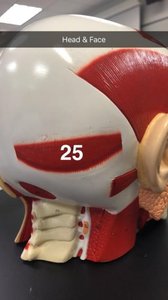
The muscles of the head and face are responsible for facial expressions, mastication (chewing), and movements of the scalp. These muscles are often studied using anatomical models, with each muscle labeled for identification.
Occipitofrontalis: This muscle consists of two bellies—the frontal belly (raises eyebrows) and the occipital belly. They are separated by the epicranial aponeurosis, a collagen sheet. The occipitofrontalis is essential for movements of the scalp and forehead.
Orbicularis Oculi: A circular muscle around the eye, responsible for closing the eyelids.
Zygomaticus Major and Minor: These muscles elevate the corners of the mouth, contributing to smiling.
Risorius: Draws the corner of the mouth laterally, aiding in expressions such as grinning.
Orbicularis Oris: Encircles the mouth and is responsible for pursing the lips.
Buccinator: Compresses the cheek, important for blowing and chewing.
Masseter: Elevates the mandible, a primary muscle for mastication.
Temporalis: Also elevates the mandible, assisting in chewing.
Example: The orbicularis oculi contracts when you blink or squint, while the zygomaticus major contracts when you smile.
Neck Muscles
The neck muscles are involved in movements of the head, neck, and shoulders, as well as respiration. They are critical for posture and mobility.
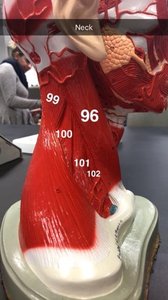
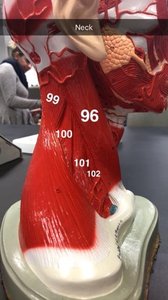
Sternocleidomastoid: Flexes the neck and rotates the head. It is a prominent muscle on the side of the neck.
Scalenes: Assist in flexion and lateral movement of the neck, and elevate the first two ribs during inspiration.
Splenius Capitis: Extends and rotates the neck.
Levator Scapulae: Elevates the scapula and assists in neck flexion.
Superficial Posterior Torso Muscles
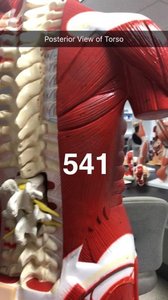
These muscles are located on the back and are involved in movements of the shoulder and upper limb, as well as maintaining posture.
Trapezius: Elevates, retracts, and rotates the scapula. It is a large, triangular muscle covering the upper back.
Latissimus Dorsi: Extends, adducts, and medially rotates the arm. It is a broad muscle of the lower back.
Superficial Anterior Torso Muscles
These muscles are located on the front of the torso and are involved in movements of the shoulder and upper limb.
Pectoralis Major: Responsible for flexion, adduction, and medial rotation of the shoulder.
Serratus Anterior: Protracts the scapula and holds it against the thoracic wall.
Deep Anterior Torso Muscles
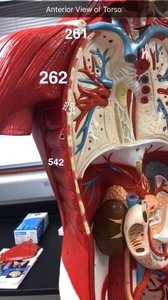
These muscles are located beneath the superficial muscles and are important for respiration and stabilization of the shoulder.
Pectoralis Minor: Stabilizes the scapula by drawing it anteriorly and inferiorly.
External Intercostals: Elevate the ribs during inhalation, increasing thoracic volume.
Internal Intercostals: Depress the ribs during exhalation, decreasing thoracic volume.
Abdominal Muscles
The abdominal muscles are essential for movements of the trunk, compression of abdominal contents, and respiration.
Rectus Abdominis: Compresses the abdomen and flexes the vertebral column.
External Obliques: Rotate and flex the trunk, compress the abdomen.
Internal Obliques: Rotate and flex the trunk, compress the abdomen.
Transversus Abdominis: Compresses the abdomen, providing stability to the trunk.
Example: The rectus abdominis contracts during sit-ups, while the obliques are active during twisting movements.
Summary Table: Major Muscles and Their Functions
Muscle | Location | Primary Function |
|---|---|---|
Occipitofrontalis | Head | Raises eyebrows, moves scalp |
Orbicularis Oculi | Face | Closes eyelids |
Zygomaticus Major/Minor | Face | Smiling |
Masseter | Jaw | Elevates mandible |
Sternocleidomastoid | Neck | Flexes neck, rotates head |
Trapezius | Back | Moves scapula |
Latissimus Dorsi | Back | Moves arm |
Pectoralis Major | Chest | Moves shoulder |
Rectus Abdominis | Abdomen | Flexes trunk |
Additional info: The anatomical models referenced in the images are commonly used in laboratory settings to help students identify and understand the location and function of each muscle. The numbers correspond to specific muscles on the models for practical identification.
