 Indietro
Study Guide: The Muscular System (Anatomy & Physiology)
Guida di studio - Note intelligenti
 Appunti personalizzati basati sui tuoi materiali, ampliati con definizioni chiave, esempi e contesto.
The Muscular System
Overview
The muscular system is responsible for movement, posture, and heat production in the human body. Muscles work by contracting, which pulls on bones and creates movement at joints. Understanding muscle anatomy, actions, and naming conventions is essential for studying human physiology.
Origin and Insertion
Definitions and Principles
Muscles attach to bones at two main sites: the origin and the insertion. The origin is typically the fixed attachment, while the insertion moves during muscle contraction. The relationship between these sites determines the movement produced by the muscle.
Origin: The stationary or less movable attachment site of a muscle.
Insertion: The movable attachment site, which is pulled toward the origin during contraction.
Movement: The insertion moves toward the origin, resulting in movement of the body part.
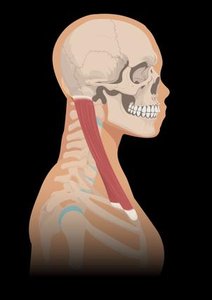
Example: The sternocleidomastoid muscle originates at the manubrium and clavicle and inserts at the mastoid process, allowing flexion and rotation of the head.
Muscle Actions
Types of Muscle Roles
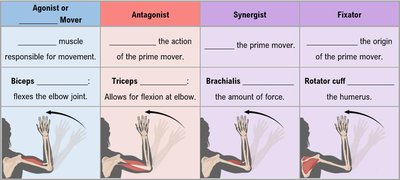
Muscles can act as agonists, antagonists, synergists, or fixators during movement. These roles coordinate complex actions and stabilize joints.
Agonist (Prime Mover): The muscle primarily responsible for a specific movement.
Antagonist: The muscle that opposes the action of the agonist.
Synergist: Assists the agonist by adding force or stabilizing movement.
Fixator: Stabilizes the origin of the agonist, preventing unwanted movement.
Example: During elbow flexion, the biceps brachii is the agonist, the triceps brachii is the antagonist, the brachialis is a synergist, and the rotator cuff muscles act as fixators.
Common Movements
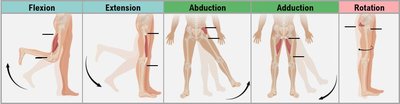
Flexion: Decreases the angle between two bones (e.g., bending the knee).
Extension: Increases the angle between two bones (e.g., straightening the knee).
Abduction: Moves a limb away from the midline.
Adduction: Moves a limb toward the midline.
Rotation: Turns a bone around its longitudinal axis.
Levers in the Muscular System
Lever Types and Mechanical Advantage
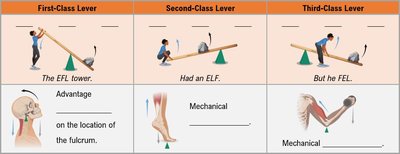
Muscles generate force using lever systems, which consist of a rigid rod (bone), a pivot point (joint), and applied force (muscle contraction). The arrangement of these components determines the mechanical advantage and efficiency of movement.
Load: The weight or resistance moved by the muscle.
Fulcrum: The joint or pivot point.
Effort: The force applied by the muscle.
There are three classes of levers:
Lever Class | Fulcrum Position | Example | Advantage |
|---|---|---|---|
First-Class | Fulcrum between load and effort | Neck muscles | Can be mechanical advantage or disadvantage |
Second-Class | Load between fulcrum and effort | Calf muscles | Mechanical advantage |
Third-Class | Effort between fulcrum and load | Biceps brachii | Mechanical disadvantage, greater range of motion |
Fascicle Arrangements
Types and Functional Implications
Muscle fascicles are bundles of muscle fibers organized in specific patterns. The arrangement affects the muscle's force and range of movement.
Parallel: Fibers run parallel to the muscle's long axis (e.g., sartorius).
Fusiform: Spindle-shaped, with a thick middle and tapered ends (e.g., biceps brachii).
Convergent: Broad origin, fibers converge to a single insertion (e.g., pectoralis major).
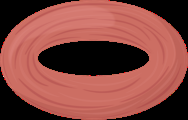
Circular: Fibers arranged in rings, controlling openings (e.g., orbicularis oculi).
Pennate: Short fibers attach obliquely to a central tendon (unipennate, bipennate, multipennate).
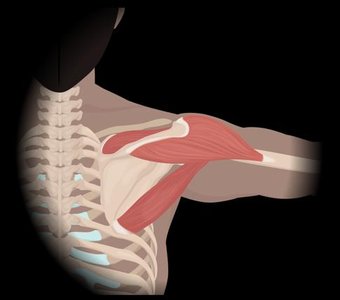
Example: The deltoid muscle is multipennate, optimized for force generation.
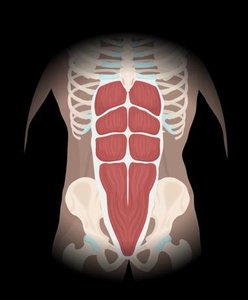
Example: The rectus abdominis muscle is parallel, optimized for range of movement.
Muscle Naming Conventions
Factors Influencing Muscle Names
Muscle names often reflect their characteristics, including location, shape, size, action, direction of fibers, attachment sites, and number of heads. Recognizing these conventions aids in identification and memorization.
Body Region: Indicates location (e.g., brachialis—arm).
Shape: Describes form (e.g., deltoid—triangle).
Size: Relative length or thickness (e.g., maximus—largest).
Muscle Action: Function (e.g., flexor—flexes).
Direction of Fibers: Orientation (e.g., rectus—straight).
Location of Attachments: Points of origin/insertion (e.g., sternocleidomastoid).
Number of Heads: Number of origins (e.g., biceps—two heads).
Muscle | Body Region | Shape | Size | Muscle Action | Direction of Fibers | Location of Attachments | Number of Heads |
|---|---|---|---|---|---|---|---|
Biceps Femoris Muscle | ✔ | ✔ | |||||
Brachioradialis | ✔ | ✔ | |||||
Transverse Abdominis | ✔ | ✔ | |||||
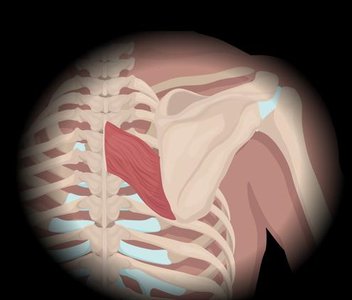
Serratus Anterior Muscle | ✔ | ✔ | |||||
Flexor Hallucis Brevis Muscle | ✔ | ✔ | ✔ | ✔ |
Summary Table: Fascicle Arrangements
Arrangement | Description | Example | Function |
|---|---|---|---|
Parallel | Fibers run parallel to long axis | Sartorius | Range of movement |
Fusiform | Spindle-shaped | Biceps brachii | Range of movement |
Convergent | Broad origin, converges to insertion | Pectoralis major | Versatile movement |
Circular | Fibers in rings | Orbicularis oculi | Control openings |
Unipennate | Fibers on one side of tendon | Extensor digitorum longus | Force generation |
Bipennate | Fibers on both sides of tendon | Rectus femoris | Force generation |
Multipennate | Fibers from multiple tendons | Deltoid | Maximum force |
Key Equations
Mechanical Advantage Formula
The mechanical advantage of a lever system is calculated as:
This equation helps determine whether a lever system prioritizes force or speed/range of motion.
Additional info:
Muscle contraction is powered by ATP and involves the sliding filament mechanism.
Muscle names often use Latin or Greek roots describing their features.
