 Indietro
Study Guide: The Muscular System (Chapter 10)
Guida di studio - Note intelligenti
 Appunti personalizzati basati sui tuoi materiali, ampliati con definizioni chiave, esempi e contesto.
The Muscular System
Interactions of Skeletal Muscles in the Body
Muscles typically function in groups to produce coordinated movements, often arranged in antagonistic pairs. This organization allows for efficient control of movement, as one muscle or group can perform an action while another can reverse it.
Antagonistic pairs: Examples include flexor-extensor and abductor-adductor pairs.
Group actions: Most movements require several muscles working together.
How Skeletal Muscles Produce Movement
Skeletal muscles exert force on tendons, which pull on bones to create movement. Muscles usually span a joint, and contraction changes the angle or position of one bone relative to another.
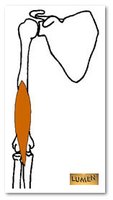
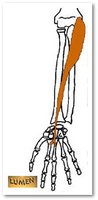
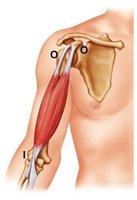
Origin: The attachment of the muscle to the bone that remains stationary.
Insertion: The attachment of the muscle to the bone that moves.
Belly: The fleshy part of the muscle between the origin and insertion.
Functional Roles of Skeletal Muscles
Muscles interact in complex ways to produce movement.
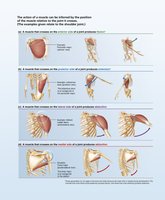
Prime Mover (Agonist): The principal muscle responsible for a movement.
Antagonist: The principal muscle causing the opposite movement.
Synergists: Muscles that assist the prime mover by adding force or reducing unnecessary movements.
Fixator: A synergist that immobilizes a bone or muscle origin, providing a stable base for the prime mover.
Naming Skeletal Muscles
Skeletal muscles are named based on several criteria, which help identify their location, shape, size, and function.
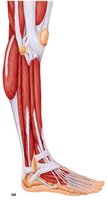
Location: Example: Epicranius (around cranium), Tibialis anterior (front of tibia).
Shape: Example: Deltoid (triangle), Trapezius (trapezoid), Serratus (saw-toothed), Rhomboideus (rhomboid), Orbicularis and sphincters (circular).
Size: Example: Maximus (largest), Minimus (smallest), Longus (longest), Brevis (short), Major (large), Minor (small).
Direction of fibers: Example: Rectus (straight), Transverse, Oblique.
Number of origins: Example: Biceps (2), Triceps (3), Quadriceps (4).
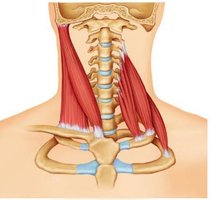
Origin and insertion: Example: Sternocleidomastoid (originates from sternum and clavicle, inserts on mastoid process).
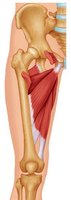
Action: Example: Abductor magnus (abducts thigh), Extensor digitorum (extends fingers).
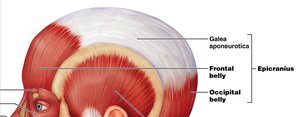
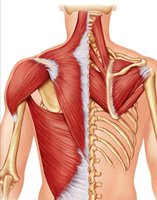
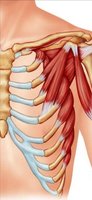
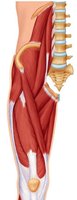
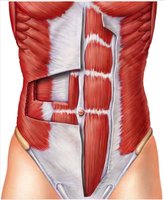
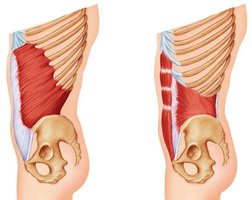
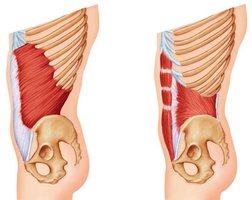
Fascicle Arrangement in Skeletal Muscles
The arrangement of fascicles within a muscle determines its shape and functional capabilities.
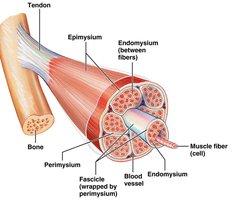
Fascicle: A bundle of muscle fibers wrapped by perimysium.
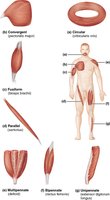
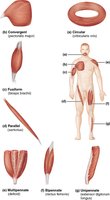
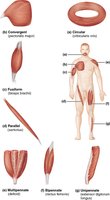
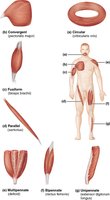
Arrangement types: Fusiform (spindle-shaped), Parallel (strap-like), Pennate (feather-shaped), Bipennate, Multipennate, Convergent, Circular (sphincters).
Functional Implications of Fascicle Arrangement
Range of motion: Depends on the length of muscle fibers (fascicles); long fibers (parallel and fusiform) allow for a large range of motion.
Power: Depends on the total number of muscle fibers; muscles with many fibers (convergent, pennate, bipennate, multipennate) generate greater power.
Lever Systems and Leverage in the Body
Skeletal muscles use bones as levers to produce movement.
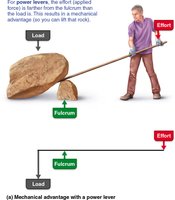
Lever: A rigid rod (bone) that moves on a fixed point (fulcrum).
Fulcrum: The joint, or fixed point.
Resistance: The force that opposes movement (load or object to be moved).
Effort: The force exerted to achieve movement, provided by muscle(s).
Isotonic contraction: Motion is produced when effort exceeds resistance.
Leverage
Mechanical advantage: Muscle tension (effort) farther from the joint (fulcrum) produces stronger contraction and opposes greater resistance.
Range of motion (ROM): Muscle tension (effort) closer to the joint (fulcrum) produces greater range of motion.
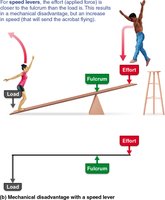
Three Classes of Levers
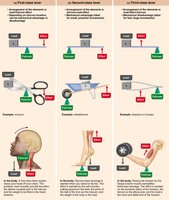
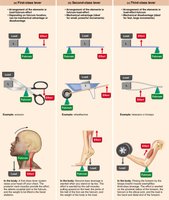
Levers in the body are classified into three types based on the relative positions of the fulcrum, effort, and load.
First-class lever: Fulcrum is between the effort and the load (e.g., neck muscles).
Second-class lever: Load is between the fulcrum and the effort (e.g., standing on tiptoe).
Third-class lever: Effort is between the fulcrum and the load (e.g., biceps brachii flexing the forearm).
Summary Table: Muscle Naming Criteria
Criterion | Example |
|---|---|
Location | Epicranius, Tibialis anterior |
Shape | Deltoid, Trapezius, Serratus, Rhomboideus, Orbicularis |
Size | Maximus, Minimus, Longus, Brevis, Major, Minor |
Direction of fibers | Rectus, Transverse, Oblique |
Number of origins | Biceps, Triceps, Quadriceps |
Origin and insertion | Sternocleidomastoid |
Action | Abductor magnus, Extensor digitorum |
Summary Table: Fascicle Arrangement and Function
Arrangement | Example | Function |
|---|---|---|
Fusiform | Biceps femoris | Large range of motion |
Parallel | Sartorius | Large range of motion |
Pennate | Extensor digitorum longus | Great power |
Bipennate | Rectus femoris | Great power |
Multipennate | Deltoid | Great power |
Convergent | Pectoralis major | Great power |
Circular | Orbicularis oris | Control of openings |
Key Equations
Lever equation:
Mechanical advantage:
Additional info:
Muscle roles (agonist, antagonist, synergist, fixator) can change depending on the movement being performed.
Fascicle arrangement is a key determinant of muscle function, affecting both range of motion and power.
Lever systems in the body are essential for understanding how muscles produce movement efficiently.
