 Indietro
Study Guide: Vertebrae, Ribs, and Pectoral Girdle
Guida di studio - Note intelligenti
 Appunti personalizzati basati sui tuoi materiali, ampliati con definizioni chiave, esempi e contesto.
Vertebral Column
Overview of the Vertebral Column
The vertebral column is a central structure in the human skeleton, providing support, protection for the spinal cord, and flexibility. It consists of 32-34 bones in infants and 26 bones in adults due to fusion of certain vertebrae.
Cervical Vertebrae: 7 vertebrae (neck region)
Thoracic Vertebrae: 12 vertebrae (upper back, articulates with ribs)
Lumbar Vertebrae: 5 vertebrae (lower back)
Sacral Vertebrae: 5 fused vertebrae in adults (forms the sacrum)
Coccyx: 3-5 fused vertebrae in adults (forms the tailbone)
General Structure of Vertebrae
Each vertebra has several key anatomical features that are important for function and articulation.
Body: The main weight-bearing portion.
Vertebral Foramen: The opening for the spinal cord.
Transverse Process: Lateral projections for muscle and ligament attachment.
Pedicle and Lamina: Form the vertebral arch.
Spinous Process: Posterior projection for muscle attachment.
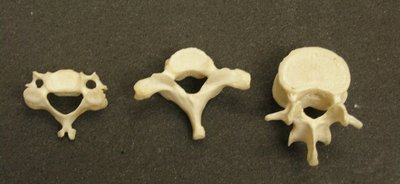
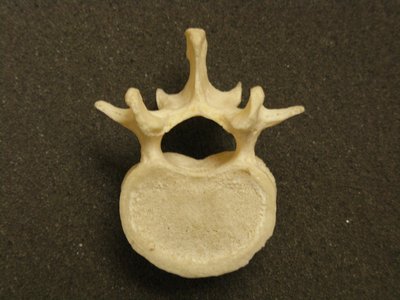
Comparison of Cervical, Thoracic, and Lumbar Vertebrae
The three main types of vertebrae differ in size, shape, and function.
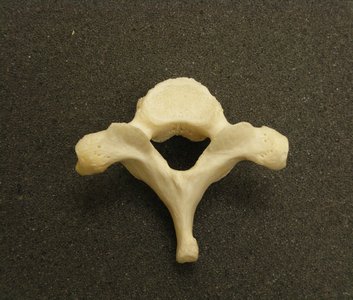
Cervical: Smallest, have transverse foramina, bifid spinous process.
Thoracic: Medium size, elongated spinous and transverse processes, articulate with ribs.
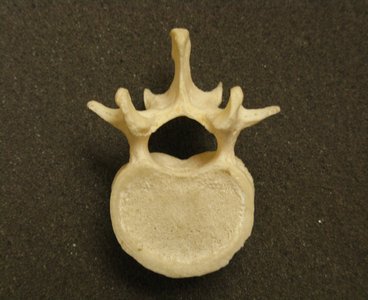
Lumbar: Largest, strong, blunt processes, straight spinous process.
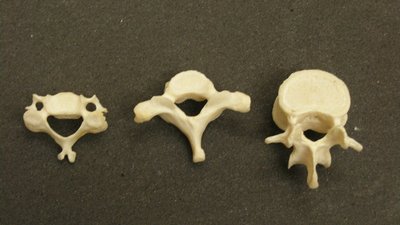
Cervical Vertebrae
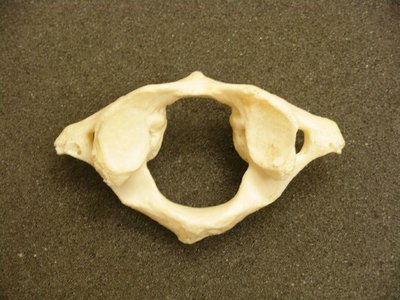
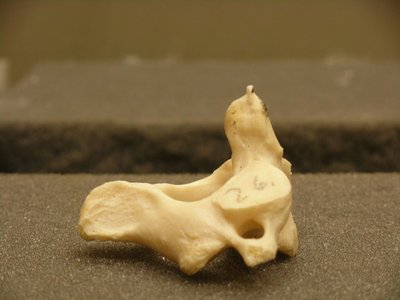
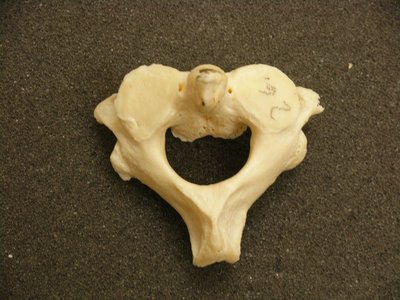
Atlas (C1) and Axis (C2)
The first two cervical vertebrae are specialized for head movement.
Atlas (C1): Articulates with occipital condyles, lacks a body and spinous process.
Axis (C2): Has the odontoid process (dens), acts as a pivot for head rotation.
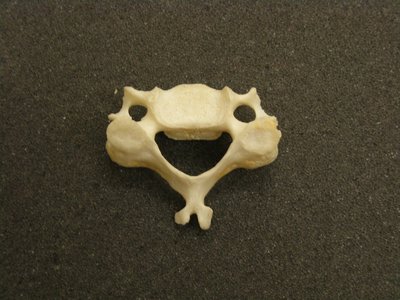
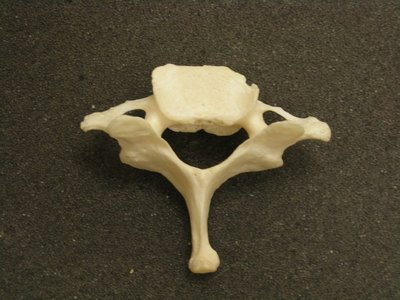
Cervical Vertebrae C3–C7
Smallest vertebrae in the column.
Transverse foramina for vertebral arteries.
Bifid spinous process (except C7).
C7 (Vertebra Prominens): Easily palpable, has transverse foramina but no bifid spine.
Thoracic Vertebrae
General Characteristics
Thoracic vertebrae are larger than cervical but smaller than lumbar vertebrae.
Elongated transverse processes for rib articulation.
Elongated, downward-pointing spinous processes.
Lumbar Vertebrae
General Characteristics
Lumbar vertebrae are the largest and strongest, supporting much of the body's weight.
Large, blunt processes.
Spinous process points straight out.
Large body for weight-bearing.
Sacrum and Coccyx
Sacral Vertebrae
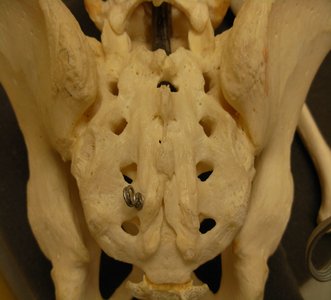
The sacrum consists of five fused vertebrae, forming a wedge between the iliac bones.
Sacral foramina: Openings for sacral nerves.
Sacroiliac joint: Articulation with the pelvis.
Coccyx
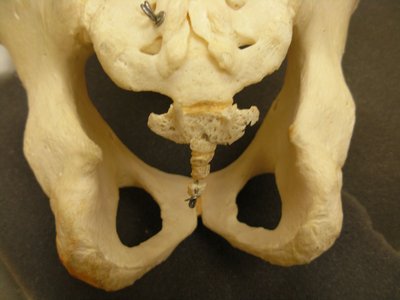
The coccyx, or tailbone, is composed of 3–5 fused vertebrae.
Serves as an attachment site for ligaments and muscles.
Ribs and Sternum
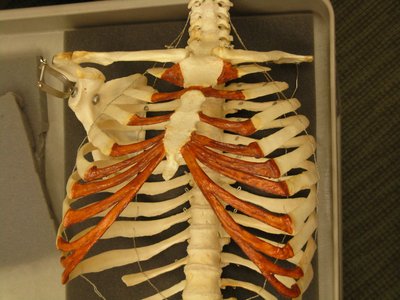
Rib Structure and Classification
The ribs are curved bones forming the thoracic cage, protecting vital organs.
Shaft: Main length of the rib.
Head: Articulates with vertebrae.
Tubercle: Articulates with transverse process of vertebra.
Neck: Narrow region between head and shaft.
Types of Ribs
True Ribs: 7 pairs, attached directly to sternum via costal cartilage.
False Ribs: 3 pairs, attached indirectly to sternum via cartilage of the 7th rib.
Floating Ribs: 2 pairs, do not attach anteriorly.
Sternum Structure
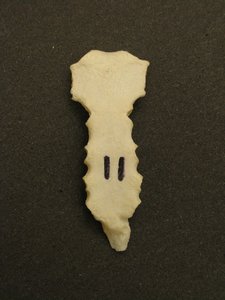
The sternum is a flat bone forming the anterior midline of the thoracic cage.
Manubrium: Superior portion.
Body: Central portion.
Xiphoid Process: Inferior tip.
Supra Sternal Notch: Superior indentation.
Sternal Angle: Junction between manubrium and body.
Pectoral Girdle
Clavicle
The clavicle, or collarbone, connects the upper limb to the trunk.
Sternal End: Articulates with sternum.
Acromial End: Articulates with scapula.
Scapula
The scapula, or shoulder blade, is a flat bone with several important features.
Posterior structures: Spine, acromion process, medial and lateral borders, superior and inferior angles.
Lateral structures: Glenoid fossa (articulates with humerus), coracoid process, supraglenoid and infraglenoid tubercles.
Other features: Scapular notch, infraspinous and supraspinous fossae.
Humerus
General Structure
The humerus is the bone of the upper arm, articulating with the scapula at the shoulder and with the radius and ulna at the elbow.
Head: Articulates with glenoid fossa.
Greater and Lesser Tuberosities: Sites for muscle attachment.
Anatomical and Surgical Neck: Anatomical neck is just below the head; surgical neck is a common fracture site.
Intertubercular Groove: Passage for tendon of the biceps brachii.
Deltoid Tuberosity: Attachment for deltoid muscle.
Capitulum and Trochlea: Articulate with forearm bones.
Coronoid and Radial Fossae: Depressions for forearm bones during flexion.
Medial and Lateral Epicondyles: Sites for muscle attachment.
Olecranon Fossa: Accommodates olecranon process of ulna during extension.
Practice Quiz Review
Sample Questions and Answers
Question 1: a) Dens/odontoid process; b) Transverse foramina
Question 2: a) Manubrium; b) Xiphoid process
Question 3: a) Acromion process; b) Glenoid process; c) Humerus
Question 4: a) True rib; b) Olecranon fossa (of the humerus)
Summary Table: Vertebrae Comparison
Type | Number | Key Features |
|---|---|---|
Cervical | 7 | Smallest, transverse foramina, bifid spinous process |
Thoracic | 12 | Medium size, elongated spinous/transverse processes, rib articulation |
Lumbar | 5 | Largest, blunt processes, straight spinous process |
Sacral | 5 (fused) | Sacral foramina, sacroiliac joint |
Coccyx | 3-5 (fused) | Tailbone, muscle/ligament attachment |
Summary Table: Rib Classification
Type | Number of Pairs | Attachment |
|---|---|---|
True Ribs | 7 | Directly to sternum via costal cartilage |
False Ribs | 3 | Indirectly to sternum via cartilage of 7th rib |
Floating Ribs | 2 | No anterior attachment |
Key Terms and Definitions
Vertebral Foramen: Opening for the spinal cord.
Odontoid Process (Dens): Tooth-like projection on axis (C2).
Costal Cartilage: Cartilage connecting ribs to sternum.
Glenoid Fossa: Socket in scapula for humerus articulation.
Olecranon Fossa: Depression in humerus for ulna.
Equations and Formulas
Vertebral Column Count
Infant:
Adult: (after fusion)
Additional info:
Some anatomical terms and details were expanded for clarity and completeness.
Images included only when directly relevant to the anatomical structures discussed.
