 Indietro
Study Notes: The Endocrine System (Anatomy & Physiology)
Guida di studio - Note intelligenti
 Appunti personalizzati basati sui tuoi materiali, ampliati con definizioni chiave, esempi e contesto.
The Endocrine System
Overview of the Endocrine System
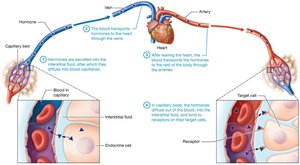
The endocrine system is a complex network of organs that synthesize and secrete chemical messengers called hormones. These hormones interact with specific target cells to regulate vital functions such as fluid, electrolyte, and acid-base homeostasis, growth, and metabolic reactions.
Hormones: Chemical messengers secreted by endocrine glands; regulate functions of other cells.
Target Cells: Cells with specific protein receptors for hormones; only these cells are affected by a given hormone.
Homeostasis: Hormones help maintain internal balance by influencing various physiological processes.
Comparison of Endocrine and Nervous Systems
The endocrine and nervous systems both regulate body functions, but they differ in their mechanisms and effects.
Nervous System: Uses neurotransmitters for rapid, short-lived effects; direct contact with target cells.
Endocrine System: Uses hormones transported via the bloodstream; effects are slower but longer-lasting.
Example: Nervous system controls muscle contraction instantly, while endocrine system regulates growth over time.
Overview of Endocrine Organs
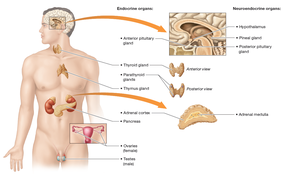
Endocrine glands are ductless organs that secrete hormones directly into the bloodstream. They are classified as primary or secondary based on their functions.
Primary Endocrine Organs: Anterior pituitary, thyroid, parathyroid, adrenal cortices, pancreas, thymus.
Secondary Endocrine Organs: Heart, kidneys, small intestines, testes, ovaries.
Neuroendocrine Organs: Hypothalamus, pineal gland, adrenal medulla; consist of nervous tissue and secrete neurohormones.
Hormones: Classes, Actions, and Regulation
Classes of Hormones
Hormones are classified by their chemical structure:
Amino-acid hormones: Hydrophilic; bind to plasma membrane receptors. Includes amine, peptide, and protein hormones.
Steroid hormones: Hydrophobic; derived from cholesterol; bind to receptors in cytosol or nucleus.
Mechanisms of Hormone Action
Hormones exert their effects by binding to receptors on or within target cells. The location of the receptor depends on the hormone's chemical nature:
Hydrophilic hormones: Bind to membrane receptors; often use second-messenger systems.
Hydrophobic hormones: Cross plasma membrane; bind to intracellular receptors.
Effects of Hormone Actions
Hormones can:
Stimulate secretion from other cells
Activate or inhibit enzymes
Stimulate or inhibit mitosis/meiosis
Open/close ion channels
Activate/inhibit gene transcription
Hormone Interactions
Synergists: Hormones that act together for a greater effect.
Antagonists: Hormones with opposing effects.
Regulation of Hormone Secretion
Hormone secretion is regulated by three main types of stimuli:
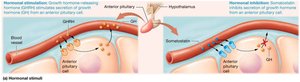
Hormonal stimuli: Response to other hormones.
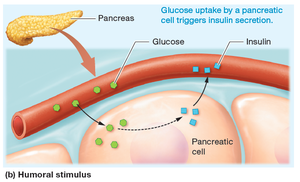
Humoral stimuli: Response to changes in blood ion/molecule concentration.
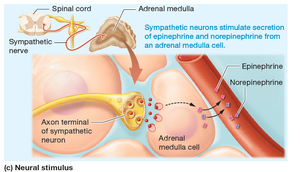
Neural stimuli: Response to nervous system signals.
Feedback Loops in Hormone Regulation
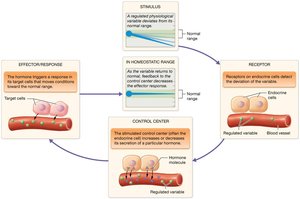
Hormone secretion is often regulated by negative feedback loops, which help maintain homeostasis.
Stimulus: Physiological variable deviates from normal.
Receptor: Detects deviation.
Control Center: Adjusts hormone secretion.
Effector/Response: Hormone triggers response to restore normal range.
The Hypothalamus and Pituitary Gland
Anatomy and Functional Relationship
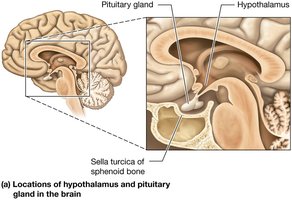
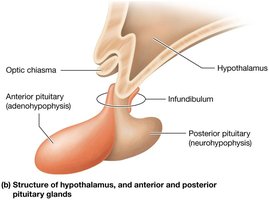
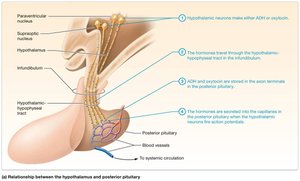
The hypothalamus and pituitary gland are central to endocrine regulation. The hypothalamus is located in the diencephalon and connected to the pituitary gland by the infundibulum.
Pituitary gland: Sits in the sella turcica of the sphenoid bone; has anterior (adenohypophysis) and posterior (neurohypophysis) parts.
Hormones of Hypothalamus and Posterior Pituitary
The posterior pituitary stores and releases two neurohormones produced by the hypothalamus:
Antidiuretic hormone (ADH): Promotes water retention; regulates water balance.
Oxytocin: Stimulates uterine contractions and milk ejection; involved in positive feedback during lactation.
Hormones of Hypothalamus and Anterior Pituitary
The hypothalamus controls the anterior pituitary via releasing and inhibiting hormones through the hypothalamic-hypophyseal portal system. Many anterior pituitary hormones are tropic, affecting other endocrine glands.
Thyroid-stimulating hormone (TSH): Stimulates thyroid gland.
Adrenocorticotropic hormone (ACTH): Stimulates adrenal cortex.
Prolactin (PRL): Stimulates mammary gland growth and milk production.
Luteinizing hormone (LH): Stimulates sex hormone production and ovulation.
Follicle-stimulating hormone (FSH): Stimulates gamete production and follicle maturation.
Growth hormone (GH): Regulates growth of various tissues.
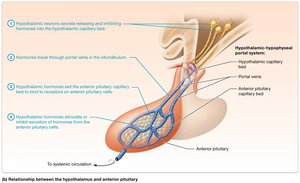
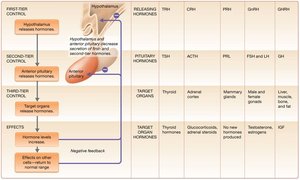
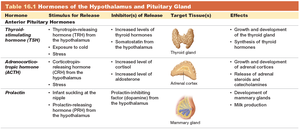
Table: Hormones of the Hypothalamus and Pituitary Gland
Hormone | Stimulus for Release | Inhibitor(s) of Release | Target Tissue(s) | Effects |
|---|---|---|---|---|
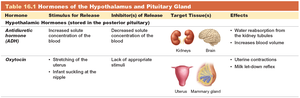
Antidiuretic hormone (ADH) | Increased solute concentration of blood | Decreased solute concentration of blood | Kidneys, brain | Water reabsorption, increases blood volume |
Oxytocin | Stretching of uterus, infant suckling | Lack of appropriate stimuli | Uterus, mammary gland | Uterine contractions, milk let-down reflex |
Hormone | Stimulus for Release | Inhibitor(s) of Release | Target Tissue(s) | Effects |
|---|---|---|---|---|
Thyroid-stimulating hormone (TSH) | Thyrotropin-releasing hormone (TRH), exposure to cold, stress | Increased levels of thyroid hormones | Thyroid gland | Growth and development, synthesis of thyroid hormones |
Adrenocorticotropic hormone (ACTH) | Corticotropin-releasing hormone (CRH), stress | Increased level of cortisol | Adrenal cortex | Growth and development, release of adrenal steroids |
Prolactin | Infant suckling, prolactin-releasing hormone | Prolactin-inhibiting factor (dopamine) | Mammary gland | Development of mammary glands, milk production |
Additional info:
These notes cover the main concepts and regulatory mechanisms of the endocrine system, including hormone classes, actions, feedback loops, and the anatomy and function of the hypothalamus and pituitary gland. The included tables summarize hormone functions and regulatory pathways for exam preparation.
