 Indietro
Study Notes: The Respiratory System – Structure, Function, and Physiology
Guida di studio - Note intelligenti
 Appunti personalizzati basati sui tuoi materiali, ampliati con definizioni chiave, esempi e contesto.
The Respiratory System
Overview and Functions
The respiratory system is essential for gas exchange, sound production, olfaction, and protection of the airways. It brings oxygen into the body to fuel cellular processes and removes carbon dioxide, a waste product of metabolism.
Gas Exchange: Oxygen is brought in and carbon dioxide is expelled.
Sound Production: Air passing over vocal folds produces sound.
Smell: Air passes over olfactory receptor cells in the nasal cavity.
Protection: Coughing and sneezing clear airways of debris.
Respiration: Key Processes
Respiration involves three main processes: ventilation, gas exchange, and oxygen utilization by cells.
Ventilation: The movement of air into (inhalation) and out of (exhalation) the lungs.
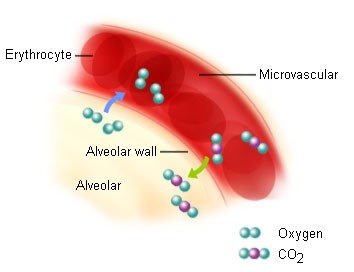
External Respiration: Gas exchange between air in the lungs and red blood cells.
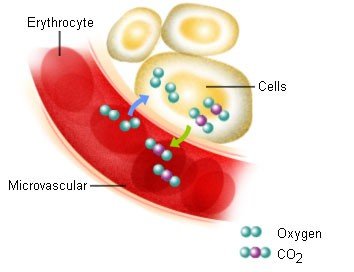
Internal Respiration: Gas exchange between red blood cells and body tissues.
Example: At rest, humans take in 5-6 liters of air per minute. Brain damage and death can occur after 5-10 minutes without air.
Ventilation: Inhalation and Exhalation
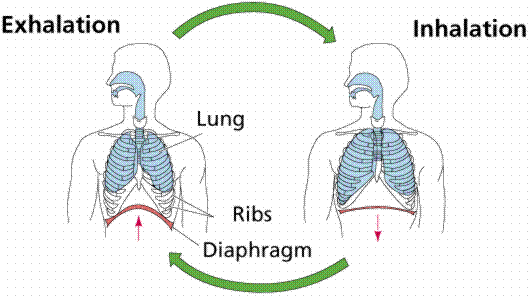
Ventilation is the process of moving air in and out of the lungs. It is driven by changes in thoracic cavity volume, primarily through the action of the diaphragm and intercostal muscles.
Inhalation: Diaphragm contracts and moves downward, ribs elevate, increasing thoracic volume and decreasing pressure, causing air to flow in.
Exhalation: Diaphragm relaxes and moves upward, ribs depress, decreasing thoracic volume and increasing pressure, causing air to flow out.
Gas Exchange: External and Internal Respiration
Gas exchange occurs in two main locations:
External Respiration: Oxygen diffuses from alveoli into red blood cells in pulmonary capillaries; carbon dioxide diffuses from blood into alveoli to be exhaled.
Internal Respiration: Oxygen diffuses from red blood cells into body tissues; carbon dioxide diffuses from tissues into blood.
Anatomy of the Respiratory System
Conducting Zone vs. Respiratory Zone
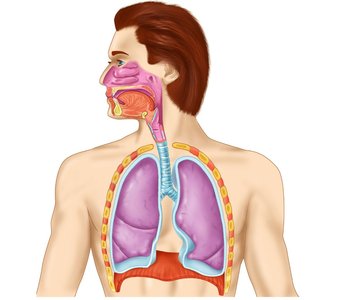
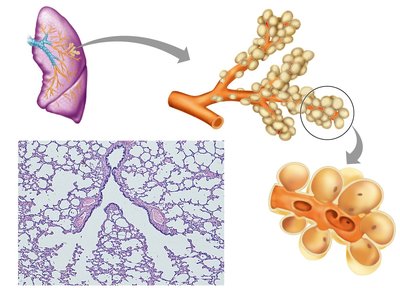
The respiratory system is divided into the conducting zone and the respiratory zone.
Conducting Zone: Transports, warms, humidifies, and filters air. Includes nasal cavity, pharynx, larynx, trachea, bronchi, and bronchioles.
Respiratory Zone: Site of external gas exchange. Includes respiratory bronchioles, alveolar ducts, and alveoli.
Structures of the Conducting Zone
Nasal Cavity: Filters, warms, and humidifies air; contains olfactory receptors.
Pharynx: Passageway for air, food, and liquids; divided into nasopharynx, oropharynx, and laryngopharynx.
Larynx: Air passage and voice production; contains vocal folds.
Trachea: Flexible tube supported by C-shaped hyaline cartilage rings.
Bronchi and Bronchioles: Branching tubes that conduct air to the respiratory zone.
Structures of the Respiratory Zone
Respiratory Bronchioles: Smallest bronchioles leading to alveolar ducts.
Alveolar Ducts: Tubes connecting bronchioles to alveolar sacs.
Alveoli: Tiny air sacs where gas exchange occurs; clusters form alveolar sacs.
Histology and Cellular Structure
Respiratory Epithelium
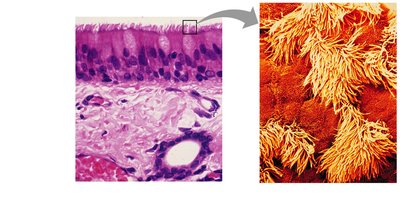
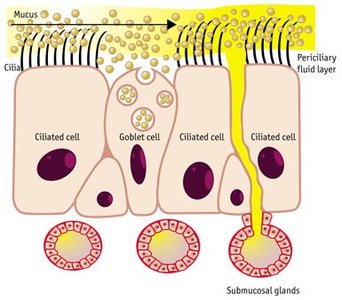
The respiratory tract is lined by specialized epithelium that aids in protection and mucus production.
Pseudostratified Ciliated Columnar Epithelium: Lines most of the conducting zone; contains cilia and goblet cells.
Goblet Cells: Secrete mucin, which forms mucus when mixed with water.
Cilia: Move mucus toward the posterior nasal cavity and pharynx.
Alveolar Structure and Cell Types
Alveoli are the primary site of gas exchange and contain specialized cell types.
Type I Alveolar Cells: Simple squamous cells forming the alveolar wall.
Type II Alveolar Cells: Cuboidal cells that secrete surfactant to reduce surface tension.
Alveolar Macrophages: Remove debris and pathogens from alveoli.
Mechanics of Breathing
Thoracic Volume Changes
Breathing is driven by changes in thoracic cavity volume, which alter air pressure and cause air to move in or out of the lungs.
Inspiration: Diaphragm contracts and moves downward, external intercostals contract, ribs elevate, thoracic volume increases, air pressure decreases, air flows in.
Expiration: Diaphragm relaxes and moves upward, external intercostals relax, ribs depress, thoracic volume decreases, air pressure increases, air flows out.
Summary Table: Respiratory Zones and Functions
Zone | Main Structures | Function |
|---|---|---|
Conducting Zone | Nasal cavity, pharynx, larynx, trachea, bronchi, bronchioles | Transport, warm, humidify, filter air |
Respiratory Zone | Respiratory bronchioles, alveolar ducts, alveoli | External gas exchange |
Key Equations
Boyle's Law: Describes the relationship between pressure and volume in the thoracic cavity during breathing.
Partial Pressure of Gases: Determines the direction of gas diffusion.
Clinical Relevance
Respiratory Distress Syndrome
Premature infants may lack functional Type II alveolar cells, leading to difficulty inflating alveoli due to insufficient surfactant.
Emphysema and COPD
Chronic exposure to irritants (e.g., cigarette smoke) can cause inflammation, excess mucus, and destruction of alveoli, resulting in impaired gas exchange and difficulty exhaling.
Conclusion
The respiratory system is a complex network of structures and processes that ensure efficient gas exchange, protection, and homeostasis. Understanding its anatomy and physiology is essential for recognizing normal function and disease states.
