 Indietro
The Autonomic Nervous System: Dual Innervation, Tone, and Visceral Reflexes
Guida di studio - Note intelligenti
 Appunti personalizzati basati sui tuoi materiali, ampliati con definizioni chiave, esempi e contesto.
The Autonomic Nervous System (ANS)
Overview of the ANS
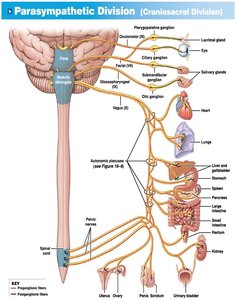
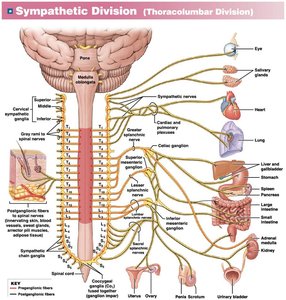
The autonomic nervous system (ANS) is a division of the peripheral nervous system responsible for regulating involuntary physiological functions, including heart rate, blood vessel diameter, digestion, and respiratory rate. It operates largely below the level of conscious control and is divided into two main branches: the sympathetic and parasympathetic divisions.
Sympathetic Division: Prepares the body for 'fight or flight' responses.
Parasympathetic Division: Promotes 'rest and digest' activities.
Dual Innervation
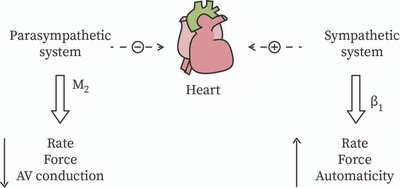
Most vital organs receive input from both the sympathetic and parasympathetic divisions, a phenomenon known as dual innervation. These divisions often have opposing effects, allowing precise regulation of organ function.
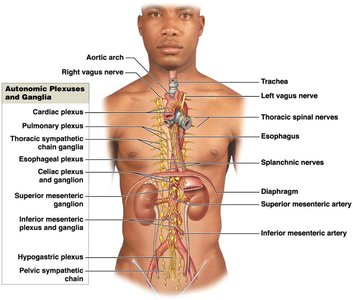
Autonomic Plexuses: Networks of nerves in the thoracic and abdominopelvic cavities formed by mingled sympathetic postganglionic fibers and parasympathetic preganglionic fibers.
Autonomic Motor Neurons: Maintain a resting level of activity, which can be increased or decreased for greater control.
Functional Significance of Dual Innervation
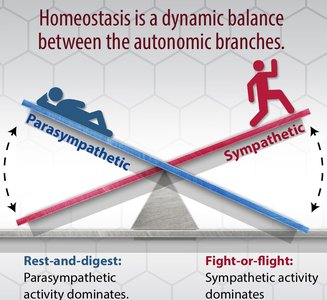
Dual innervation provides a dynamic balance between the two branches, maintaining homeostasis. For example, the heart is primarily controlled by the parasympathetic division at rest, but during crisis, sympathetic activity increases heart rate while parasympathetic activity is inhibited.
Homeostasis: Achieved by balancing sympathetic and parasympathetic activity.
Example: Heart rate regulation.
Single Innervation and Autonomic Tone
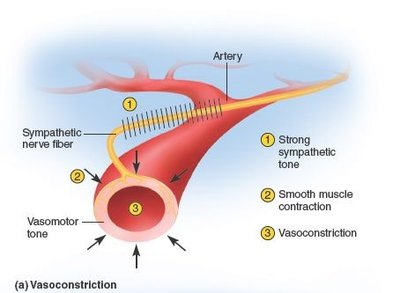
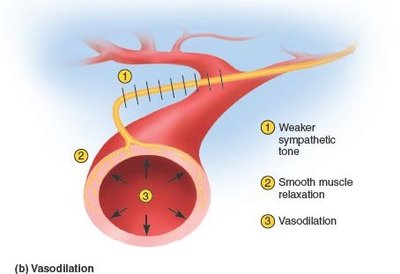
Some organs are innervated by only one division. For example, blood vessel diameter is controlled solely by the sympathetic division. Autonomic tone refers to the background level of activity maintained by autonomic motor neurons, allowing for rapid increases or decreases in activity.
Sympathetic Tone: Keeps blood vessels partially contracted.
Vasoconstriction: Increased sympathetic activity causes smooth muscle contraction and vessel narrowing.
Vasodilation: Decreased sympathetic activity causes smooth muscle relaxation and vessel widening.
Hierarchy of ANS Control
Levels of Control in the ANS
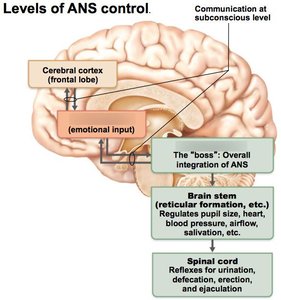
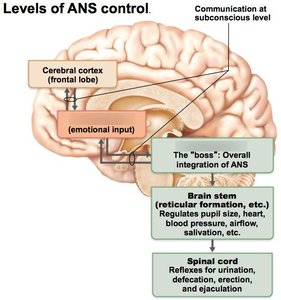
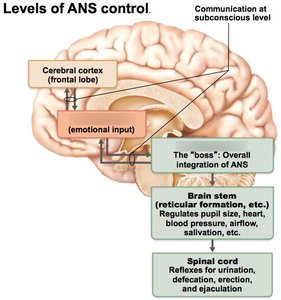
The ANS is regulated by a hierarchy of interacting levels within the central nervous system (CNS), including the cerebral cortex, hypothalamus, brainstem, and spinal cord. Each level contributes to the integration and execution of autonomic functions.
Cerebral Cortex: Modifies ANS activity at a subconscious level, often through the limbic system.
Hypothalamus: Integrates visceral, emotional, and behavioral responses; controls the endocrine system via the pituitary gland.
Medulla Oblongata: Primary site for moment-to-moment control of involuntary processes such as heart rate and respiration.
Spinal Cord: Mediates reflexes for urination, defecation, erection, and ejaculation.
Voluntary Control of Visceral Functions
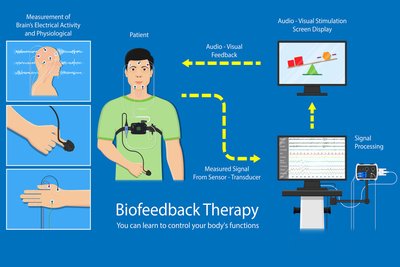
While most autonomic functions are involuntary, some can be influenced consciously through techniques such as biofeedback therapy, which allows individuals to learn to control certain physiological processes.
Visceral Reflexes
Definition and Significance
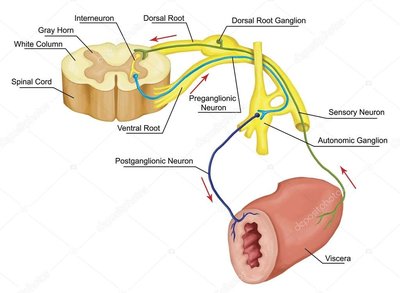
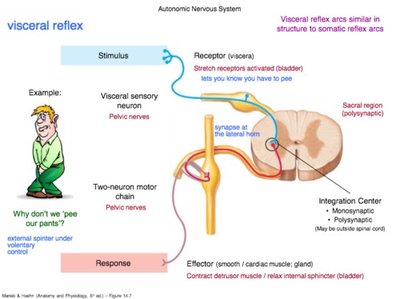
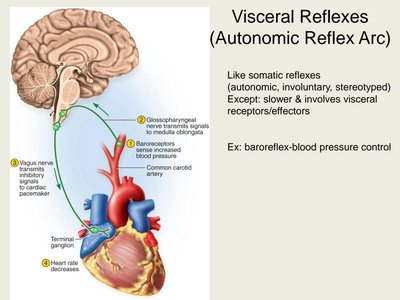
Visceral reflexes are autonomic, polysynaptic reflexes initiated in the viscera that provide automatic motor responses to maintain internal homeostasis. These reflexes are essential for regulating functions such as blood pressure, digestion, and heart rate.
Components of a Visceral Reflex Arc: Receptor, sensory neuron, processing center (interneurons), two sequential visceral motor neurons, and effector.
Automatic Response: Ensures rapid and involuntary adjustment to internal changes.
Long Visceral Reflexes
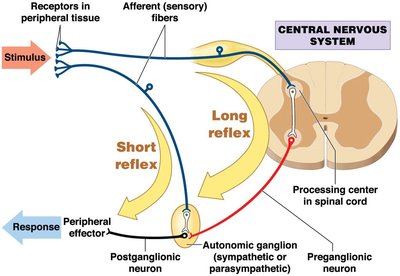
Long visceral reflexes involve the CNS and are typically slower, mediating complex responses such as those involving emotions or external stimuli. These reflexes integrate information from both internal and external sources.
Example: Emotional stress affecting heart rate or digestive activity.
Short Visceral Reflexes
Short visceral reflexes bypass the CNS entirely, with sensory neurons directly stimulating postganglionic neurons within local nerve plexuses. These reflexes are faster and provide immediate responses, such as the stomach contracting when stretched by food.
Example: Local control of digestive functions independent of CNS input.
Neural Reflex Pathways in the Gastrointestinal Tract
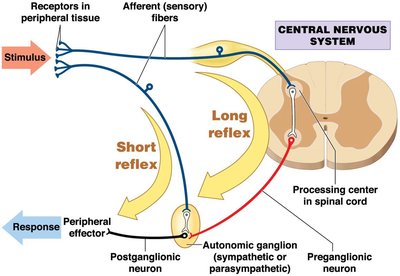
Neural reflex pathways in the gastrointestinal tract can be initiated by stimuli inside or outside the tract. External stimuli (such as sight, smell, taste, or thought of food) and internal stimuli (such as chemoreceptors, osmoreceptors, or mechanoreceptors) trigger long or short reflexes that regulate contractile or secretory activity.
Long Reflexes: Involve the CNS and extrinsic visceral (autonomic) efferents.
Short Reflexes: Occur within the local (intrinsic) nerve plexus, controlling digestive functions independently of the CNS.
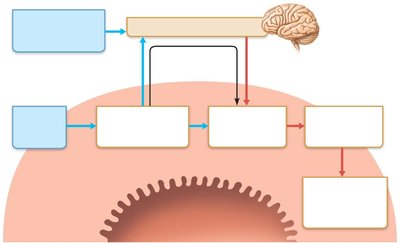
Summary Table: Comparison of Long and Short Visceral Reflexes
Feature | Long Reflex | Short Reflex |
|---|---|---|
Involvement | CNS (central nervous system) | Local nerve plexus only |
Speed | Slower | Faster |
Complexity | Complex, integrates external stimuli | Simple, immediate response |
Examples | Emotional stress affecting digestion | Stomach contraction when stretched |
Key Terms:
Dual Innervation: Input from both sympathetic and parasympathetic divisions.
Autonomic Tone: Background level of activity in autonomic motor neurons.
Visceral Reflex: Automatic response to internal stimuli, maintaining homeostasis.
Long Reflex: Involves CNS, slower, complex.
Short Reflex: Local, faster, immediate.
Additional info: Academic context was added to clarify the hierarchy of ANS control, the mechanisms of dual innervation, and the physiological significance of visceral reflexes.
