 Indietro
The Central Nervous System: Structure, Development, and Protection
Guida di studio - Note intelligenti
 Appunti personalizzati basati sui tuoi materiali, ampliati con definizioni chiave, esempi e contesto.
The Central Nervous System (CNS)
Overview of the Nervous System
The nervous system is a highly evolved network that enables coordinated interactions between the body and its environment. It is divided into the central nervous system (CNS), which includes the brain and spinal cord, and the peripheral nervous system (PNS), which receives information and delivers instructions to and from the CNS.
CNS: Integrates sensory input and determines appropriate output.
PNS: Transmits signals between the CNS and the rest of the body.
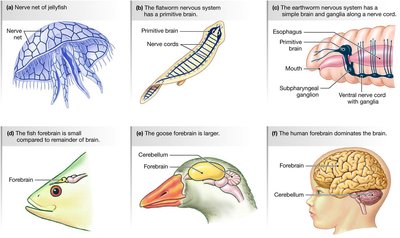
Nervous System Development
Embryological Origins
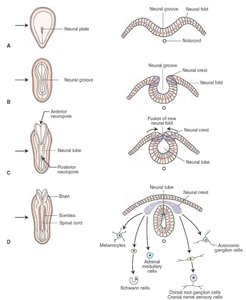
The nervous system originates from the embryonic ectoderm, forming a neural plate that folds to create the neural tube (future CNS) and neural crest (future PNS). Proper closure of the neural tube is critical for normal development.
Neural Tube: Gives rise to the brain and spinal cord (neurons and glia).
Neural Crest: Migrates to form peripheral neurons, glia, and other cell types.
Developmental Disorders: Improper closure can result in conditions such as spina bifida and anencephaly.
Brain Compartmentalization
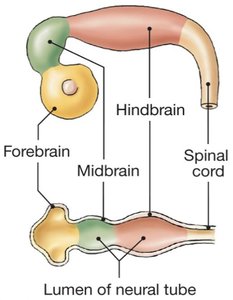
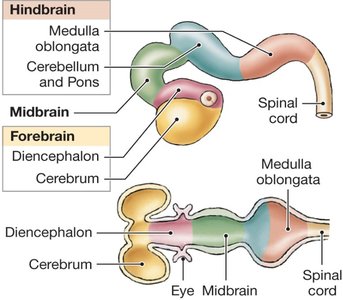
Early in development, the brain forms three primary compartments, which further differentiate into specialized regions. This compartmentalization is species-specific and leads to the complex structure of the mature brain.
Primary Brain Vesicles: Forebrain, midbrain, and hindbrain.
Secondary Brain Vesicles: Further division leads to structures such as the cerebrum, diencephalon, cerebellum, and brainstem.
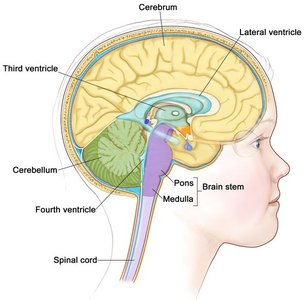
Brain Organization
Gray Matter and White Matter
The CNS is organized into gray matter and white matter, each with distinct functions and structures.
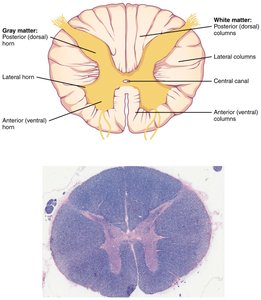
Gray Matter: Composed of unmyelinated neurons and cell bodies, organized into nuclei (in the CNS) or ganglia (in the PNS).
White Matter: Consists of myelinated axons that form tracts connecting different CNS regions (nerves in the PNS).
Major Brain Regions
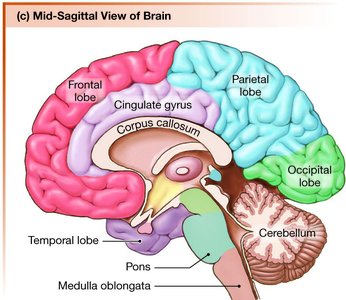
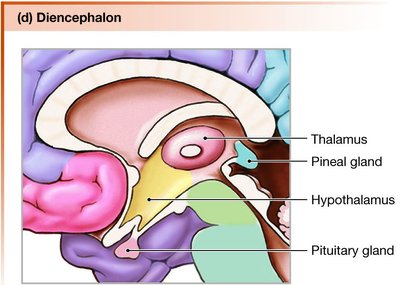
The brain is divided into several major regions, each responsible for specific functions:
Cerebrum: Responsible for higher cognitive functions, voluntary movement, and sensory perception.
Diencephalon: Includes the thalamus and hypothalamus, important for sensory relay and homeostasis.
Brainstem: Composed of the midbrain, pons, and medulla oblongata; controls vital functions such as breathing and heart rate.
Cerebellum: Coordinates movement and balance.
Ventricular System
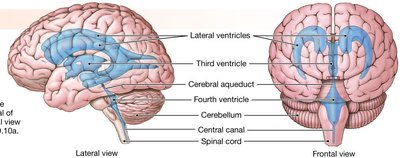
The brain contains a series of interconnected cavities called ventricles, which are filled with cerebrospinal fluid (CSF). These structures are essential for cushioning the brain and maintaining its chemical environment.
Lateral Ventricles: Located in each cerebral hemisphere.
Third Ventricle: Located in the diencephalon.
Fourth Ventricle: Located between the brainstem and cerebellum.
CNS Protection
The Meninges
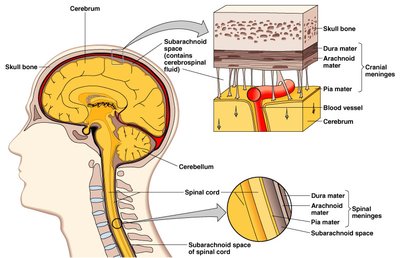
The CNS is protected by three connective tissue membranes called meninges, which provide physical and chemical protection.
Dura Mater: The tough, outermost layer.
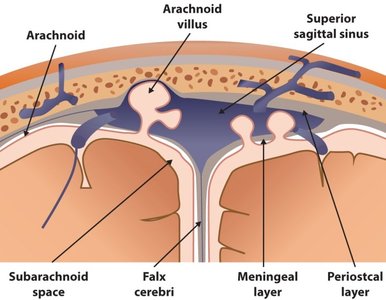
Arachnoid Mater: The middle, web-like layer; contains the subarachnoid space filled with CSF.
Pia Mater: The delicate, innermost layer in direct contact with the brain and spinal cord.
Cerebrospinal Fluid (CSF)
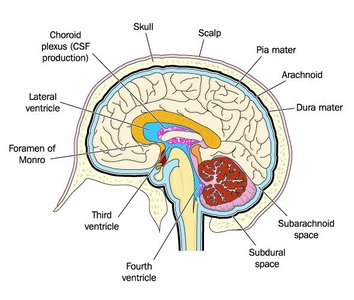
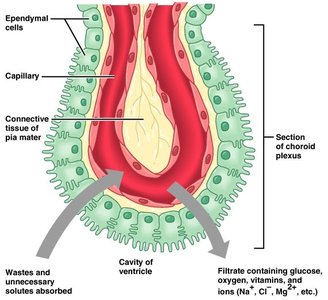
CSF is a clear fluid that cushions the brain, removes waste, and provides a stable chemical environment. It is produced by the choroid plexus and circulates through the ventricles and subarachnoid space.
Production: Formed by selective filtration of blood plasma in the choroid plexus.
Circulation: Flows through ventricles, central canal, and subarachnoid space; absorbed by arachnoid villi into the venous system.
Functions: Physical buffer, chemical stability, and waste removal.
Blood-Brain Barrier (BBB)
The BBB is a selective barrier formed by endothelial cells with tight junctions, astrocyte end-feet, and pericytes. It protects the brain from toxins and pathogens while allowing essential nutrients to pass through.
Structure: Tight junctions between capillary endothelial cells prevent passage of most substances.
Function: Maintains CNS homeostasis and protects neural tissue.
Exceptions: Some brain regions (e.g., hypothalamus, medulla) have a weaker barrier to allow for specific physiological functions.
The Spinal Cord
Structure and Function
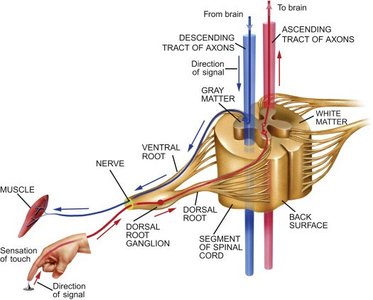
The spinal cord serves as a relay center between the brain and the body, transmitting sensory and motor information. It is organized into gray and white matter, with ascending (sensory) and descending (motor) tracts.
Gray Matter: Contains cell bodies of neurons; organized into dorsal (sensory) and ventral (motor) horns.
White Matter: Contains myelinated axons forming tracts for signal transmission.
Spinal Reflexes: Some responses are mediated directly by the spinal cord without brain involvement.
Summary Table: CNS Organization and Protection
Structure | Function | Key Features |
|---|---|---|
Gray Matter | Integration and processing of information | Cell bodies, unmyelinated neurons, nuclei |
White Matter | Transmission of signals | Myelinated axons, tracts |
Meninges | Physical protection | Dura mater, arachnoid mater, pia mater |
CSF | Cushioning, chemical stability | Produced by choroid plexus, circulates in ventricles and subarachnoid space |
Blood-Brain Barrier | Selective protection | Tight junctions, astrocytes, pericytes |
Key Terms
Neural Tube: Embryonic precursor to the CNS.
Ventricle: Fluid-filled cavity in the brain.
Meninges: Protective membranes of the CNS.
Choroid Plexus: Structure that produces CSF.
Blood-Brain Barrier: Selective barrier protecting the brain from harmful substances.
