 Indietro
The Chemical Basis of Life: Essential Concepts for Anatomy & Physiology
Guida di studio - Note intelligenti
 Appunti personalizzati basati sui tuoi materiali, ampliati con definizioni chiave, esempi e contesto.
The Chemical Level of Organization
Introduction to Chemistry in Biology
Chemicals form the foundation of all biological structures and processes. Understanding the basic concepts of chemistry is essential for comprehending the structure and function of living organisms, as well as their interactions with the environment.
Atoms are ordered into molecules, representing the lowest level of biological organization.
Biological organization builds from chemicals to cells, tissues, organs, and organisms.
Elements, Atoms, and Molecules
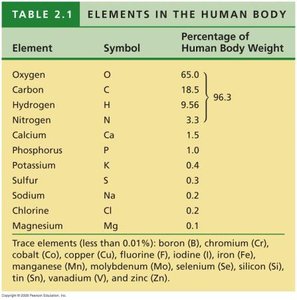
Living organisms are composed of approximately 25 essential chemical elements, which are arranged into higher levels of structural organization. Matter, which occupies space and has mass, is made up of these elements.
Element: A substance that cannot be broken down into other substances by ordinary chemical means.
There are 92 naturally occurring elements; only a few exist in pure form.
Trace elements are required in minute amounts for proper physiological function.
Trace Elements and Their Importance
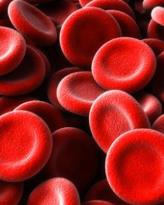
Trace elements are common additives to food and water and are essential for preventing disease. For example, iron is necessary for oxygen transport in blood, and iodine is required for thyroid hormone production.
Iron deficiency impairs oxygen transport.
Iodine deficiency leads to goiter due to insufficient thyroid hormone production.

Compounds
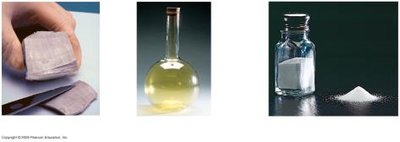
A compound is a substance consisting of two or more different elements combined in a fixed ratio. Many compounds in living organisms contain carbon, hydrogen, oxygen, and nitrogen.
Example: Table salt (NaCl) is formed from sodium (a metal) and chlorine (a poisonous gas), but together they form an edible compound.
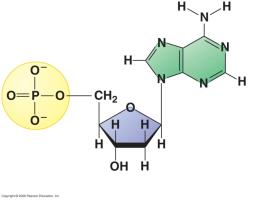
DNA contains carbon, hydrogen, oxygen, nitrogen, and phosphorus.
Atomic Structure and Properties
Atom Composition
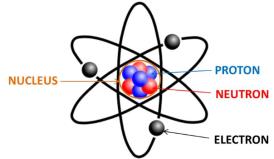
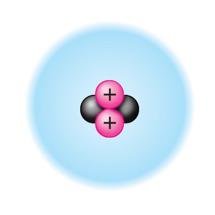
An atom is the smallest unit of matter that retains the properties of an element. Atoms are composed of subatomic particles: protons, neutrons, and electrons.
Proton: Positive charge
Neutron: No charge (neutral)
Electron: Negative charge
Element Information
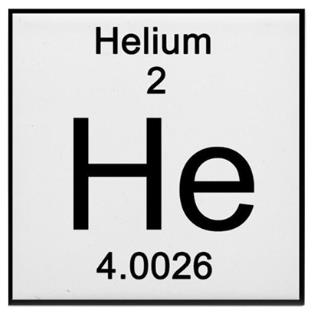
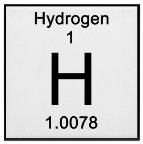
Each element is defined by its atomic number (number of protons) and atomic mass (sum of protons and neutrons). The element symbol is derived from its name or Latin name.
Atomic Number: Number of protons in the nucleus
Atomic Mass: Weighted average mass based on isotopes
Element Symbol: Abbreviation of the element's name
Isotopes and Atomic Mass
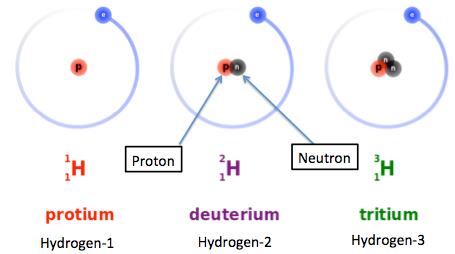
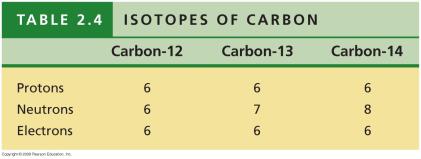
Isotopes are variants of elements with the same number of protons but different numbers of neutrons. Atomic mass is calculated as the weighted average of all isotopes.
Example: Hydrogen has three isotopes: protium (1H), deuterium (2H), and tritium (3H).
Carbon-12, Carbon-13, and Carbon-14 are isotopes of carbon.
Isotope | Protons | Neutrons | Electrons |
|---|---|---|---|
Carbon-12 | 6 | 6 | 6 |
Carbon-13 | 6 | 7 | 6 |
Carbon-14 | 6 | 8 | 6 |
Radioactive Isotopes
Some isotopes are unstable and emit energy, making them radioactive. Radioactive isotopes are used in medical imaging (e.g., PET scans) but can also cause cellular damage if exposure is uncontrolled.
Radioactive tracers are used for diagnosis and research.
Excessive exposure can damage DNA and other molecules.
Electron Arrangement and Chemical Bonds
Electron Shells and Chemical Properties
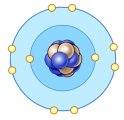
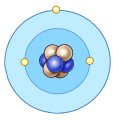
Electrons are arranged in energy levels called shells. The number of electrons in the outermost shell determines an atom's chemical properties and reactivity.
First shell: maximum 2 electrons
Second and third shells: maximum 8 electrons each
Atoms achieve stability by filling their outer shells, often through chemical bonding.
Ionic Bonds
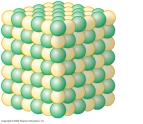
An ion is an atom or molecule with an electrical charge resulting from the gain or loss of electrons. Ionic bonds form when oppositely charged ions attract each other.
Example: Sodium (Na) loses an electron to become Na+, chlorine (Cl) gains an electron to become Cl–, forming sodium chloride (NaCl).
Covalent Bonds
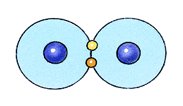
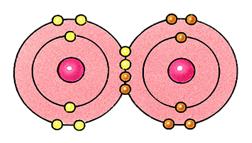
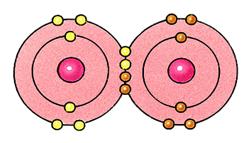
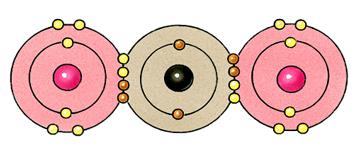
Covalent bonds form when atoms share outer-shell electrons. Molecules are formed by covalent bonds, and atoms are most stable when their outer shell is full (octet rule).
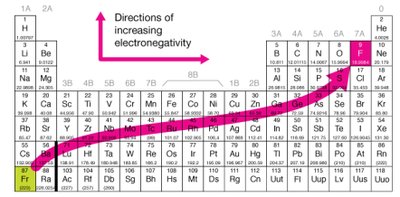
Electronegativity: The attraction of an atom for shared electrons; higher in elements like fluorine.
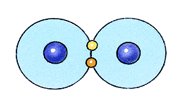
Nonpolar covalent bonds occur when atoms share electrons equally.
Polar covalent bonds occur when atoms share electrons unequally, resulting in partial charges.

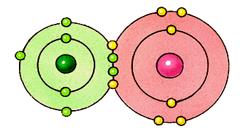
Polar Molecules and Water
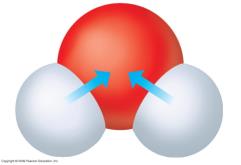
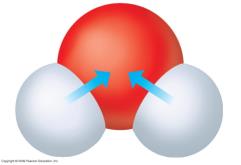
Water (H2O) is a polar molecule due to unequal sharing of electrons between oxygen and hydrogen atoms. This results in partial negative and positive charges, making water an excellent solvent.
Polar molecules have an unequal distribution of charges.
Water's polarity enables hydrogen bonding and unique properties.
Hydrogen Bonds
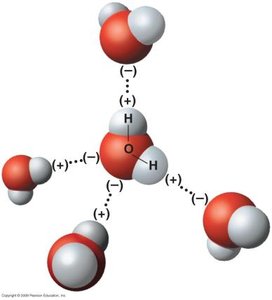
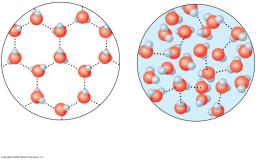
Hydrogen bonds are weak attractions between the positive region of a hydrogen atom (in a polar covalent bond) and a negative region of another atom (often oxygen or nitrogen). These bonds are crucial for the properties of water and biological molecules.
Hydrogen bonds contribute to water's cohesion, surface tension, and temperature moderation.
Cohesion and Surface Tension
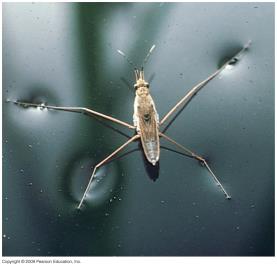
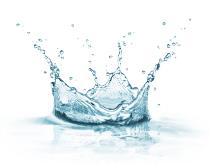
Cohesion is the tendency of water molecules to stick together due to hydrogen bonding. Surface tension is a measure of how difficult it is to break the surface of a liquid, and is higher in water than most other liquids.
Surface tension allows certain insects to walk on water.
Water's Role in Temperature Regulation
Hydrogen bonds give water a high specific heat, allowing it to resist temperature changes. Heat is absorbed to break hydrogen bonds and released when they form, which is important for processes like evaporative cooling.
Density of Ice vs. Liquid Water
Water is less dense as a solid (ice) than as a liquid due to stable hydrogen bonds forming a crystal lattice with spaces between molecules. This property allows ice to float.
Ice formation is crucial for aquatic life, as it insulates water below.

Water as the Solvent of Life
Solutions, Solutes, and Solvents
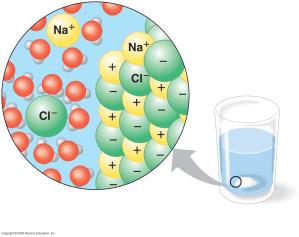
A solution is a uniform mixture of two or more substances. The solute is the substance dissolved, and the solvent is the dissolving agent. Water is the universal solvent in biological systems.
Water dissolves ionic compounds like salt due to its polarity.
Chemical Reactions and Energy
Types of Chemical Reactions
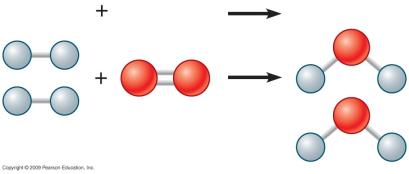
Chemical reactions involve making and breaking bonds, changing the composition of matter. Types include synthesis, decomposition, exchange, and reversible reactions.
Synthesis:
Decomposition:
Exchange:
Reversible:
Activation Energy
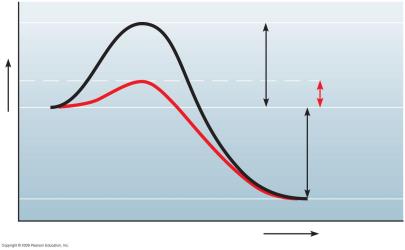
Activation energy is the energy required to start a chemical reaction. Enzymes lower activation energy, enabling reactions to occur efficiently in cells.
Acidic and Basic Conditions
Acids, Bases, and pH
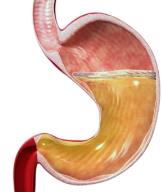
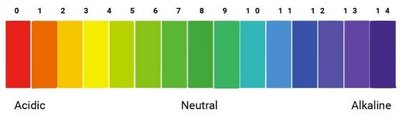
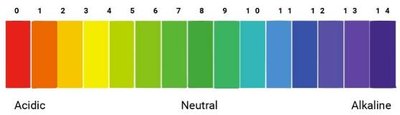
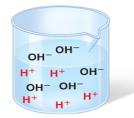
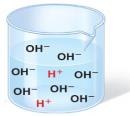
Water molecules can dissociate into hydrogen ions (H+) and hydroxide ions (OH–). Acids increase H+ concentration, while bases decrease it by accepting H+ or providing OH–. The pH scale measures the acidity or basicity of a solution.
Acidic solution: Higher H+ concentration
Basic solution: Higher OH– concentration
Neutral solution: Equal H+ and OH– concentrations
Summary Table: Acids, Bases, and pH
Type | H+ Concentration | OH– Concentration | pH Range |
|---|---|---|---|
Acidic | High | Low | 0-6 |
Neutral | Equal | Equal | 7 |
Basic | Low | High | 8-14 |
Additional info: These notes expand on the original lecture content by providing definitions, examples, and tables for clarity. All images included are directly relevant to the adjacent explanations and reinforce key concepts in the chemical level of biological organization.
