 Indietro
The Chemical Basis of Life: Essential Concepts for Anatomy & Physiology
Guida di studio - Note intelligenti
 Appunti personalizzati basati sui tuoi materiali, ampliati con definizioni chiave, esempi e contesto.
The Chemical Level of Organization
Introduction to Chemistry in Biology
Living organisms, including humans, are fundamentally composed of chemicals, which form the basis of biological structure and function. Understanding chemistry is essential for grasping the principles of life and the organization of biological systems.
Key Point 1: Chemicals constitute the bodies of organisms and the physical environment.
Key Point 2: The arrangement of atoms into molecules represents the lowest level of biological organization.
Example: The structure of DNA, proteins, and other biomolecules depends on chemical principles.
Elements, Atoms, and Molecules
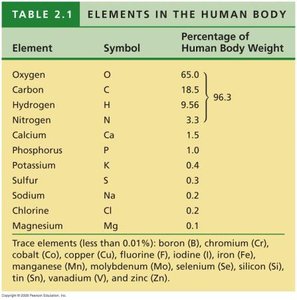
The human body is composed of approximately 25 essential elements, with a few trace elements required for health. Elements are organized into higher levels of structural complexity, eventually forming living organisms.
Key Point 1: Element – a substance that cannot be broken down into other substances by ordinary chemical means.
Key Point 2: Matter is anything that occupies space and has mass.
Key Point 3: Trace elements are required in minute amounts but are vital for health.
Trace Elements and Their Importance
Trace elements are common additives to food and water and are essential for preventing disease.
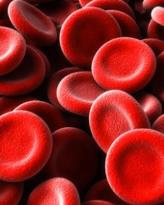
Key Point 1: Iron is necessary for oxygen transport in the blood.
Key Point 2: Iodine is required for thyroid hormone production; deficiency can cause goiter.

Compounds
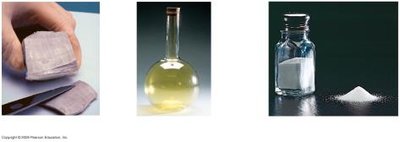
Compounds are substances consisting of two or more different elements combined in a fixed ratio. Many compounds in living organisms contain carbon, hydrogen, oxygen, and nitrogen.
Key Point 1: Table salt (NaCl) is a compound formed from sodium (a metal) and chlorine (a poisonous gas).
Key Point 2: Unique arrangements of elements provide distinct properties for each compound.
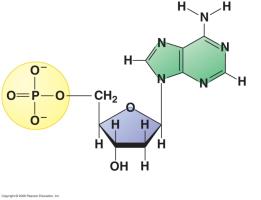
Example: DNA contains carbon, hydrogen, oxygen, and nitrogen.
Atomic Structure and Properties
Atoms: The Smallest Unit of Matter
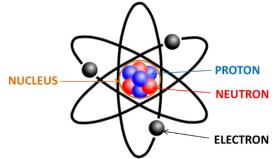
Atoms are the smallest units of matter that retain the properties of an element. They are composed of subatomic particles: protons, neutrons, and electrons.
Key Point 1: Proton – positive charge; Neutron – neutral; Electron – negative charge.
Key Point 2: Elements differ in their number of protons, neutrons, and electrons.
Example: Lithium has 3 protons, 4 neutrons, and 3 electrons; Carbon has 6 of each.
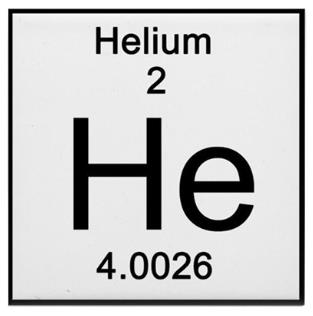
Element Information: Atomic Number and Mass
Each element is defined by its atomic number (number of protons) and atomic mass (sum of protons and neutrons).
Key Point 1: Atomic number determines the element's identity.
Key Point 2: Atomic mass is the weighted average based on isotopes.
Key Point 3: Element symbols are derived from common or Latin names.
Isotopes and Atomic Mass
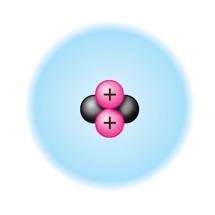
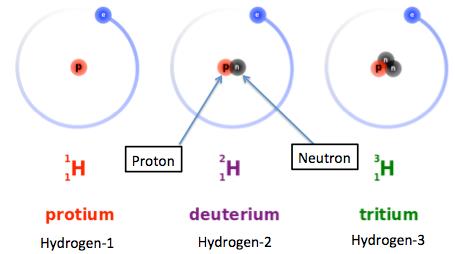
Isotopes are variants of elements with the same number of protons but different numbers of neutrons. Atomic mass reflects the average mass of all isotopes.
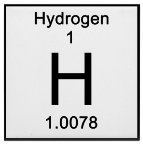
Key Point 1: Hydrogen has three isotopes: 1H (protium), 2H (deuterium), 3H (tritium).
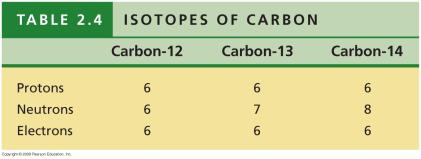
Key Point 2: Carbon-12, Carbon-13, and Carbon-14 are isotopes of carbon.
Isotope | Protons | Neutrons | Electrons |
|---|---|---|---|
Carbon-12 | 6 | 6 | 6 |
Carbon-13 | 6 | 7 | 6 |
Carbon-14 | 6 | 8 | 6 |
Radioactive Isotopes
Some isotopes are unstable and emit energy, which can be useful or harmful.
Key Point 1: Radioactive tracers are used in medical imaging (e.g., PET scans).
Key Point 2: Uncontrolled exposure can damage DNA and cellular molecules.
Electron Arrangement and Chemical Bonds
Electron Shells and Chemical Properties
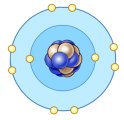
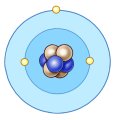
Electrons are arranged in energy levels called shells. The number of electrons in the outermost shell determines an atom's chemical properties.
Key Point 1: The first shell holds 2 electrons; the second and third hold up to 8.
Key Point 2: Atoms seek to fill their outer shells by sharing, donating, or receiving electrons, forming chemical bonds.
Ionic Bonds
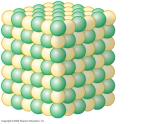
Ionic bonds form when atoms transfer electrons, resulting in charged ions that attract each other.
Key Point 1: Sodium (Na) loses an electron to become Na+; Chlorine (Cl) gains an electron to become Cl–.
Key Point 2: The resulting compound, NaCl, is held together by ionic bonds.
Covalent Bonds
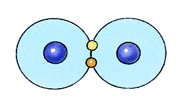
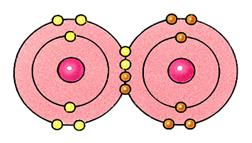
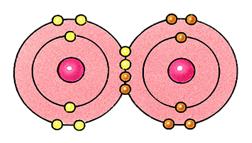
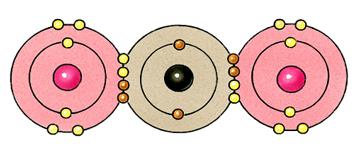
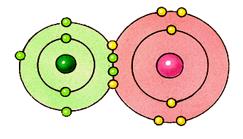
Covalent bonds form when atoms share electrons. Molecules are formed by covalent bonds, following the octet rule for stability.
Key Point 1: Atoms are most stable when their outer shell is full.
Key Point 2: Electronegativity is the attraction for shared electrons; more electronegative atoms pull harder.

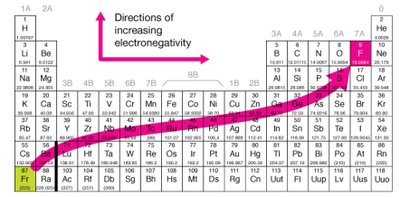
Polar and Nonpolar Covalent Bonds
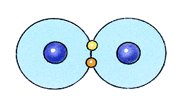
Key Point 1: Nonpolar covalent bonds occur when atoms share electrons equally (e.g., H2, O2).
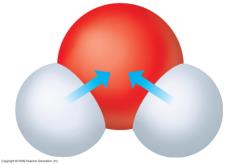
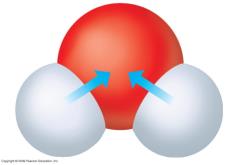
Key Point 2: Polar covalent bonds occur when atoms share electrons unequally, resulting in partial charges (e.g., H2O).
Hydrogen Bonds
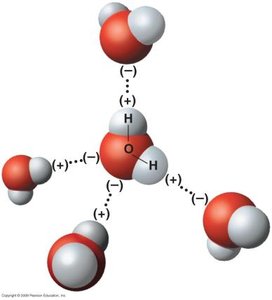
Hydrogen bonds are weak bonds formed between polar molecules, such as water. They are crucial for many biological processes.
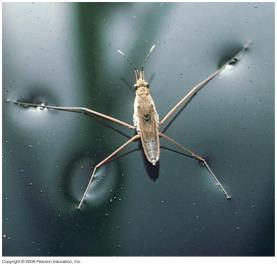
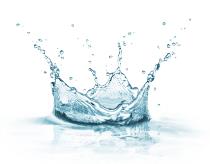
Key Point 1: Hydrogen bonds cause water molecules to stick together (cohesion).
Key Point 2: Cohesion leads to surface tension, important for processes like water transport in plants.
Water's Unique Properties
Water's hydrogen bonds give it unique properties, such as high cohesion, surface tension, and temperature moderation.
Key Point 1: Water resists temperature changes due to hydrogen bonding.
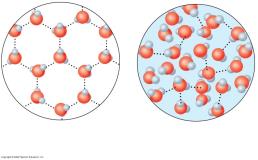
Key Point 2: Ice is less dense than liquid water because hydrogen bonds form a stable crystal structure with space between molecules.

Solutions, Chemical Reactions, and pH
Water as the Solvent of Life
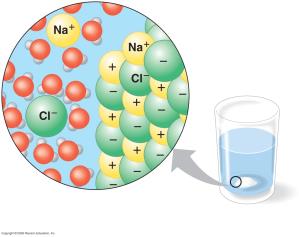
Water is the universal solvent, dissolving many substances essential for life.
Key Point 1: A solution consists of a solute (dissolved substance) and a solvent (dissolving agent).
Key Point 2: Water dissolves ionic compounds like salt due to its polarity.
Types of Chemical Reactions
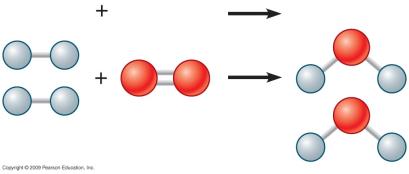
Chemical reactions involve making and breaking bonds, changing the composition of matter.
Key Point 1: Synthesis:
Key Point 2: Decomposition:
Key Point 3: Exchange:
Key Point 4: Reversible:
Activation Energy and Enzymes
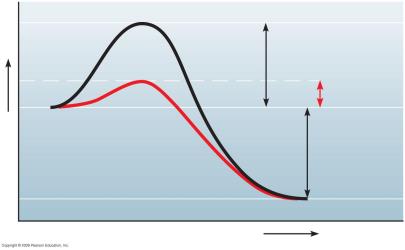
Chemical reactions in cells require activation energy to start. Enzymes lower the activation energy, facilitating reactions.
Key Point 1: Activation energy is the energy needed to initiate a reaction.
Key Point 2: Enzymes are biological catalysts that speed up reactions.
Acidic and Basic Conditions: The pH Scale
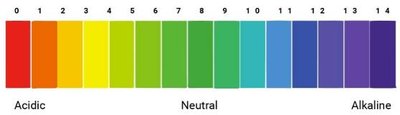
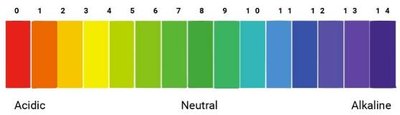
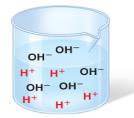
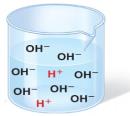
The pH scale measures the concentration of hydrogen ions (H+) in a solution, indicating whether it is acidic, neutral, or basic.
Key Point 1: Acidic solutions have more H+ ions; basic solutions have more OH– ions.
Key Point 2: The pH scale ranges from 0 (most acidic) to 14 (most basic), with 7 being neutral.
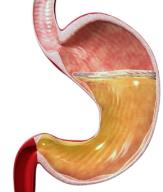
Example: Stomach acid (HCl) is highly acidic; sodium hydroxide (NaOH) is highly basic.
Summary Table: Elements in the Human Body
Element | Symbol | Percentage of Human Body Weight |
|---|---|---|
Oxygen | O | 65.0 |
Carbon | C | 18.5 |
Hydrogen | H | 9.5 |
Nitrogen | N | 3.3 |
Calcium | Ca | 1.5 |
Phosphorus | P | 1.0 |
Potassium | K | 0.4 |
Sulfur | S | 0.3 |
Sodium | Na | 0.2 |
Chlorine | Cl | 0.2 |
Magnesium | Mg | 0.1 |
Conclusion
Understanding the chemical basis of life is fundamental to anatomy and physiology. The structure and function of biological molecules, the properties of water, and the regulation of pH are all rooted in chemical principles.
Key Point: Mastery of these concepts is essential for further study in biological sciences.
