 Indietro
The Chemical Basis of Life: Essential Concepts for Anatomy & Physiology
Guida di studio - Note intelligenti
 Appunti personalizzati basati sui tuoi materiali, ampliati con definizioni chiave, esempi e contesto.
The Chemical Level of Organization
Introduction to Chemistry in Biology
Living organisms and their environments are fundamentally composed of chemicals, which are organized into molecules and higher levels of biological structure. Understanding basic chemistry is essential for comprehending the processes of life.
Chemicals form the basis of biological organization.
Atoms are ordered into molecules, representing the lowest level of biological organization.
Biological structure and function depend on the arrangement and interaction of these chemicals.
Elements, Atoms, and Molecules
Elements are the simplest forms of matter and cannot be broken down further. Atoms are the smallest units of elements, and molecules are combinations of atoms.
Element: A pure substance consisting of only one type of atom.
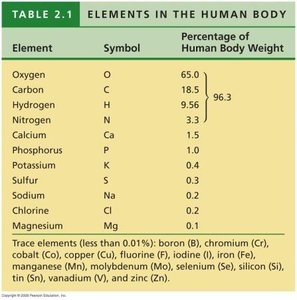
There are 92 naturally occurring elements; about 25 are essential for life.
Trace elements are required in minute amounts but are vital for health.
Trace Elements and Their Importance
Trace elements are added to food and water to prevent disease and support physiological functions.
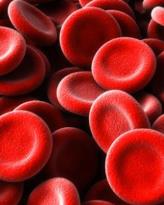
Iron (Fe): Essential for oxygen transport in blood.
Iodine (I): Required for thyroid hormone production; deficiency can cause goiter.

Compounds
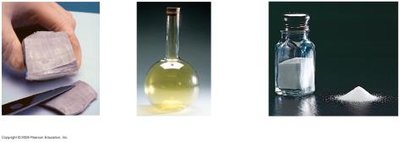
Compounds are substances formed from two or more elements in fixed ratios. Their properties differ from the individual elements.
Example: Sodium chloride (NaCl) is formed from sodium (a metal) and chlorine (a poisonous gas), but together they make edible table salt.
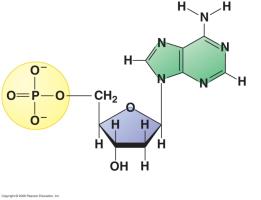
Most biological compounds contain carbon, hydrogen, oxygen, and nitrogen.
Atomic Structure and Properties
Atoms and Subatomic Particles
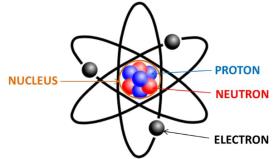
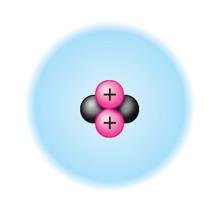
Atoms consist of protons, neutrons, and electrons. These subatomic particles determine the chemical properties of elements.
Proton: Positive charge
Neutron: No charge
Electron: Negative charge
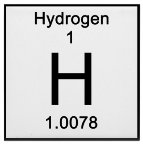
Element Information and Atomic Number
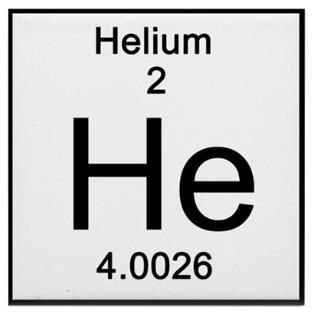
Each element is defined by its atomic number (number of protons) and atomic mass (sum of protons and neutrons).
Atomic Number: Number of protons in the nucleus
Atomic Mass: Weighted average mass based on isotopes
Element Symbol: Abbreviation from common or Latin name
Isotopes and Atomic Mass
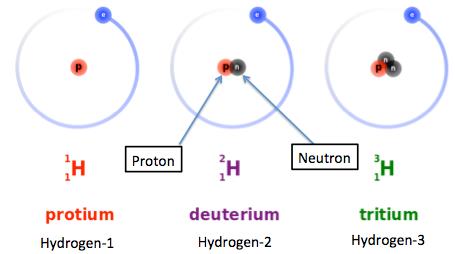
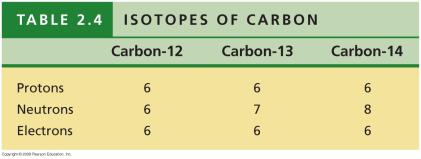
Isotopes are variants of elements with different numbers of neutrons. Atomic mass reflects the average mass of all isotopes.
Example: Hydrogen has three isotopes: 1H (protium), 2H (deuterium), 3H (tritium).
Atomic mass is calculated based on the abundance of each isotope.
Isotopes of Carbon
Carbon-12 | Carbon-13 | Carbon-14 | |
|---|---|---|---|
Protons | 6 | 6 | 6 |
Neutrons | 6 | 7 | 8 |
Electrons | 6 | 6 | 6 |
Radioactive Isotopes
Some isotopes are unstable and emit energy, which can be useful or harmful.
Medical uses: Radioactive tracers for imaging (e.g., PET scans).
Dangers: Uncontrolled exposure can damage DNA and cellular molecules.
Electron Arrangement and Chemical Bonds
Electron Shells and Chemical Properties
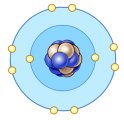
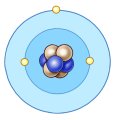
Electrons occupy energy levels called shells. The arrangement of electrons determines how atoms interact and form bonds.
First shell holds 2 electrons; second and third hold up to 8.
Atoms are most stable when their outer shell is full.
Ionic Bonds
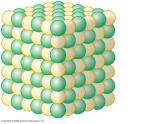
Ionic bonds form when atoms transfer electrons, resulting in charged ions that attract each other.
Example: Sodium (Na) donates an electron to chlorine (Cl), forming Na+ and Cl– ions, which combine to make NaCl.
Covalent Bonds
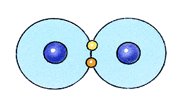
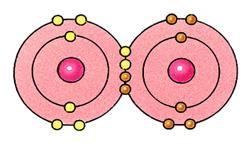
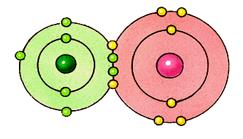
Covalent bonds form when atoms share electrons. These bonds are essential for forming molecules.
Atoms follow the octet rule, seeking to fill their outer shell.
Electronegativity: The ability of an atom to attract shared electrons.

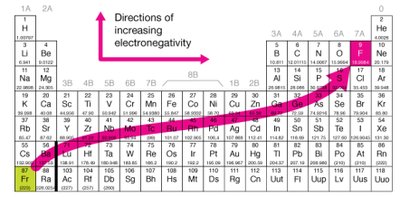
Polar and Nonpolar Covalent Bonds
Nonpolar covalent bonds: Electrons are shared equally (e.g., H2, O2).
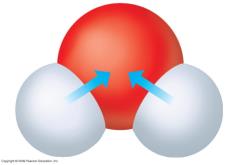
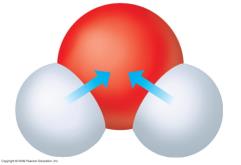
Polar covalent bonds: Electrons are shared unequally, creating partial charges (e.g., H2O).
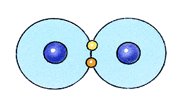
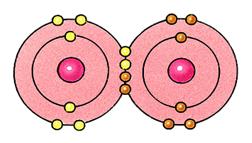
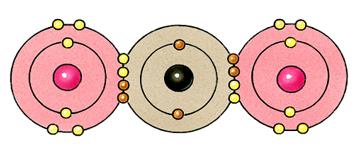
Hydrogen Bonds
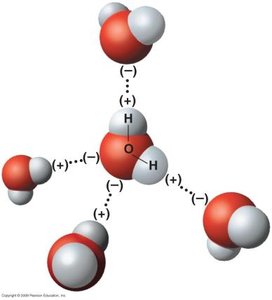
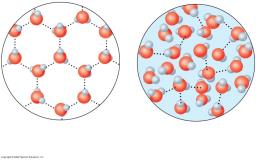
Hydrogen bonds are weak attractions between polar molecules, especially important in water and biological molecules.
Hydrogen bonds contribute to water's cohesion, surface tension, and temperature moderation.
Cohesion and Surface Tension
Water molecules stick together due to hydrogen bonding, resulting in high cohesion and surface tension.
Surface tension allows insects to walk on water.

Water's Role in Temperature Regulation
Hydrogen bonds allow water to resist temperature changes, supporting life by stabilizing environments and organisms.
Evaporative cooling (perspiration) is an example of water's temperature regulation.
Density of Ice vs. Liquid Water
Water is less dense as a solid (ice) than as a liquid, due to stable hydrogen bonds forming a crystal structure.
Ice floats on water, which is crucial for aquatic life.

Water as the Solvent of Life
Solutions, Solutes, and Solvents
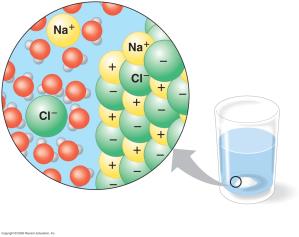
Water is the universal solvent, dissolving many substances essential for biological processes.
Solute: Substance dissolved
Solvent: Substance doing the dissolving (water in biological systems)
Chemical Reactions and Energy
Types of Energy
Potential energy: Stored energy, such as chemical energy in bonds.
Kinetic energy: Energy of motion, used to perform work.


ATP: The Energy Molecule
ATP stores chemical energy in phosphate bonds, which is released during hydrolysis to power cellular processes.
ATP (adenosine triphosphate) is the primary energy carrier in cells.
Types of Chemical Reactions
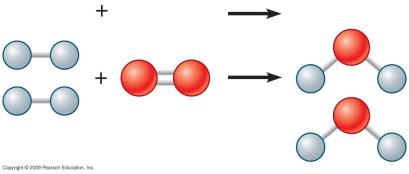
Synthesis:
Decomposition:
Exchange:
Reversible:
Activation Energy
Chemical reactions require activation energy to start. Enzymes lower this energy barrier, allowing reactions to proceed efficiently in cells. 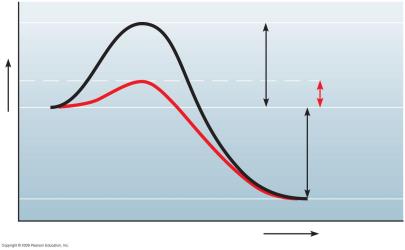
Acidic and Basic Conditions
Acids, Bases, and pH
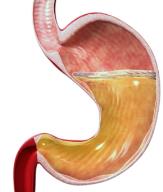
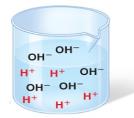
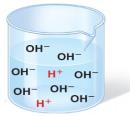
Water can dissociate into hydrogen ions (H+) and hydroxide ions (OH–). The balance of these ions determines acidity or basicity.
Acid: Increases H+ concentration
Base: Reduces H+ concentration, increases OH–
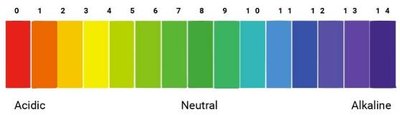
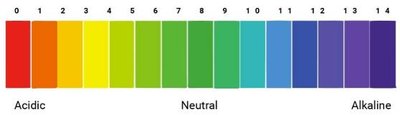
pH scale: Measures acidity/basicity from 0 (acidic) to 14 (basic); 7 is neutral.
Summary Table: Elements in the Human Body
Element | Symbol | Percentage of Human Body Weight |
|---|---|---|
Oxygen | O | 65.0 |
Carbon | C | 18.5 |
Hydrogen | H | 9.5 |
Nitrogen | N | 3.3 |
Calcium | Ca | 1.5 |
Phosphorus | P | 1.0 |
Potassium | K | 0.4 |
Sulfur | S | 0.3 |
Sodium | Na | 0.2 |
Chlorine | Cl | 0.2 |
Magnesium | Mg | 0.1 |
Summary Table: Isotopes of Carbon
Carbon-12 | Carbon-13 | Carbon-14 | |
|---|---|---|---|
Protons | 6 | 6 | 6 |
Neutrons | 6 | 7 | 8 |
Electrons | 6 | 6 | 6 |
Key Takeaways
Understanding the chemical basis of life is foundational for anatomy and physiology.
Elements, atoms, and molecules form the structural and functional basis of living organisms.
Chemical bonds and reactions drive biological processes, including energy transfer and regulation of pH.
