Indietro
The Digestive System and Body Metabolism: Structure, Function, and Processes
Guida di studio - Note intelligenti
 Appunti personalizzati basati sui tuoi materiali, ampliati con definizioni chiave, esempi e contesto.
The Digestive System: Overview
Introduction
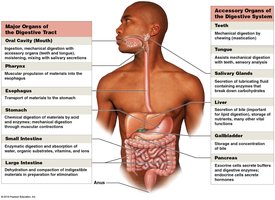
The digestive system is responsible for breaking down food, absorbing nutrients, and eliminating waste. It consists of the alimentary canal and accessory organs, each with specialized functions.
Alimentary canal: The continuous muscular tube from mouth to anus, including the oral cavity, pharynx, esophagus, stomach, small intestine, and large intestine.
Accessory organs: Teeth, tongue, salivary glands, liver, gallbladder, and pancreas, which aid in digestion but are not part of the canal itself.
Processes of the Digestive System
Essential Activities
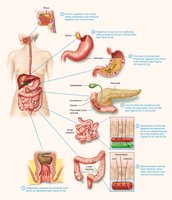
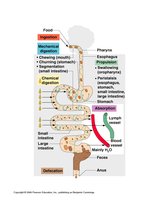
Digestion involves six main processes:
Ingestion: Intake of food into the mouth.
Propulsion: Movement of food through the canal, including swallowing and peristalsis.
Mechanical digestion: Physical breakdown of food, increasing surface area for enzymes.
Chemical digestion: Enzymatic breakdown of food into absorbable molecules.
Absorption: Passage of nutrients from the digestive tract into blood or lymph.
Defecation: Elimination of indigestible substances as feces.
Mechanical Digestion
Physical Breakdown of Food
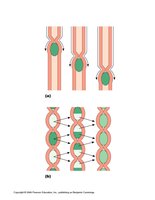
Mechanical digestion prepares food for chemical digestion by increasing its surface area.
Chewing: Mastication by teeth.
Mixing: Tongue mixes food with saliva.
Churning: Stomach muscles churn food.
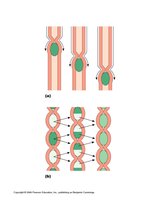
Segmentation: Local contractions in the small intestine mix food with digestive fluids.
Chemical Digestion
Enzymatic Breakdown
Chemical digestion uses enzymes to break down macromolecules into their building blocks.
Carbohydrates: Broken down by amylases into monosaccharides.
Proteins: Broken down by proteases (e.g., pepsin, trypsin) into amino acids.
Fats: Broken down by lipases and bile into fatty acids and glycerol.
Nucleic acids: Broken down by nucleases into nucleotides.
Carbohydrate Digestion
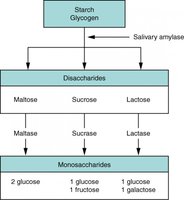
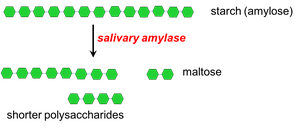
Starch and glycogen are broken down by salivary and pancreatic amylase.
Disaccharides (maltose, sucrose, lactose) are further digested by brush border enzymes (maltase, sucrase, lactase).
Monosaccharides (glucose, fructose, galactose) are absorbed.
Protein Digestion
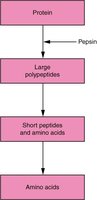
Proteins are broken down by pepsin in the stomach and pancreatic enzymes in the small intestine.
Peptidases in the brush border complete digestion to amino acids.
Digestive Activities of the Mouth
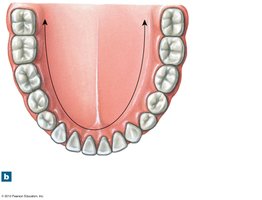
Teeth and Mastication
The mouth is the site of ingestion and mechanical digestion.
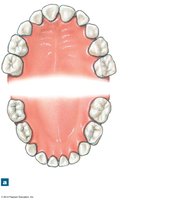
Teeth: Humans have two sets—deciduous (baby) and permanent (adult).
Classification: Incisors (cutting), canines (tearing), premolars and molars (grinding).
Salivary Glands and Saliva
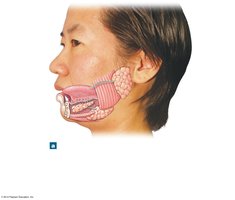
Salivary glands: Parotid, submandibular, and sublingual glands secrete saliva.
Saliva composition: 99.4% water, electrolytes, buffers, glycoproteins, antibodies, enzymes (amylase, lysozyme), and waste products.
Functions: Lubrication, bolus formation, taste, chemical digestion, antibacterial action.
Propulsion: Swallowing and Peristalsis
Swallowing (Deglutition)
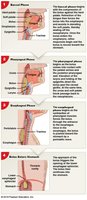
Swallowing involves coordinated muscle contractions to move food from the mouth to the stomach.
Buccal phase: Voluntary, initiated by the tongue.
Pharyngeal-esophageal phase: Involuntary, controlled by the swallowing center in the brainstem.
Peristalsis
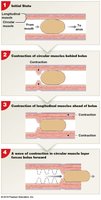
Peristalsis is the primary means of propulsion throughout the digestive tract.
Alternating waves of contraction and relaxation of smooth muscle move food forward.
Stomach: Structure and Function
Mechanical and Chemical Digestion
The stomach churns food and secretes gastric juices for chemical digestion.
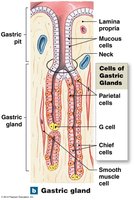
Specialized mucosa: Simple columnar epithelium, mucous neck cells, gastric glands (chief, parietal, G cells).
Gastrin: Hormone regulating secretion of pepsinogen and HCl.
Pepsinogen activation: Pepsinogen is converted to pepsin by HCl, enabling protein digestion.
Small Intestine: Structure and Function
Histological Features
The small intestine is specialized for absorption and digestion.
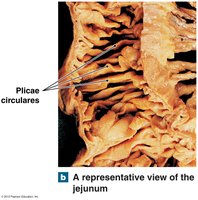
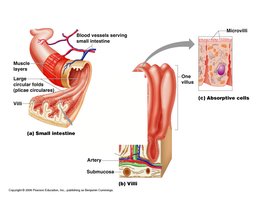
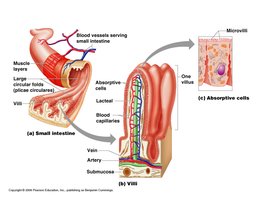
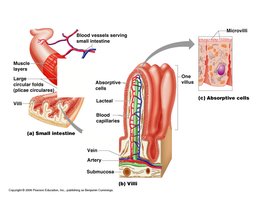
Circular folds (plicae circulares): Slow movement of chyme, increase surface area.
Villi: Finger-like projections, increase surface area for absorption.
Microvilli (brush border): Further increase surface area, contain enzymes for final digestion.
Digestive Processes in the Small Intestine
Mechanical digestion: Segmentation mixes chyme with digestive enzymes.
Chemical digestion: Brush border enzymes break down disaccharides and peptides.
Absorption: Nutrients absorbed by absorptive cells, blood capillaries, and lacteals.
Pancreas, Liver, and Gallbladder: Accessory Organs
Pancreas
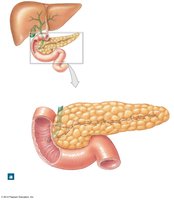
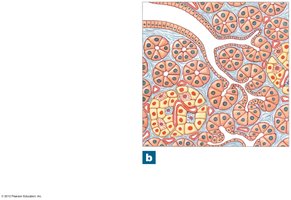
Exocrine function: Secretes digestive enzymes (amylase, lipase, nucleases, proteases) and bicarbonate into the duodenum.
Endocrine function: Secretes insulin and glucagon for blood glucose regulation.
Liver
Bile production: Bile emulsifies fats, aiding digestion.
Metabolism: Processes nutrients, detoxifies substances, excretes waste.
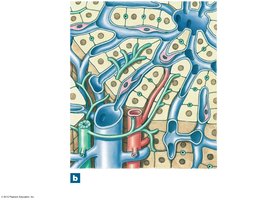
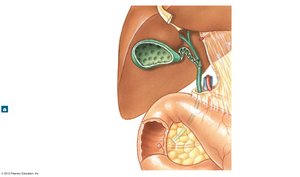
Gallbladder
Storage of bile: Releases bile into the duodenum as needed.
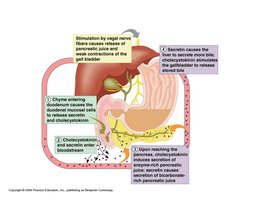
Regulation of Secretion
Stimulated by vagus nerve and local hormones (secretin, cholecystokinin).
Large Intestine: Structure and Function
Absorption and Propulsion
The large intestine absorbs water and electrolytes, forms feces, and propels waste.
Haustral contractions: Localized movements for mixing.
Peristalsis and mass movements: Move feces toward rectum.
Defecation
Defecation Reflex
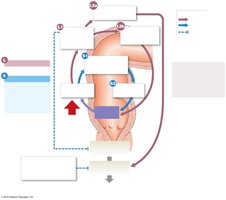
Mass movements push feces into rectum, stretching the wall and triggering the reflex.
Involves both short and long reflexes, coordinated by the sacral parasympathetic system.
Summary Tables: Structure and Function of Digestive Organs
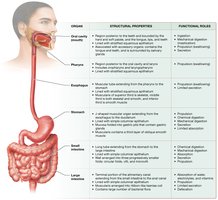
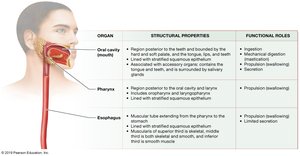
Alimentary Canal Organs
Organ | Structural Properties | Functional Roles |
|---|---|---|
Oral cavity | Stratified squamous epithelium, teeth, tongue, salivary glands | Ingestion, mechanical digestion, secretion |
Pharynx | Muscle layers, passageway for air and food | Propulsion (swallowing) |
Esophagus | Muscular tube, stratified squamous epithelium | Propulsion (swallowing) |
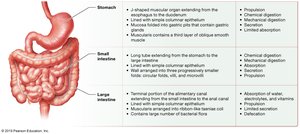
Stomach | J-shaped, simple columnar epithelium, gastric glands | Propulsion, chemical digestion, mechanical digestion, limited absorption |
Small intestine | Long tube, circular folds, villi, microvilli | Chemical digestion, absorption, secretion, propulsion |
Large intestine | Terminal portion, haustra, simple columnar epithelium | Absorption of water, propulsion, secretion, defecation |
Accessory Organs
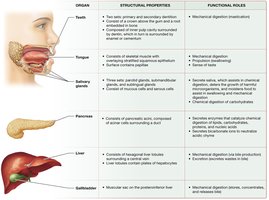
Organ | Structural Properties | Functional Roles |
|---|---|---|
Teeth | Two sets, crown and root, surrounded by bone | Mechanical digestion (mastication) |
Tongue | Skeletal muscle, stratified squamous epithelium | Mechanical digestion, bolus formation |
Salivary glands | Three pairs, ducts | Secrete saliva, chemical digestion of carbohydrates |
Pancreas | Acinar cells, islets | Secrete digestive enzymes and hormones |
Liver | Hexagonal lobules, hepatocytes | Bile production, metabolism, detoxification |
Gallbladder | Muscular sac | Stores and concentrates bile |
Control of Digestive Activity
Regulation
Controlled by the parasympathetic division and local chemical/mechanical receptors.
Stimuli include organ stretch, pH, and presence of breakdown products.
Reflexes activate or inhibit glandular secretions and smooth muscle activity.
Homeostatic Imbalances
Common Disorders
Mouth: Xerostomia (dry mouth), periodontitis (gum disease).
Esophagus: Heartburn, GERD, hiatal hernia.
Stomach: Gastritis, peptic ulcers (often caused by Helicobacter pylori).
Liver: Hepatitis, NAFLD, cirrhosis.
Gallbladder: Gallstones, obstructive jaundice.
Pancreas: Pancreatitis, diabetes mellitus (type 1 and 2).
Summary: Process of Digestion
Stepwise Overview
Food enters the mouth, is mechanically and chemically digested.
Propelled by swallowing and peristalsis through the esophagus to the stomach.
Stomach churns and digests proteins.
Small intestine completes digestion and absorbs nutrients.
Large intestine absorbs water and forms feces.
Defecation eliminates waste.