 Indietro
The Endocrine System: Structure, Function, and Hormonal Regulation
Guida di studio - Note intelligenti
 Appunti personalizzati basati sui tuoi materiali, ampliati con definizioni chiave, esempi e contesto.
The Endocrine System
Internal Communication: Nervous vs. Endocrine Systems
The body relies on both the nervous and endocrine systems for internal communication and coordination. These systems differ in their signaling methods and timing:
Nervous System: Uses electrical and chemical signals (action potentials and neurotransmitters); communicates rapidly with short-lived effects.
Endocrine System: Uses chemical messengers (hormones); communicates gradually with longer-lasting effects.
Cell Signaling: Overview
Cell-to-cell communication in the body occurs through four major methods:
Gap Junctions: Physically join cells, allowing direct passage of molecules.
Neurotransmitters: Released by neurons, bind to receptors on adjacent cells.
Paracrines: Secreted by cells, diffuse to nearby cells within the same tissue.
Hormones: Chemical messengers transported by the bloodstream to distant tissues or organs.
Endocrine System: Overview
The endocrine system consists of glands, tissues, and cells that secrete hormones. Hormones are classified into three main categories:
Monoamines: Derived from amino acids; water-soluble; bind to plasma membrane receptors.
Peptide Hormones: Chains of amino acids; water-soluble; bind to plasma membrane receptors.
Steroids: Derived from cholesterol; fat-soluble; enter cells to bind intracellular receptors.
Hormonal Interactions
Hormones can interact in several ways:
Synergistic Effects: Two or more hormones act together for a greater effect (e.g., FSH & testosterone stimulate sperm production).
Permissive Effects: One hormone enhances the response to another (e.g., progesterone requires estrogen-induced receptors).
Antagonistic Effects: One hormone opposes another (e.g., insulin & glucagon regulate blood sugar).
Glands: Structure and Function
Definition and Types of Glands
A gland is a cell or organ that secretes substances for use elsewhere or for elimination as waste. Secretion is a useful product (enzyme or hormone), while excretion is a waste product (urine).
Exocrine Glands
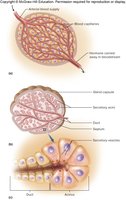
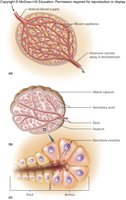
Exocrine glands release products through ducts onto body surfaces or into organ cavities. Examples include sweat, mammary, tear, salivary glands, liver, and pancreas.
Endocrine Glands
Endocrine glands lack ducts and secrete hormones directly into the bloodstream. Examples include pituitary, thyroid, adrenal glands, and pancreas.
Mixed Function Glands
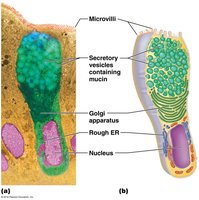
Some organs have both endocrine and exocrine functions. Glands can range from single cells to complex multicellular structures.
Hormonal Release and Regulation
Hormonal Release Mechanism
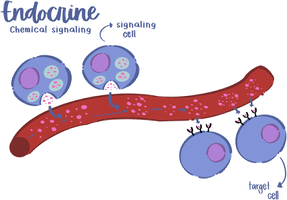
Hormones are released into the bloodstream when the endocrine system receives the proper signal. The signaling cell releases the hormone, and the target cell (with specific receptors) receives the signal.
Trigger Mechanisms for Hormone Release
Humoral Stimuli: Triggered by changes in blood levels (e.g., high glucose triggers insulin).
Neural Stimuli: Triggered by nerve fibers (e.g., sympathetic nerves trigger adrenal medulla).
Hormonal Stimuli: Triggered by hormones from other glands (e.g., pituitary hormones trigger thyroid hormone release).
Major Players of the Endocrine System
Overview of Endocrine Organs
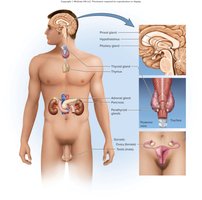
The endocrine system includes the pineal gland, hypothalamus, pituitary gland, thyroid gland, parathyroid gland, thymus, adrenal glands, pancreas, and gonads.
Pineal Gland
The pineal gland is a small structure hanging from the roof of the third ventricle in the brain. It secretes melatonin, which regulates sleep cycles.
Hypothalamus
The hypothalamus is a key regulator of the endocrine system, often acting through the pituitary gland.
Pituitary Gland
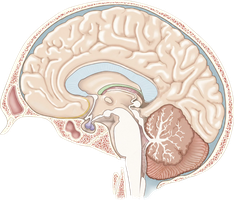
The pituitary gland (hypophysis) is a two-lobed structure hanging from the hypothalamus, often called the 'master gland'.
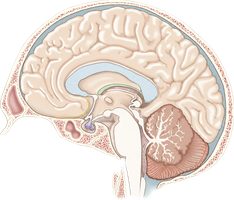
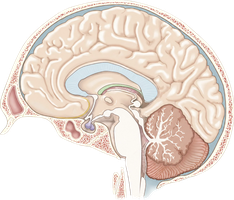
Anterior Pituitary: Secretes six peptide hormones: GH, PRL, TSH, ACTH, FSH, LH.
Posterior Pituitary: Stores and releases two hormones produced by the hypothalamus: ADH and OT.
Anterior Pituitary Hormones
Growth Hormone (GH): Stimulates growth of skeletal muscle and long bones, cell growth, fat metabolism.
Prolactin (PRL): Stimulates and maintains milk production in mammary glands.
Thyroid Stimulating Hormone (TSH): Stimulates thyroid hormone release, regulates metabolism.
Adrenocorticotropic Hormone (ACTH): Regulates adrenal gland stress hormone release.
Follicle Stimulating Hormone (FSH): Stimulates follicle development in ovaries and sperm development in testes.
Luteinizing Hormone (LH): Triggers ovulation and stimulates testosterone production.
Posterior Pituitary Hormones
Antidiuretic Hormone (ADH): Increases water retention in kidneys, decreases urine volume, increases blood volume and pressure.
Oxytocin (OT): Released via positive feedback, stimulates uterine contractions, milk flow, and mother-baby bonding.
Thyroid Gland
Located just below the Adam's apple, the thyroid gland produces two hormones:
Thyroid Hormone (T3 & T4): Regulates metabolism, requires iodine.
Calcitonin: Decreases blood calcium by stimulating osteoblasts; more important in children.
Parathyroid Gland
Four pea-sized glands on the posterior thyroid. Secretes parathyroid hormone (PTH), which increases blood calcium by stimulating osteoclasts and synthesis of calcitriol.
Thymus
Located posterior to the sternum, the thymus releases thymopoietin, thymosin, and thymulin to stimulate lymphatic organ development and T-cell maturation. It atrophies with age.
Adrenal Glands
Adrenal glands sit atop the kidneys and consist of two parts:
Adrenal Cortex: Produces corticosteroids: mineralocorticoids (electrolyte balance), glucocorticoids (glucose metabolism), androgens (sex steroids).
Adrenal Medulla: Secretes catecholamines (epinephrine, norepinephrine) in response to stress.
Key Adrenal Cortex Hormones
Aldosterone: Regulates sodium and potassium by targeting kidney tubules.
Cortisol: Released in response to ACTH and stress, increases blood glucose.
Androgens: Trigger secondary sex characteristics, activate glands, stimulate libido.
Pancreas
The pancreas is a spongy gland posterior to the stomach, containing islets that regulate blood glucose:
Insulin: Released from beta cells, decreases blood glucose by stimulating uptake and storage.
Glucagon: Released from alpha cells, increases blood glucose by stimulating glycogen breakdown.
Gonads
The gonads (testes and ovaries) produce gametes and sex hormones:
Testes: Produce androgens (testosterone) for male characteristics, sex drive, and sperm production.
Ovaries: Produce estradiol (estrogen) and progesterone for female characteristics, menstrual cycle, pregnancy, and lactation.
Summary Table: Hormones and Their Functions
Hormone | Source | Main Function |
|---|---|---|
Growth Hormone (GH) | Anterior Pituitary | Stimulates growth, metabolism |
Prolactin (PRL) | Anterior Pituitary | Milk production |
Thyroid Stimulating Hormone (TSH) | Anterior Pituitary | Stimulates thyroid |
Adrenocorticotropic Hormone (ACTH) | Anterior Pituitary | Stimulates adrenal cortex |
Follicle Stimulating Hormone (FSH) | Anterior Pituitary | Stimulates gamete production |
Luteinizing Hormone (LH) | Anterior Pituitary | Triggers ovulation, testosterone |
Antidiuretic Hormone (ADH) | Posterior Pituitary | Water retention |
Oxytocin (OT) | Posterior Pituitary | Uterine contractions, milk flow |
Thyroid Hormone (T3/T4) | Thyroid | Regulates metabolism |
Calcitonin | Thyroid | Decreases blood calcium |
Parathyroid Hormone (PTH) | Parathyroid | Increases blood calcium |
Aldosterone | Adrenal Cortex | Electrolyte balance |
Cortisol | Adrenal Cortex | Stress response, glucose |
Androgens | Adrenal Cortex/Testes | Sex characteristics |
Insulin | Pancreas | Decreases blood glucose |
Glucagon | Pancreas | Increases blood glucose |
Estrogen/Progesterone | Ovaries | Female characteristics, cycle |
Testosterone | Testes | Male characteristics, sperm |
Key Equations
Hormone concentration in blood can be described by:
Where: C = concentration S = secretion rate R = removal rate
Additional info: Some details about gland structure and hormone mechanisms were inferred for completeness and clarity.
