 Indietro
The Endocrine System: Structure, Function, and Regulation
Guida di studio - Note intelligenti
 Appunti personalizzati basati sui tuoi materiali, ampliati con definizioni chiave, esempi e contesto.
The Endocrine System
Overview of the Endocrine System
The endocrine system is one of the two major regulatory systems of the body, alongside the nervous system. It consists of organs that synthesize and secrete chemical messengers called hormones into the blood, which interact with specific cells known as target cells. Tissues containing these target cells are referred to as target tissues. Target cells possess receptors for hormones, enabling changes in cellular function.
Hormones: Chemical messengers secreted by endocrine organs.
Target Cells: Cells with specific receptors for hormones.
Target Tissues: Tissues where target cells reside.
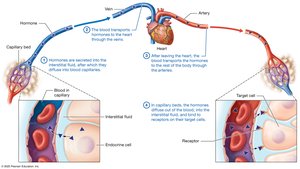
Comparison of the Endocrine and Nervous Systems
Unlike the nervous system, endocrine cells do not come into close contact with their target cells. Hormones are secreted into the interstitial fluid, diffuse into blood capillaries, and are transported throughout the body. In capillary beds, hormones diffuse out of the blood and bind to receptors on their target cells.
Endocrine signaling: Hormones travel via blood to distant targets.
Nervous signaling: Neurotransmitters act locally and rapidly.
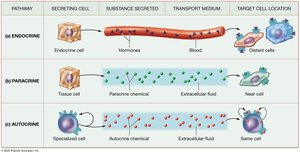
Paracrine and Autocrine Signals
Not all chemical messengers act as classic hormones. Some act locally:
Paracrine signals: Chemicals secreted into extracellular fluid to influence nearby cells.
Autocrine signals: Chemicals secreted by a cell to elicit effects from the same cell.
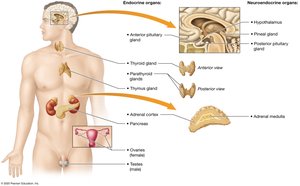
Overview of Endocrine Organs
Endocrine glands are ductless organs composed of glandular epithelial cells that secrete hormones into the interstitial fluid for transport by the bloodstream. Their effects are generally longer-lasting than those of the nervous system.
Primary endocrine organs: Anterior pituitary, thyroid, parathyroid, adrenal cortices, pancreas, thymus, ovaries/testes.
Secondary endocrine glands: Heart, kidneys, small intestine, adipose tissue.
Neuroendocrine organs: Hypothalamus, pineal gland, adrenal medulla.
Classes of Hormones
Hormones are classified based on their chemical structure:
Amino acid-based hormones: Derived from amino acids; mostly hydrophilic.
Peptide/protein hormones: Chains of amino acids; generally hydrophilic.
Steroid hormones: Derived from cholesterol; hydrophobic and lipid-soluble.
Hormone Transport in Blood
Free hormones: Small, hydrophilic hormones travel freely in plasma.
Bound hormones: Hydrophobic hormones form complexes with binding proteins, extending their lifespan and providing a reservoir.
Target Cells and Receptors
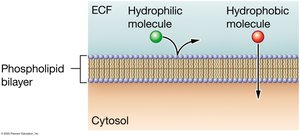
Target cells contain highly specific receptors for hormones, which can bind at extremely low concentrations. Some hormones bind to one type of target cell, while others bind to multiple cell types. Hormone receptors may be embedded in the plasma membrane (for hydrophilic hormones) or located in the cytosol/nucleus (for hydrophobic hormones).
Mechanisms of Hormone Action
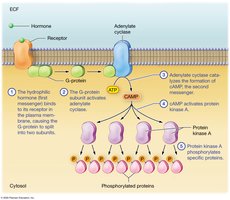
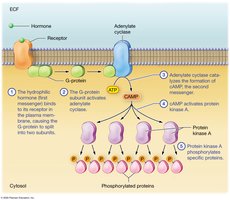
Hydrophilic hormones typically act via second-messenger systems, s/uch as the adenylate cyclase–cAMP pathway:
Hormone binds to receptor, activating G-protein.
G-protein activates adenylate cyclase, forming cAMP from ATP.
cAMP activates protein kinase A, which phosphorylates proteins, altering their activity.
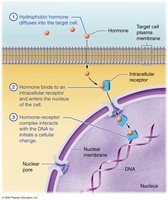
Hydrophobic hormones diffuse into target cells, bind to intracellular receptors, and interact with DNA to initiate cellular changes.
Regulation of Hormone Secretion
Hormone secretion is regulated by various stimuli:
Hormonal stimuli: Endocrine cells respond to other hormones.
Humoral stimuli: Endocrine cells respond to ion/compound concentrations in blood.
Neural stimuli: Endocrine cells respond to nervous system signals.
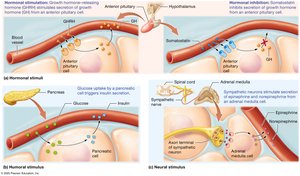
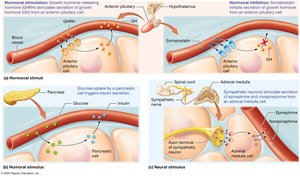
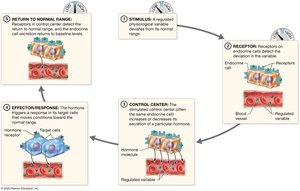
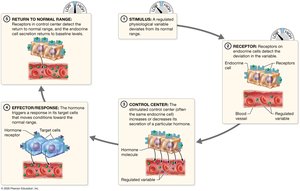
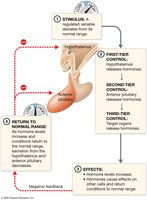
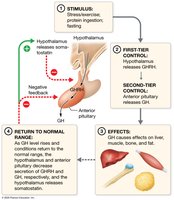
Hormone secretion is usually regulated by negative feedback loops, ensuring homeostasis.
Hypothalamus and Pituitary Gland
Structure and Functional Relationship
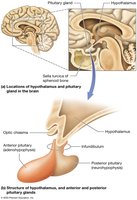
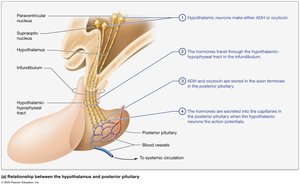
The hypothalamus connects to the pituitary gland via the infundibulum. The anterior pituitary is a true gland, while the posterior pituitary is composed of nervous tissue and stores neurohormones.
Hormones of the Hypothalamus and Posterior Pituitary
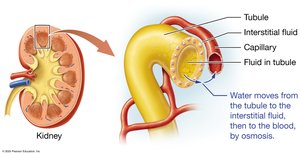
Antidiuretic hormone (ADH): Promotes water retention by kidneys; released in response to high solute concentration.
Oxytocin: Stimulates uterine contractions and milk ejection; operates via positive feedback.
Functional Relationship of Hypothalamus and Anterior Pituitary
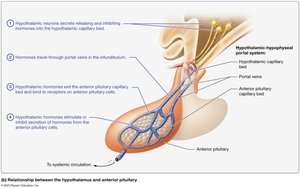
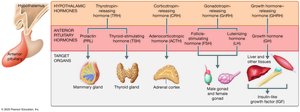
The hypothalamus produces releasing and inhibiting hormones that control the anterior pituitary. Tropic hormones from the anterior pituitary regulate other glands.
Anterior Pituitary Hormones
Hormone | Stimulus for Release | Inhibitor(s) of Release | Target Tissue(s) | Effects |
|---|---|---|---|---|
TSH | TRH from hypothalamus | Somatostatin | Thyroid gland | Growth and development; secretion of thyroid hormones |
ACTH | CRH from hypothalamus | Increased levels of cortisol | Adrenal cortex | Growth and development; secretion of adrenal steroids |
Prolactin | Infant suckling; TRH | Dopamine | Mammary gland | Development of mammary glands; milk production |
LH | GnRH from hypothalamus | Increased levels of sex hormones | Gonads | Development of gonads; testosterone/estrogen/progesterone production |
FSH | GnRH from hypothalamus | Increased levels of sex hormones | Gonads | Production of gametes; maturation of ovarian follicles |
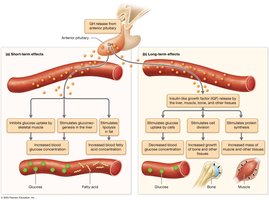
GH | GHRH from hypothalamus; exercise, fasting, protein ingestion | Somatostatin | Liver, adipose, bone, muscle | Growth, protein synthesis, fat breakdown, gluconeogenesis |
Thyroid and Parathyroid Glands
Structure of the Thyroid and Parathyroid Glands
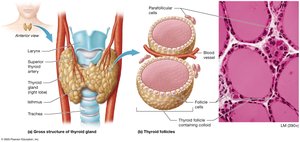
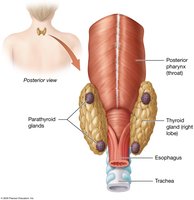
The thyroid gland is located in the anterior neck and consists of right and left lobes connected by the isthmus. It is composed of thyroid follicles filled with colloid, where thyroid hormone precursors are stored. Parafollicular cells produce calcitonin. The parathyroid glands are usually four small glands embedded in the posterior thyroid; chief cells produce parathyroid hormone (PTH).
Thyroid Hormones: Metabolic Regulators
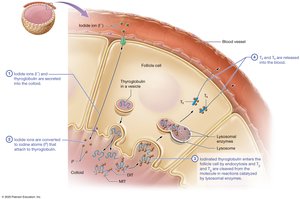
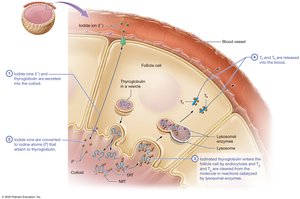
Triiodothyronine (T3): Contains three iodine atoms; more physiologically active.
Thyroxine (T4): Contains four iodine atoms; converted to T3 in target cells.
Thyroid hormones regulate basal metabolic rate, thermoregulation, growth and development, and synergize with the sympathetic nervous system.
Regulation of Thyroid Hormone Production
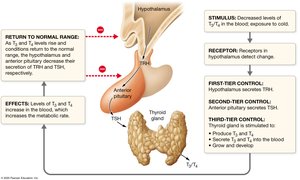
Thyroid hormone production is regulated by a negative feedback loop involving TRH (hypothalamus), TSH (anterior pituitary), and thyroid hormones.
Thyroid Disorders
Hyperthyroidism: Overproduction of thyroid hormones; causes weight loss, heat intolerance, and cardiovascular disruptions.
Graves Disease: Autoimmune hyperthyroidism; may cause exophthalmos and goiter.
Hypothyroidism: Underproduction of thyroid hormones; causes weight gain, cold intolerance, and goiter.

Parathyroid Hormone and Calcitonin: Bone Homeostasis
Parathyroid Hormone (PTH)
PTH is secreted in response to hypocalcemia and increases blood calcium by stimulating osteoclasts, increasing intestinal absorption, and enhancing kidney reabsorption.
Calcitonin
Calcitonin is produced by parafollicular cells in response to hypercalcemia and inhibits osteoclast activity, promoting bone formation.
Adrenal Glands
Structure of the Adrenal Glands
The adrenal glands are located on the superior end of the kidneys and consist of an outer cortex and inner medulla. The cortex has three zones: zona glomerulosa (mineralocorticoids), zona fasciculata (glucocorticoids), and zona reticularis (androgenic steroids).
Hormones of the Adrenal Cortex
Aldosterone: Regulates sodium, potassium, fluid volume, blood pressure, and acid-base homeostasis.
Cortisol: Mediates stress response, gluconeogenesis, anti-inflammatory actions.
Androgenic steroids: Affect reproductive organs and other tissues.
Pancreas
Structure of the Pancreas
The pancreas contains both endocrine (islets) and exocrine (acinar) cells. Islets secrete peptide hormones: alpha cells (glucagon), beta cells (insulin), delta cells (somatostatin).
Hormones of the Endocrine Pancreas: Glucose Homeostasis
Glucagon: Increases blood glucose by promoting glycogenolysis, gluconeogenesis, and ketone body formation.
Insulin: Lowers blood glucose by promoting nutrient uptake and storage.
Other Endocrine Organs and Hormones
Thymus: Secretes thymosin and thymopoietin for T lymphocyte maturation.
Gonads: Testes produce testosterone; ovaries produce estrogens and progesterone.
Pineal gland: Secretes melatonin for sleep regulation.
Adipose tissue: Produces leptin for satiety.
Heart: Produces atrial natriuretic peptide (ANP) for blood pressure regulation.
Kidneys: Produce erythropoietin, renin, and convert vitamin D to its active form.
Hormonal Control of Metabolic and Fluid Homeostasis
Endocrine control ensures metabolic fuels are available during activity, stores fuels during rest, and regulates growth and feeding behaviors. Fluid homeostasis is maintained by ADH, aldosterone, and ANP, which regulate water volume and electrolyte balance.
Summary Table: Major Endocrine Glands and Their Hormones
Gland | Hormone(s) | Main Function |
|---|---|---|
Pituitary | TSH, ACTH, GH, LH, FSH, Prolactin, ADH, Oxytocin | Regulation of other glands, growth, water balance, reproduction |
Thyroid | T3, T4, Calcitonin | Metabolic rate, calcium homeostasis |
Parathyroid | PTH | Calcium homeostasis |
Adrenal | Aldosterone, Cortisol, Androgens, Epinephrine, Norepinephrine | Fluid/electrolyte balance, stress response, metabolism |
Pancreas | Insulin, Glucagon, Somatostatin | Glucose homeostasis |
Gonads | Testosterone, Estrogens, Progesterone | Reproduction, secondary sex characteristics |
Pineal | Melatonin | Sleep regulation |
Thymus | Thymosin, Thymopoietin | Immune cell maturation |
Heart | ANP | Blood pressure regulation |
Kidneys | EPO, Renin, Calcitriol | Red blood cell production, blood pressure, calcium homeostasis |
Adipose | Leptin | Satiety regulation |
