 Indietro
The Immune System and Lymphatic System: Structure, Function, and Regulation
Guida di studio - Note intelligenti
 Appunti personalizzati basati sui tuoi materiali, ampliati con definizioni chiave, esempi e contesto.
The Immune System and Lymphatic System
Overview
The immune system is a complex network of cells, tissues, and organs that work together to defend the body against pathogens and maintain homeostasis. The lymphatic system is closely integrated with the immune system, providing structural and functional support for immune responses.
Lymphatic System
Functions of the Lymphatic System
Drains excess interstitial fluid: Returns fluid from tissues to the bloodstream, preventing edema.
Transports dietary lipids: Absorbs and transports fats from the digestive tract via lacteals.
Carries out immune responses: Provides sites for immune cell activation and proliferation.
Components of the Lymphatic System
Lymph: Fluid similar to plasma but with less protein, containing lymphocytes.
Lymphatic vessels: Network of vessels that transport lymph throughout the body.
Lymphatic tissues and organs: Includes lymph nodes, thymus, spleen, and lymphoid nodules.
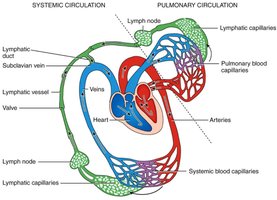
Lymphatic Tissues and Organs
Lymphoid tissues: Aggregations of lymphocytes in connective tissue (e.g., tonsils, Peyer's patches).
Lymphoid organs: Structured organs such as lymph nodes (filter lymph), thymus (T cell maturation), and spleen (filters blood, immune surveillance).
Defense System: Innate and Adaptive Immunity
Antigens vs. Pathogens
Antigen: Any substance that can trigger an immune response (often a protein or polysaccharide).
Pathogen: Disease-causing organism (e.g., bacteria, viruses, fungi, parasites).
Types of Immunity
Innate (Nonspecific) Immunity: Present at birth; provides immediate, general protection.
Adaptive (Specific) Immunity: Develops in response to specific antigens; involves memory and specificity.
Innate Immunity
Physical Barriers
Skin: Epidermis and associated structures form a physical barrier.
Mucous membranes: Trap and remove microbes with mucus, hairs, and cilia.
Other fluids: Tears, saliva, and gastric juice help flush out or destroy pathogens.
Cellular Defenses
Phagocytes: Cells that ingest and destroy pathogens (e.g., neutrophils, macrophages).
Properties of phagocytes: Chemotaxis (movement toward chemicals), adherence, ingestion, and digestion of microbes.
Natural Killer (NK) cells: Destroy infected or abnormal cells by releasing perforin and inducing apoptosis.
Antimicrobial Proteins
Interferons (IFNs): Proteins released by virus-infected cells to inhibit viral replication.
Transferrin: Binds iron, limiting bacterial growth.
Complement system: Group of plasma proteins that enhance immune responses (inflammation, phagocytosis, cell lysis).
Complement System
Effects: Inflammation, enhanced phagocytosis, cell lysis via the membrane attack complex (MAC).
Pathways: Lectin, alternative, and classical pathways.
Inflammatory Response and Fever
Inflammation: Vasodilation and increased permeability of blood vessels, mediated by histamine, kinins, prostaglandins, leukotrienes, and complement proteins.
Fever: Elevated body temperature induced by pyrogens (e.g., interleukin-1) to inhibit pathogens and enhance immune function.
Adaptive Immunity
Key Properties
Specificity: Targets specific antigens.
Versatility: Can respond to a wide variety of antigens by producing clones.
Tolerance: Distinguishes self from non-self antigens.
Memory: Remembers previous encounters for faster secondary responses.
Types of Adaptive Immunity
Active Immunity: Body produces its own antibodies (naturally acquired via infection or artificially via vaccination).
Passive Immunity: Antibodies are transferred from another source (naturally via placenta/breast milk or artificially via injection).
Antigens and Epitopes
Antigen: Substance that elicits an immune response.
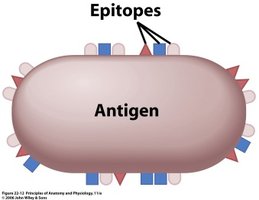
Epitope: Specific region on an antigen recognized by immune cells.
Antigen receptors: Proteins on lymphocytes that bind specific epitopes (generated by somatic recombination).
Major Histocompatibility Complex (MHC)
MHC Class I: Present on all nucleated cells; present endogenous antigens to CD8+ T cells.
MHC Class II: Present on antigen-presenting cells (APCs); present exogenous antigens to CD4+ T cells.
Antigen Processing and Presentation
Endogenous antigen presentation: Uses MHC I molecules and activates CD8+ T cells (cytotoxic T cells).
Exogenous antigen presentation: Uses MHC II molecules on professional APCs (dendritic cells, macrophages, B cells) to activate CD4+ T cells (helper T cells).
T Cells
Activation and Differentiation
Activation: Requires antigen recognition by T-cell receptors (TCRs) and costimulation.
Proliferation and differentiation: Activated T cells form clones and differentiate into effector and memory cells.
CD4+ T cells: Helper T cells (TH) secrete interleukin-2 (IL-2) to stimulate other immune cells; regulatory T cells (Treg) modulate immune responses.
CD8+ T cells: Cytotoxic T cells (TC) destroy infected cells using perforin, cytokines, and lymphotoxin.
Elimination of Pathogens
Cytotoxic T cells: Kill infected or abnormal cells directly.
Immunological surveillance: Continual monitoring for abnormal cells.
B Cells and Antibodies
B Cell Activation
Sensitization: B-cell receptors (BCRs) bind antigen.
Costimulation: Helper T cells provide signals for full activation.
Plasma cells: Produce and secrete antibodies.
Memory B cells: Provide long-term immunity.
Antibody Structure and Classes
Structure: Composed of heavy and light chains, with constant and variable segments forming antigen-binding sites.
Classes: IgA, IgD, IgE, IgG, and IgM, each with distinct roles in immunity.
Antibody Functions
Neutralization: Block pathogen activity.
Agglutination/Precipitation: Clump antigens for easier removal.
Complement activation: Trigger lysis of pathogens.
Opsonization: Enhance phagocytosis.
Inflammation: Promote immune cell recruitment.
Antibody Responses
Primary response: First exposure to antigen; slower and lower antibody titer.
Secondary response: Subsequent exposures; faster and stronger due to memory cells.
Immune Regulation
Self-Recognition and Self-Tolerance
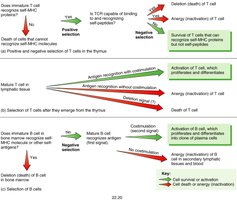
Positive selection: Ensures T cells recognize self-MHC molecules.
Negative selection: Eliminates T cells that react strongly to self-antigens (prevents autoimmunity).
Deletion and anergy: Mechanisms for removing or inactivating self-reactive lymphocytes.
Regulatory Mechanisms
Regulatory T cells (Tr): Suppress immune responses to maintain tolerance.
Cytokines: Signaling molecules that coordinate immune responses.
Red blood cells (RBCs): May play a minor role in immune regulation.
Immune Disorders
Types of Immune Disorders
Autoimmune diseases: Immune system attacks self-tissues (e.g., due to dysregulated T cells or autoantibodies).
Immunodeficiency diseases: Impaired immune function (e.g., SCID, AIDS).
Allergies: Hypersensitivity to harmless substances (allergens); can cause anaphylaxis or delayed hypersensitivity reactions.
Stress and the Immune System
Glucocorticoids: Hormones released during stress that suppress inflammation, reduce phagocyte activity, and inhibit interleukin secretion, potentially weakening immune responses.
