 Indietro
The Immune System: Innate and Adaptive Body Defenses
Guida di studio - Note intelligenti
 Appunti personalizzati basati sui tuoi materiali, ampliati con definizioni chiave, esempi e contesto.
The Immune System: Innate and Adaptive Body Defenses
Overview of Immunity
The immune system protects the body from disease through two main defense systems: innate (nonspecific) and adaptive (specific) defenses. These systems work together to resist infection and maintain health.
Innate Defense System: Provides immediate, nonspecific protection against pathogens. Includes surface barriers and internal defenses.
Adaptive Defense System: Provides specific, long-lasting protection and memory against particular pathogens. Includes humoral and cellular immunity.
Innate (Nonspecific) Defenses
Surface Barriers
Surface barriers are the body's first line of defense, preventing pathogen entry.
Skin: Keratinized epithelium resists acids, bases, enzymes, and toxins.
Mucous Membranes: Line body cavities and secrete protective chemicals (e.g., mucus, lysozyme, HCl in stomach).
Respiratory Modifications: Mucus-coated hairs and cilia trap and remove microbes.
Internal Defenses: Cells and Chemicals
If pathogens breach surface barriers, internal defenses are activated.
Phagocytes: Macrophages and neutrophils engulf and destroy pathogens.
Natural Killer (NK) Cells: Target and induce apoptosis in abnormal cells lacking "self" markers.
Inflammation: Local response to injury or infection, characterized by redness, heat, swelling, and pain.
Antimicrobial Proteins: Interferons and complement proteins attack microbes and hinder their reproduction.
Fever: Systemic response that increases body temperature to inhibit microbial growth and speed repair.
Phagocyte Mobilization
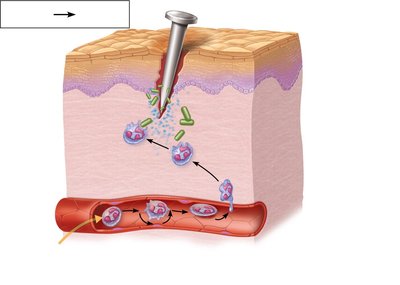
Phagocytes are recruited to sites of infection through a series of steps:
Leukocytosis: Neutrophils are released from bone marrow.
Margination: Neutrophils cling to capillary walls.
Diapedesis: Neutrophils squeeze through capillary walls into tissues.
Chemotaxis: Neutrophils follow chemical signals to the infection site.
Antimicrobial Proteins: Interferons
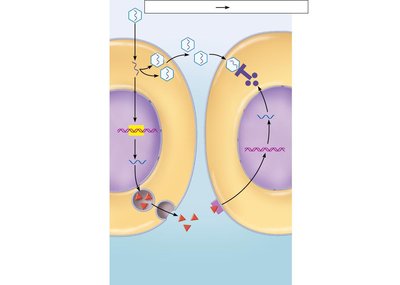
Interferons (IFNs) are proteins released by virus-infected cells to protect neighboring cells.
Induce synthesis of antiviral proteins in adjacent cells.
Activate macrophages and NK cells.
Used therapeutically for viral infections and some cancers.
Antimicrobial Proteins: Complement System
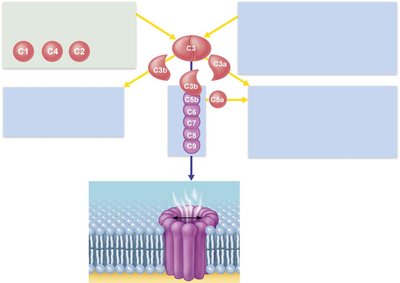
The complement system consists of about 20 plasma proteins that enhance immune responses.
Activated via classical (antibody-mediated) or alternative (pathogen surface) pathways.
Leads to inflammation, opsonization (enhanced phagocytosis), and cell lysis via the membrane attack complex (MAC).
Adaptive (Specific) Defenses
General Properties
Specificity: Targets particular pathogens.
Systemic: Not restricted to the initial infection site.
Memory: Mounts stronger attacks on previously encountered pathogens.
Antigens and Antigenic Determinants
Antigens are substances that provoke immune responses. Antigenic determinants are specific regions recognized by antibodies or lymphocyte receptors.
Complete Antigens: Proteins, polysaccharides, lipids, nucleic acids.
Haptens: Small molecules that become immunogenic when attached to body proteins (e.g., poison ivy, animal dander).

Cells of the Adaptive Immune System
B Lymphocytes (B cells): Responsible for humoral (antibody-mediated) immunity.
T Lymphocytes (T cells): Responsible for cellular (cell-mediated) immunity.
Antigen-Presenting Cells (APCs): Dendritic cells, macrophages, and B cells that present antigens to T cells.
Lymphocyte Development and Maturation
Origin: All lymphocytes originate in red bone marrow.
B cells mature in bone marrow; T cells mature in the thymus.
Immunocompetence: Ability to recognize a specific antigen.
Self-tolerance: Unresponsiveness to self-antigens.
Major Histocompatibility Complex (MHC) Proteins
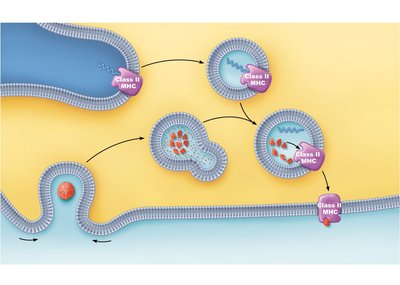
Class I MHC: Found on all nucleated cells; present endogenous antigens to cytotoxic T cells.
Class II MHC: Found on APCs; present exogenous antigens to helper T cells.
Humoral (Antibody-Mediated) Immunity
Antibody Structure and Classes
Antibodies (immunoglobulins) are Y-shaped proteins with variable regions for antigen binding and constant regions determining class and function.
Classes: IgM, IgA, IgD, IgG, IgE
Antibody Actions
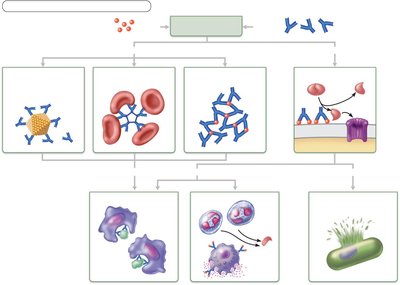
Antibodies inactivate and tag antigens for destruction by forming antigen-antibody complexes. Main mechanisms include:
Neutralization: Block pathogen binding sites.
Agglutination: Clump cell-bound antigens.
Precipitation: Clump soluble antigens.
Complement Fixation: Trigger cell lysis and enhance inflammation.
Immunological Memory
Primary Response: First exposure to antigen; slow antibody production.
Secondary Response: Faster, stronger response upon re-exposure due to memory cells.
Types of Humoral Immunity
Active Immunity: Body produces antibodies (natural infection or vaccination).
Passive Immunity: Antibodies are received from another source (maternal antibodies or injection).
Cell-Mediated Immunity
T Cell Types and Functions
Helper T (TH) Cells: Activate B cells, T cells, and macrophages; central to adaptive immunity.
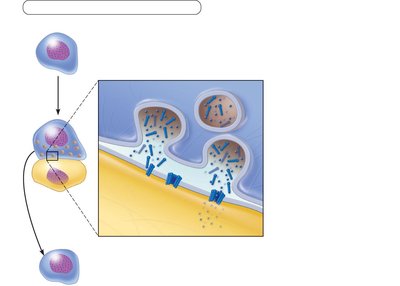
Cytotoxic T (TC) Cells: Destroy infected or abnormal cells by inducing apoptosis.
Regulatory T (TReg) Cells: Suppress immune responses to prevent autoimmunity.
Memory T Cells: Provide rapid response upon re-exposure to antigen.
T Cell Activation
T cells require antigen presentation by MHC proteins and co-stimulation to become activated and proliferate.
Mechanism of Cytotoxic T Cell Killing
TC cells bind to infected cells displaying antigen on MHC I.
Release perforins to form pores and granzymes to induce apoptosis.
Clinical Aspects of Immunity
Immunodeficiencies
Congenital or acquired conditions impairing immune function (e.g., AIDS).
Autoimmune Diseases
Immune system attacks self-tissues (e.g., multiple sclerosis, type I diabetes, lupus).
Mechanisms include molecular mimicry, new self-antigens, and barrier trauma.
Hypersensitivities
Excessive immune responses to harmless antigens (allergies, anaphylactic shock).
Classified by time course and immune components involved (antibody or T cell mediated).
Developmental Aspects
Immune system matures after birth; affected by stress, aging, and environmental exposure.
