 Indietro
The Lymphatic System and Immunity: Structure, Function, and Defense Mechanisms
Guida di studio - Note intelligenti
 Appunti personalizzati basati sui tuoi materiali, ampliati con definizioni chiave, esempi e contesto.
The Lymphatic System: Organization and Structure
Lymphatic Tissues and Organs
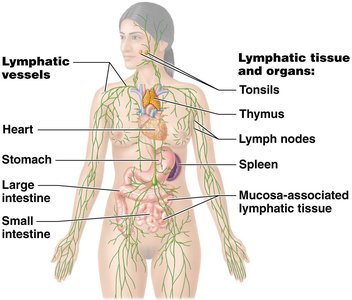
The lymphatic system is a network of tissues, organs, and vessels that play a crucial role in immune defense and fluid balance. It includes lymphatic vessels, lymph nodes, tonsils, thymus, spleen, and mucosa-associated lymphatic tissue.
Lymphocytes are produced and distributed in lymphoid tissues (e.g., tonsils), lymphoid organs (e.g., spleen, thymus), and red bone marrow.
Lymphatic vessels transport lymph from tissues back to the venous system.
Lymphatic capillaries collect interstitial fluid and return it to the bloodstream.
Lymphatic Capillaries and Circulation
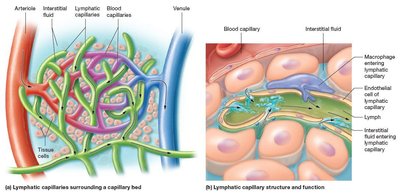
Lymphatic capillaries are thin-walled vessels that absorb interstitial fluid from tissues. This fluid, now called lymph, travels through lymphatic vessels and ducts, eventually returning to the venous blood.
Blood to interstitial fluid: Fluid leaves blood capillaries and enters tissues.
Interstitial fluid to lymph: Lymphatic capillaries absorb excess fluid.
Lymphatic vessels and valves: Ensure one-way flow of lymph toward the heart.
Lymph Nodes: Structure and Function
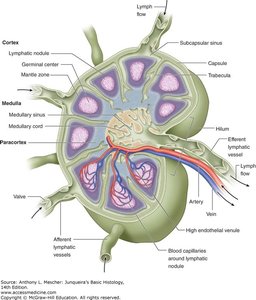
Lymph nodes are distributed throughout the body to monitor peripheral infections and respond before pathogens reach vital organs. They filter lymph and house immune cells.
Cortex: Contains lymphatic nodules and germinal centers.
Medulla: Contains medullary cords and sinuses.
Afferent and efferent vessels: Lymph enters via afferent vessels and exits via efferent vessels.
Types of Immunity
Overview of Immunity
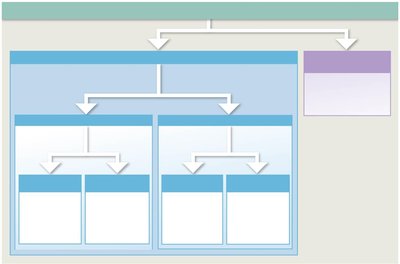
Immunity is the ability to resist infection and disease. It is classified as innate (nonspecific) or adaptive (specific).
Innate immunity: Genetically determined, present at birth, and does not require prior exposure.
Adaptive immunity: Acquired after exposure to antigens or by receiving antibodies from another source.
Adaptive Immunity: Active and Passive
Adaptive immunity is further divided into active and passive forms, each of which can be naturally or artificially acquired.
Type | Acquisition | Example |
|---|---|---|
Active (Natural) | Exposure to antigens in environment | Recovering from an infection |
Active (Artificial) | Administration of antigen | Vaccination |
Passive (Natural) | Transfer of maternal antibodies | Antibodies in breast milk |
Passive (Artificial) | Administration of antibodies | Antibody therapy |
Innate (Nonspecific) Immunity
Innate Defenses
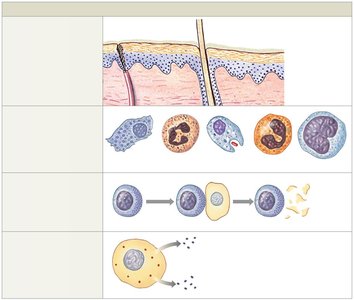
Innate immunity provides immediate, nonspecific defense against pathogens. It includes physical barriers, phagocytes, immune surveillance, interferons, complement, inflammation, and fever.
Physical barriers: Skin and mucous membranes prevent entry of pathogens.
Phagocytes: Cells such as neutrophils and macrophages engulf pathogens and debris.
Immune surveillance: Natural killer (NK) cells destroy abnormal cells.
Interferons: Chemical messengers that coordinate defenses against viral infections.
Complement system: Circulating proteins that assist antibodies in pathogen destruction.
Inflammation: Localized response to injury or infection, limiting spread.
Fever: Elevated body temperature accelerates metabolism and defenses.
NK Cell Mediated Destruction
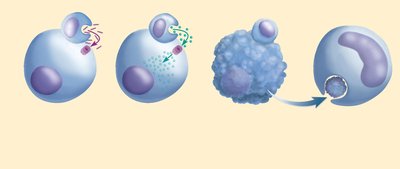
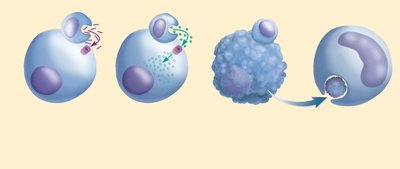
Natural killer (NK) cells play a key role in immune surveillance by targeting and destroying abnormal cells.
NK cell releases perforins, forming a hole in the enemy cell membrane.
Granzymes enter through the perforin hole and degrade cell enzymes.
Enemy cell dies by apoptosis.
Macrophage engulfs and digests dying cell.
Antimicrobial Proteins: The Complement System
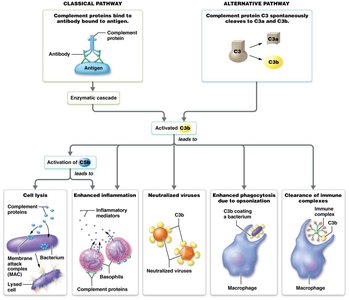
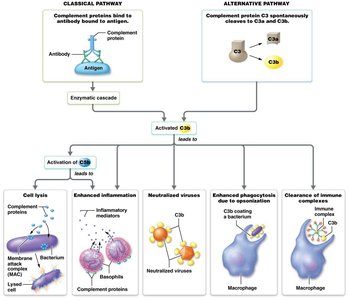
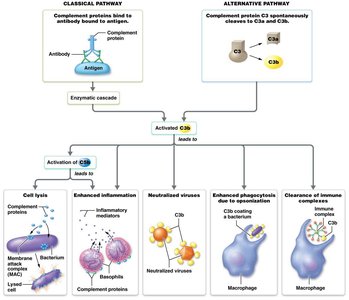
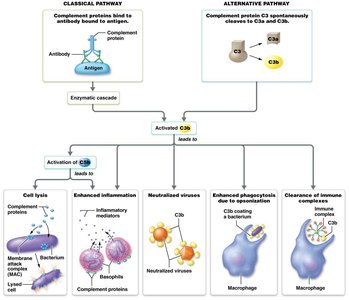
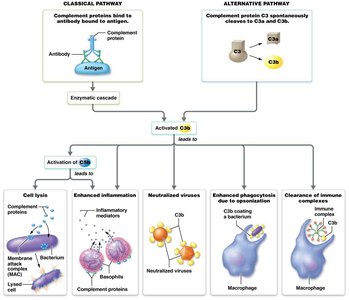
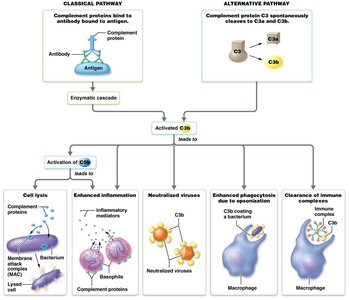
The complement system consists of over 20 plasma proteins produced primarily by the liver. Activation of complement leads to cell lysis, enhanced inflammation, neutralization of viruses, enhanced phagocytosis, and clearance of immune complexes.
Classical pathway: Initiated by antibodies bound to antigens.
Alternative pathway: Initiated by spontaneous activation of complement proteins.
Membrane attack complex (MAC): Forms pores in pathogen membranes, leading to cell lysis.
The Inflammatory Response
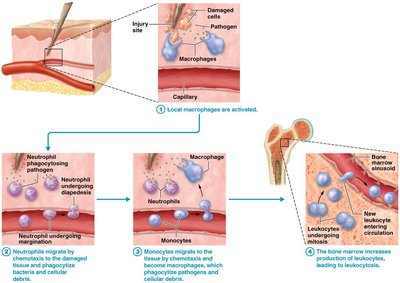
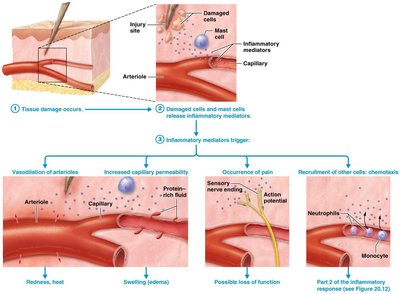
Inflammation is a localized, tissue-level response to injury or infection. It involves vasodilation, increased capillary permeability, pain, recruitment of immune cells, and activation of leukocyte production.
Vasodilation: Increases blood flow to the site.
Capillary permeability: Allows immune cells and proteins to enter tissues.
Pain: Occurs due to activation of sensory nerves.
Recruitment of cells: Neutrophils and monocytes migrate to the site.
Leukocyte production: Bone marrow increases production of immune cells.
Adaptive (Specific) Immunity
Cell-Mediated Immunity: T Cells
Cell-mediated immunity is the first arm of the adaptive immune system and involves T cells. Helper T (TH) cells and cytotoxic T (TC) cells respond to infected, cancerous, or foreign cells.
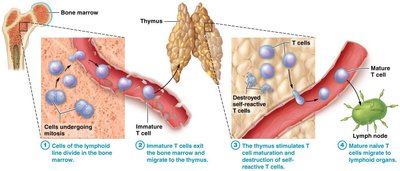
T cell production: Formed in bone marrow, mature in thymus.
Clonal selection: Each T cell clone responds to a specific antigen.
Immunocompetence: Thymus screens T cells for ability to recognize antigens.
MHC molecules: T cells interact with antigens bound to major histocompatibility complex (MHC) molecules.
Major Histocompatibility Complex (MHC) Molecules
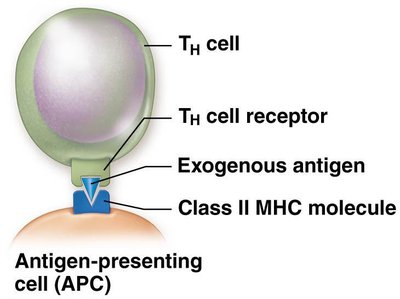
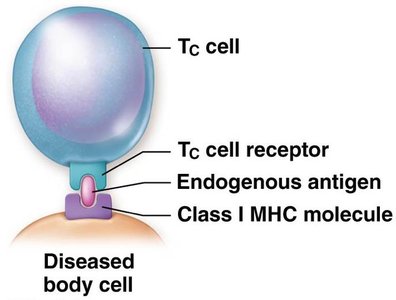
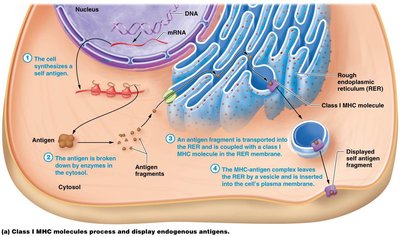
MHC molecules are glycoproteins that present antigen fragments to T cells. There are two main classes:
Class I MHC: Present endogenous antigens to cytotoxic T cells (TC).
Class II MHC: Present exogenous antigens to helper T cells (TH).
B Cells and Antibody-Mediated Immunity
B cells are responsible for antibody-mediated immunity. They produce antibodies that bind to specific antigens, neutralizing pathogens or marking them for destruction.
B cell receptors: Bind to specific antigens.
Clonal selection: Group of B cells that bind to a specific antigen.
Antibody secretion: Antibodies bind to the same antigen as the B cell receptor.
Immune Response to Pathogens
The immune system responds differently to various pathogens, such as viruses, bacteria, and cancer cells. The response involves both innate and adaptive mechanisms.
Common cold: Involves activation of both T cells and B cells.
Bacterial infection: Phagocytes and antibodies play a major role.
Cancer cells: NK cells and cytotoxic T cells target abnormal cells.
Summary Table: Types of Immunity
Type | Mechanism | Example |
|---|---|---|
Innate | Physical barriers, phagocytes, NK cells, complement, inflammation, fever | Skin, mucous membranes, neutrophils |
Adaptive (Active) | Antigen exposure, antibody production | Vaccination, infection recovery |
Adaptive (Passive) | Antibody transfer | Maternal antibodies, antibody therapy |
Additional info: Academic context was added to clarify the mechanisms and functions of the lymphatic system and immunity, including definitions, examples, and expanded explanations of immune responses.
